"And God spoke all these words: 'I am the LORD your God, who brought you out of Egypt, out of the land of slavery.'" (Exodus 20:1–2)
- "You shall have no other gods before me." (Exodus 20:3)
- "You shall not make for yourself an image in the form of anything in heaven above or on the earth beneath or in the waters below. You shall not bow down to them or worship them." (Exodus 20:4–5)
- "You shall not misuse the name of the LORD your God, for the LORD will not hold anyone guiltless who misuses his name." (Exodus 20:7)
- "Remember the Sabbath day by keeping it holy. Six days you shall labor and do all your work, but the seventh day is a sabbath to the LORD your God." (Exodus 20:8–10)
- "Honor your father and your mother, so that you may live long in the land the LORD your God is giving you." (Exodus 20:12)
- "You shall not murder." (Exodus 20:13)
- "You shall not commit adultery." (Exodus 20:14)
- "You shall not steal." (Exodus 20:15)
- "You shall not give false testimony against your neighbor." (Exodus 20:16)
- "You shall not covet your neighbor's house. You shall not covet your neighbor's wife, or his male or female servant, his ox or donkey, or anything that belongs to your neighbor." (Exodus 20:17)
1. The Covenant Framework: Suzerain-Vassal Treaties at Sinai
To understand the depth of the Decalogue, modern readers must view it through the historical lens of ancient Near Eastern covenant treaties. In the second millennium BC, great emperors (suzerains) formed binding treaties with subordinate nations (vassals). These legal covenants consistently followed a standardized five-part diplomatic structure:
- Preamble: Identifying the Great King ("I am Yahweh your God").
- Historical Prologue: Recounting the King's benevolent deeds ("who brought you out of the land of Egypt, out of the house of bondage").
- Stipulations: The fundamental obligations required of the vassal (the Ten Words).
- Witnesses & Sanctions: Divine blessings for covenant fidelity and severe curses for treason.
- Document Placement: Inscription upon two stone tablets deposited inside the Ark of the Covenant under the footstool of the King.
Crucially, the historical prologue preceded all legal stipulations. God did not give Israel the Ten Commandments as a burdensome ladder to earn their redemption; rather, He redeemed them by grace from Egyptian tyranny first, and then gave them the law as the royal charter of their new life of freedom.
2. Tablet One: Vertical Duties Toward Yahweh (Commandments 1–4)
The first table of the law establishes the exclusive supremacy, immaterial nature, sacred authority, and rhythm of God's worship:
- Commandment 1 (Monotheistic Exclusivity): Prohibits polytheism. In an ancient world saturated with localized pantheons (such as Ra, Osiris, and Baal), Israel was consecrated to one sovereign Creator who brooks no rivals.
- Commandment 2 (Iconoclastic Purity): Forbids reducing the transcendent Creator to a tangible, carved idol. Because God created human beings as His living image (Imago Dei), any lifeless wooden or metallic effigy degrades His uncontainable majesty.
- Commandment 3 (Vocal Sanctity): Prohibits speaking God's holy name (YHWH) in vain, flippancy, false swearing, or manipulative incantations. It demands that our speech honor the gravity of His character.
- Commandment 4 (Sabbath Rhythm): Mandates a perpetual cycle of six days of productive labor followed by a 24-hour cessation from commercial toil. It memorializes both God's cosmic rest at Creation (Exodus 20:11) and Israel's liberation from unceasing Egyptian slave labor (Deuteronomy 5:15).
3. Tablet Two: Horizontal Duties Toward Human Society (Commandments 5–10)
The second table of the law provides the indestructible ethical bedrock for human community, establishing the sacred boundaries of family, life, sexuality, property, and truth:
- Commandment 5 (Honor for Parents): The bridge commandment. Parents represent the first earthly conduit of authority, tradition, and divine knowledge to the child. Honoring parents sustains societal longevity and moral order.
- Commandment 6 (Sanctity of Human Life): The Hebrew verb ratsach specifically condemns premeditated murder, manslaughter, and malicious violence, affirming that human life is sacred because it carries the divine imprint.
- Commandment 7 (Sanctity of Marriage): Protects the covenant bond between husband and wife from infidelity, safeguarding the spiritual and biological nursery of the next generation.
- Commandment 8 (Sacredness of Stewardship & Property): Forbids theft, exploitation, fraud, and kidnapping, affirming the right to personal property under divine stewardship.
- Commandment 9 (Integrity of Judicial Witness): Outlaws perjury, slander, and gossip. A society that perverts judicial and verbal truth inevitably descends into systemic oppression and anarchy.
- Commandment 10 (Heart Purity & Contentment): The culminating capstone of the Decalogue. Unlike human criminal codes that can only police external actions, the tenth commandment penetrates into the invisible motives of the heart, forbidding covetousness (internal lust for that which belongs to another).
4. The Two Tablets: A Legal Common Misconception
Popular renaissance artwork typically depicts Moses holding two oversized arched stones, with commandments 1 to 5 chiseled on the left stone and 6 to 10 on the right. However, Near Eastern treaty archaeology demonstrates that both tablets contained the complete text of all ten commandments. In ancient suzerainty covenants, two duplicate copies of the treaty were prepared—one copy for the imperial king and one copy for the vassal subject. Because Yahweh took up His dwelling directly in Israel's midst over the Mercy Seat, both legal copies were placed inside the Ark of the Covenant as an enduring covenant witness.
5. Christ's Radicalization in the Sermon on the Mount
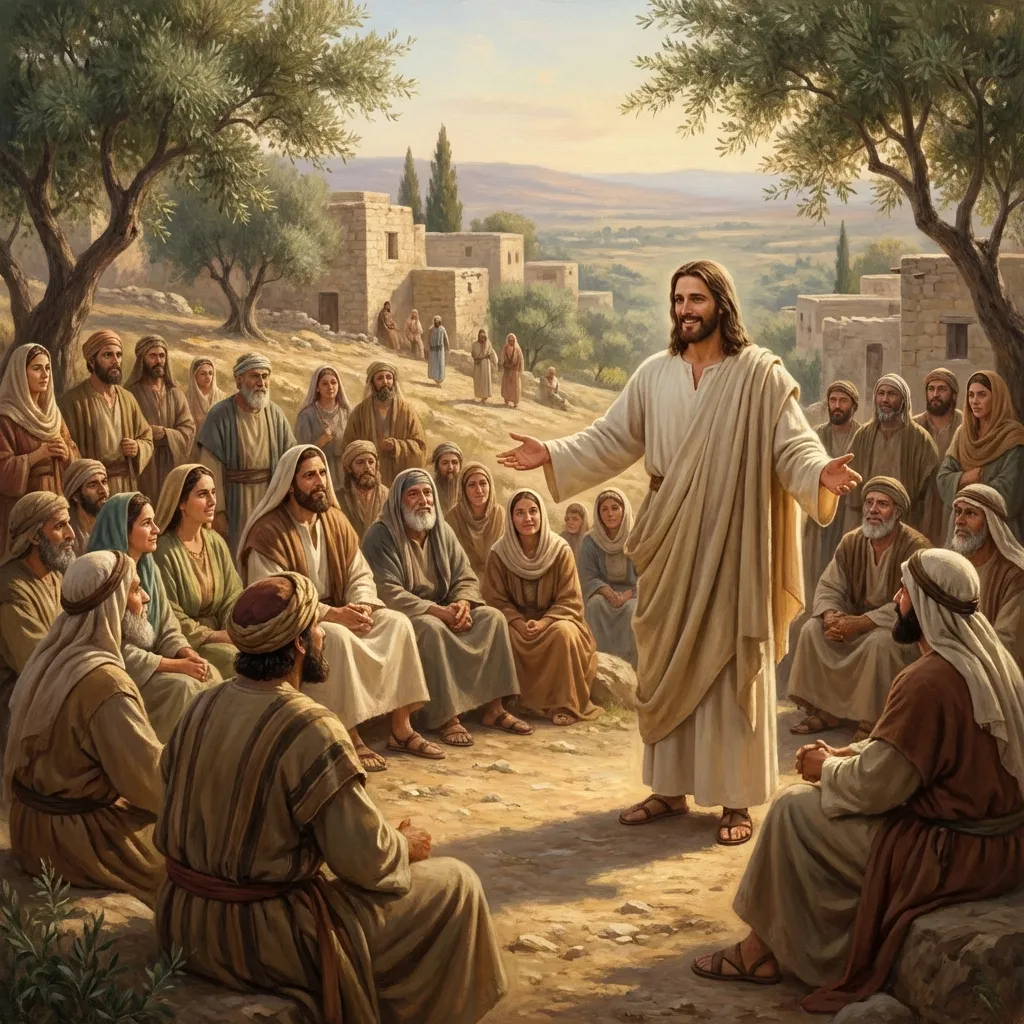
In Matthew 5:21–48, Jesus demonstrated that the Decalogue was never meant to be confined to external ritual compliance. He showed that harboring unrighteous anger and speaking contemptuous insults violates the sixth commandment against murder, and that harboring lustful desires in the imagination violates the seventh commandment against adultery. Christ showed that the law demands total heart transformation, a standard so high that no fallen human can achieve salvation through works, driving us directly into the arms of divine grace.
Biblical Keywords & Theological Roots
Word, utterance, decree, or dynamic spoken matter; in Hebrew tradition, the Ten Commandments are called 'The Ten Words' (Aseret HaDiberot).
Covenant, treaty, solemn compact cut between two parties binding them in mutual obligation and enduring loyalty.
Holy, set apart, consecrated, utterly separate from moral impurity and common corruption.
Cessation, desisting from labor, sacred rest instituted by God at Creation and ratified at Sinai as a covenant sign.
Support Independent Biblical Research
Did this study bless you? Help support our independent bilingual research and interactive visual Bible tools.
⚡ Fast Facts
- The Ten Commandments are called 'Aseret HaDiberot' in Hebrew, which literally translates to 'The Ten Words' (Decalogue in Greek).
- Unlike the rest of the Mosaic legal code written down by Moses' hand, Scripture explicitly records that the Decalogue was 'written with the finger of God' upon two stone tablets (Exodus 31:18).
- Both stone tablets were placed inside the gold-covered Ark of the Covenant beneath the golden Mercy Seat (Exodus 25:16, 21).
- The 10th commandment against coveting is unique in ancient legal history because it outlaws an invisible internal motive rather than an external physical crime.
❓ Frequently Asked Questions (FAQs)
Are New Testament Christians required to keep the Ten Commandments?
Christians are saved by grace through faith in Christ and not by the works of the Law (Ephesians 2:8-9). However, nine of the Ten Commandments are explicitly reaffirmed in the New Testament as moral standards for believers walking in the Spirit. The moral law reveals God's eternal holy character, while Christ fulfills the ceremonial requirements.
Why did Moses shatter the first set of stone tablets?
When Moses descended Mount Sinai and witnessed Israel worshiping the golden calf in wild revelry (Exodus 32:19), he shattered the tablets. In ancient legal practice, shattering a treaty document was the formal legal demonstration that the covenant had been completely broken by the treasonous vassal.
What is the theological difference between the Sabbath in the Old Testament and the Lord's Day (Sunday)?
The Old Testament Sabbath commemorated God's completion of Creation on the seventh day and deliverance from Egypt. The early church met on Sunday ('the first day of the week' or the Lord's Day) to celebrate the inauguration of the New Creation through the resurrection of Jesus Christ from the dead (Acts 20:7; 1 Corinthians 16:2; Revelation 1:10).