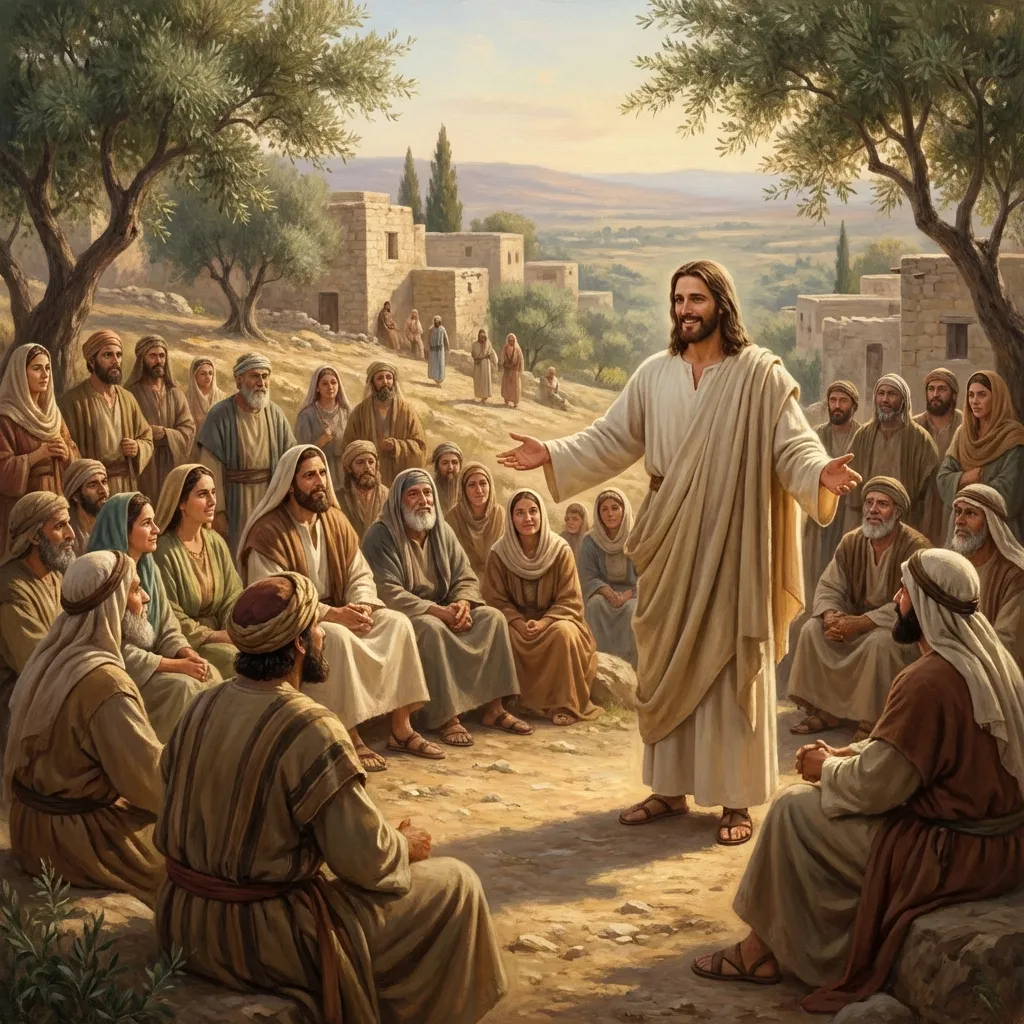
"Do not think that I have come to abolish the Law or the Prophets; I have not come to abolish them but to fulfill them. For truly I tell you, until heaven and earth disappear, not the smallest letter, not the least stroke of a pen, will by any means disappear from the Law until everything is accomplished." (Matthew 5:17–18)
1. The Architecture of the 613 Commandments (Taryag Mitzvot)
The concept that the Torah contains exactly 613 commandments (known in Hebrew as Taryag Mitzvot, using Hebrew gematria where TaRYaG represents 400 + 200 + 10 + 3 = 613) was first formally recorded in the 3rd century AD by Rabbi Simlai in the Talmud (Tractate Makkot 23b). According to classical rabbinic exposition, these 613 divine statutes are structured with intentional anatomical and chronological symmetry:
- 248 Positive Commandments (Mitzvot Aseh — "You Shall Do"): Traditionally correlated with the 248 bones and major limbs of the human body, signifying that every organ of the believer must be dedicated to active righteousness and service.
- 365 Negative Commandments (Mitzvot Lo Ta'aseh — "You Shall Not Do"): Corresponding to the 365 days of the solar year, signifying that on every single day of life, the disciple must exercise vigilance against committing iniquity.
2. The Tripartite Division: Moral, Civil, and Ceremonial Law
Christian theology and classical Reformation scholarship (as articulated in the Westminster Confession and Thomas Aquinas' Summa Theologiae) categorize the 613 Mosaic statutes into three distinct theological categories:
1. The Moral Law
Summarized in the Ten Commandments and grounded in the immutable, eternal character of God. Precepts against idolatry, murder, theft, and adultery apply to all humanity across all dispensations and remain binding today.
2. The Civil / Judicial Law
The state constitution designed specifically for the geopolitical nation of ancient Israel under theocratic rule. Included city-of-refuge protocols, agricultural property restitution, gleaning rights, and penology. While their specific judicial forms expired with the fall of the Jewish theocracy, their underlying general equity continues to instruct civil justice.
3. The Ceremonial Law
The ritual apparatus of the Tabernacle and Temple, encompassing the Levitical priesthood, animal sacrifices, dietary kashrut laws, ritual washings, and sacred festivals. These statutes served as prophetic types and shadows pointing directly to Jesus Christ.
3. Major Rabbinic Categorization: Maimonides' 14 Books
In the 12th century, the eminent Jewish philosopher Moses Maimonides (the Rambam) compiled his monumental legal codification, the Mishneh Torah, organizing the 613 commandments into 14 thematic treatises:
- Sefer HaMada (Book of Knowledge): Fundamental theological truths regarding the absolute oneness, incorporeality, and sanctification of Yahweh's holy name.
- Sefer Ahavah (Book of Love): Injunctions sanctifying personal devotion—circumcision, daily prayer, reciting the Shema, wearing tzitzit, and mounting mezuzot.
- Sefer Zemanim (Book of Appointed Times): Observance of the weekly Sabbath, Yom Kippur fasts, Passover matzah, Sukkot booths, and Shofar blasts.
- Sefer Nashim (Book of Women): Marital sanctification, marriage contracts (ketubah), divorce protections, and family purity.
- Sefer Kedushah (Book of Holiness): Dietary boundaries (abstaining from blood, pork, and blending milk and meat) and prohibition of sexual transgressions.
- Sefer Nezikin (Book of Damages): Civil restitution, torts, personal injury penalties, property boundaries, and equitable compensation.
- Sefer Avodah (Book of Divine Service): Construction of the Temple, priestly vestments, and sacrificial logistics.
4. The Theological Purpose of the Law
Why did God issue 613 complex statutes if salvation cannot be earned through human performance? The Apostle Paul explains in Romans and Galatians that the Law functions with four essential purposes:
- To Reveal God's Transcendent Holiness: The Law demonstrates the infinite purity and righteousness of God, establishing that He is totally separate from human wickedness.
- To Expose Human Sinfulness: "Through the law we become conscious of our sin" (Romans 3:20). Like a spiritual mirror, the Law reveals the dirt on our faces, but it possesses no power to wash us clean.
- To Restrain Evil in Society: By providing swift judicial penalties, the Mosaic code preserved civil order in ancient Israel and prevented widespread cultural degeneration.
- As a Guardian (Paidagogos) Leading to Christ: "So the law was our guardian until Christ came that we might be justified by faith" (Galatians 3:24). The Law proved that human effort falls woefully short, driving the thirsty sinner to seek the righteousness of the Messiah.
5. Christ as the Fulfiller and Telos of the Torah
In Romans 10:4, Paul writes: "Christ is the end (Greek: telos — culmination, goal, and target) of the law so that there may be righteousness for everyone who believes." Jesus did not abolish the Torah like a rebel destroying the lawbooks; He fulfilled every jot and tittle (Matthew 5:17–18):
- He obeyed the Moral Law perfectly without committing a single sin (Hebrews 4:15).
- He fulfilled the Ceremonial Law as the spotless Lamb of God whose once-for-all sacrifice extinguished the need for Levitical bulls and goats (Hebrews 9:11–14).
- He inaugurated the New Covenant prophesied by Jeremiah, where the Spirit writes God's law directly upon our hearts (Jeremiah 31:33; Hebrews 8:10).
Biblical Keywords & Theological Roots
Commandment, precept, authoritative divine statute; in Jewish thought, performing a mitzvah is a sacred act connecting man directly to the will of God.
Instruction, divine direction, guidance, teaching; far broader than mere legalism, Torah represents God's loving paternal counsel for holy living.
Civil laws, judicial judgments, ordinances based on intuitive universal justice that human reason would naturally comprehend.
Statutes, divine decrees whose rationale transcends human rational analysis (e.g., dietary laws, red heifer ashes), observed purely out of obedience.
Support Independent Biblical Research
Did this study bless you? Help support our independent bilingual research and interactive visual Bible tools.
⚡ Fast Facts
- The Hebrew acronym 'Taryag' (תרי״ג) represents the number 613 in Jewish gematria (Tav = 400, Resh = 200, Yod = 10, Gimel = 3).
- Rabbinic tradition counts 248 positive commandments (equal to traditional counts of human bones) and 365 negative prohibitions (equal to days of the solar year).
- Moses Maimonides (Rambam) in 1170 AD organized the 613 statutes into 14 thematic books called the 'Mishneh Torah'.
- Following the destruction of the Second Temple in 70 AD, orthodox rabbis calculate that only approximately 271 of the 613 commandments can legally be observed today without an active Temple and priesthood.
❓ Frequently Asked Questions (FAQs)
Why do Christians not follow Old Testament dietary and ceremonial laws today?
In the New Testament, Jesus declared all foods clean (Mark 7:19), a truth reaffirmed to Peter in Acts 10. The Apostle Paul explains in Colossians 2:16-17 that dietary laws, festivals, and new moons were 'a shadow of the things that were to come; the reality, however, is found in Christ.' Because the reality has arrived, the prophetic shadow is no longer binding.
Did any human being ever keep all 613 commandments perfectly?
Scripture affirms that all have sinned and fall short of the glory of God (Romans 3:23). Only Jesus Christ lived a completely sinless life, fulfilling every requirement of the Law with absolute moral perfection (2 Corinthians 5:21; Hebrews 4:15).
What is the relationship between the Law and Grace in Christian doctrine?
The Law reveals the standard of God's holiness and diagnoses our deadly condition of sin, acting as a mirror. Grace provides the cure through the atoning blood of Christ. The Law drives us to grace for salvation, and grace writes God's love on our hearts, enabling us to walk in holiness.