"He protects all his bones, not one of them will be broken... It must be eaten inside the one house; take none of the meat outside the house. Do not break any of the bones."
"The soldiers therefore came and broke the legs of the first man who had been crucified with Jesus, and then those of the other. But when they came to Jesus and found that he was already dead, they did not break his legs... These things happened so that the scripture would be fulfilled: 'Not one of his bones will be broken.'"
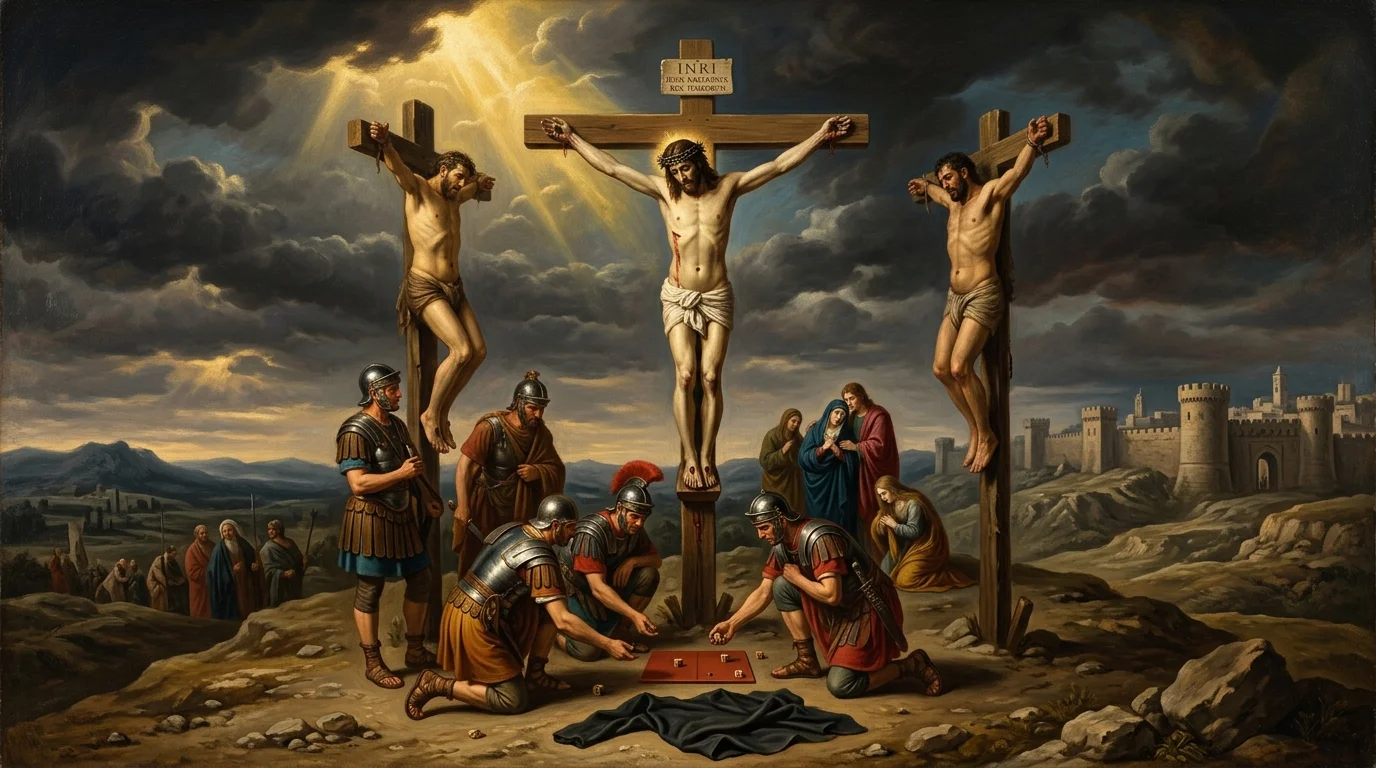
Exodus 12:46 established a perpetual statute regarding the Passover Lamb: 'Do not break any of the bones.' Reaffirmed in Numbers 9:12 and prophetically elevated in Psalm 34:20 ('He protects all his bones, not one of them will be broken'), this divine decree was vindicated with breathtaking precision at Calvary when Roman soldiers with iron mallets smashed the legs of two dying criminals, but bypassed Jesus Christ completely.
1. The Passover Ordinance of the Unbroken Lamb
Fifteen hundred years before Golgotha, in the dark midnight of the Egyptian Exodus, God instituted the Passover feast. Each Hebrew household selected a yearling lamb without defect. The blood was painted on the doorposts to ward off the Destroyer, and the roasted meat was eaten inside. Yahweh issued a strict ritual command: 'It must be eaten inside the house; take none of the meat outside the house. Do not break any of the bones' (Exodus 12:46). The lamb had to remain structurally whole—a symbol of unblemished perfection and divine preservation.
2. The Roman Mallet of Crurifragium
Crucifixion killed through slow asphyxiation. To breathe, the victim had to push up on the nail through his feet. When Friday afternoon waned, the Jewish authorities panicked. Deuteronomy 21:23 commanded that a body hung on a tree could not remain overnight, especially with the high Passover Sabbath beginning at sundown. The Sanhedrin petitioned Pilate to perform crurifragium—shattering the victims' legs with heavy iron clubs. Once the legs were broken, the criminals could no longer lift themselves to inhale, suffocating to death in minutes.
3. The Spared Bones: John 19:31-33
The Roman soldiers marched up the rocky crest of Golgotha with their heavy iron bars. They approached the first thief, swinging the club with sickening force, snapping the shinbones. They moved across to the second thief and smashed his legs. But when they reached the central cross, an extraordinary thing happened: 'When they came to Jesus and saw that he was already dead, they did not break his legs' (John 19:33). Jesus had not died of exhaustion or suffocation; as Lord of life, He had sovereignly yielded up His spirit when His atoning work was complete (John 19:30).
4. The Spear Thrust Instead of the Mallet
Rather than breaking His bones, a soldier took a lance and thrust it into Jesus' side to ensure death, bringing forth blood and water. The Apostle John, writing under the inspiration of the Holy Spirit, beheld the divine tapestry unfolding: 'These things happened so that the scripture would be fulfilled: Not one of his bones will be broken, and, as another scripture says, They will look on the one they have pierced' (John 19:36-37). Two entirely separate prophecies—Exodus 12:46 and Zechariah 12:10—were fulfilled in a single heartbeat!
5. The Undivided Body of Christ
Why did God protect Jesus' bones with such meticulous jealousy? In biblical anthropology, the bones (*atsemot*) represent the core framework, strength, and enduring substance of a human life. Furthermore, the New Testament identifies the Church as the mystical body of Christ: 'we are members of his body, of his flesh, and of his bones' (Ephesians 5:30). Just as not one physical bone of Jesus could be fractured by Roman iron, so not a single true believer united to Christ can ever be severed, shattered, or lost by all the powers of hell!
Biblical Keywords & Theological Roots
Bone, skeletal frame, substance; the underlying structural integrity of the sacrificial victim.
To break, shatter, fracture in pieces; the brutal Roman practice of crurifragium to accelerate death.
To guard, preserve, keep watch over; sovereign divine protection ensuring not a single bone is fractured.
Ancient Near Eastern & Archaeological Context
In crucifixion, victims suffocated because the weight of the suspended body pulled the diaphragm down, making exhalation impossible without pushing up on the feet. To end an execution quickly before religious festivals, the Romans performed *crurifragium* (*skelokopia*): smashing the fibula and tibia with heavy iron clubs. Deprived of the ability to push up to breathe, the victim died of asphyxiation within minutes. The Jewish authorities pleaded with Pilate to break the legs because the high Sabbath of Passover was approaching (John 19:31).
🔑 Key Spiritual Takeaways
- Jesus is the authentic, unblemished Passover Lamb whose sacrifice fulfills every single nuance of the Exodus covenant.
- God's sovereign providence watched over every single bone in Christ's body, preventing Roman iron from violating sacred scripture.
- Even when Jesus' body lay lifeless on the cross, God’s hand exercised absolute protective authority over His holy flesh.
- Just as not one bone of Christ's physical body was broken, so not one member of His spiritual body (the Church) will ever be lost or destroyed.
Support Independent Biblical Research
Did this study bless you? Help support our independent bilingual research and interactive visual Bible tools.
⚡ Fast Facts
- Passover Ordinance: Exodus 12:46 and Numbers 9:12 strictly commanded regarding the Passover lamb: 'Do not break any of the bones.'
- Psalm 34 Prophetic Shield: Psalm 34:20 declared: 'He protects all his bones, not one of them will be broken.'
- Roman Crurifragium: To ensure the victims died before the Sabbath sunset, Roman soldiers broke the legs (*crurifragium*) of the two thieves with iron mallets, but bypassed Jesus because He was already dead (John 19:31-33).
- Apostolic Culmination: John 19:36 explicitly cites this as prophetic fulfillment: 'These things happened so that the scripture would be fulfilled: Not one of his bones will be broken.'
❓ Frequently Asked Questions (FAQs)
Why did the soldiers break the legs of the thieves but not Jesus?
The two thieves were still gasping for air, so the soldiers shattered their legs. But when they reached Jesus, they saw He had already willingly yielded up His spirit (John 19:33). To confirm His death without breaking bones, a soldier thrust a spear into His side, fulfilling both Exodus 12:46 (bones unbroken) and Zechariah 12:10 (pierced side).
How does Exodus 12:46 connect to Jesus?
The Apostle Paul explicitly states: 'For Christ, our Passover lamb, has been sacrificed' (1 Corinthians 5:7). Exodus 12:46 commanded that the Passover lamb whose blood shielded Israel from the destroyer could not have a single bone broken. Jesus fulfilled this sacrificial blueprint to the letter.
What does this prophecy teach about God's sovereignty over human brutality?
Pagan Roman soldiers equipped with iron clubs had total power to smash Jesus' legs. Yet God’s invisible hand stayed their mallets, proving that even ruthless military executioners cannot violate a single syllable of God’s ordained prophetic decree.