"He was assigned a grave with the wicked, and with the rich in his death, though he had done no violence, nor was any deceit in his mouth."
"As evening approached, there came a rich man from Arimathea, named Joseph, who had himself become a disciple of Jesus. Going to Pilate, he asked for Jesus’ body... Joseph took the body, wrapped it in a clean linen cloth, and placed it in his own new tomb that he had cut out of the rock. He rolled a big stone in front of the entrance to the tomb and went away."
Isaiah 53:9 presents one of the most enigmatic paradoxes in the Old Testament: 'He was assigned a grave with the wicked, and with the rich in his death, though he had done no violence, nor was any deceit in his mouth.' How could a condemned man destined for a disgraced criminal's pit end up in the luxurious private tomb of a wealthy aristocrat? On Good Friday evening, Matthew 27 and John 19 recorded the breathtaking historical fulfillment of this ancient prophecy.
1. The Disgraced Grave of Crucified Outlaws
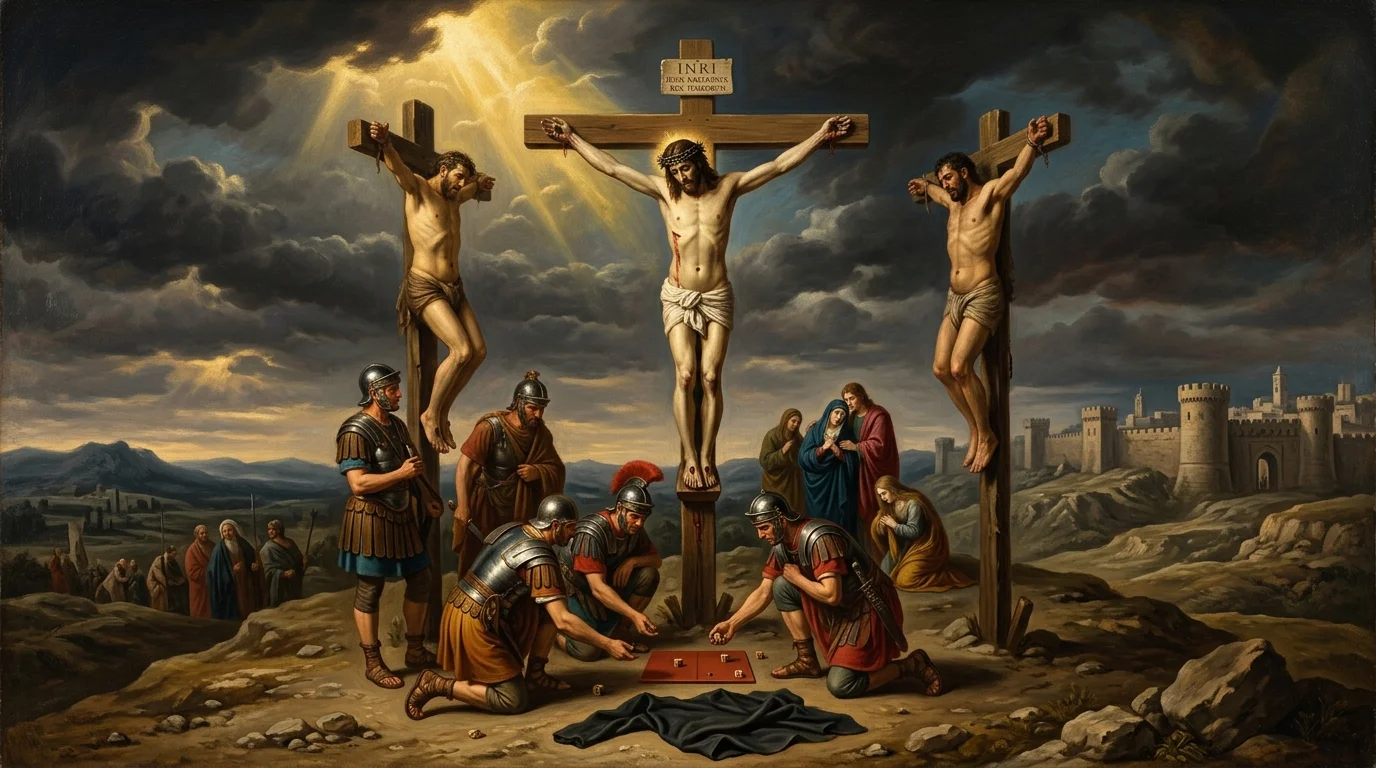
Under Roman and Jewish practice, victims of crucifixion were denied honorable family burials. The Roman authorities either left the corpses to rot on the cross as carrion for vultures, or cast them into communal lime trenches in the Valley of Hinnom (Gehenna) outside Jerusalem. The Jewish Sanhedrin intended this exact disgraceful disposal for Jesus: 'He was assigned a grave with the wicked.' In human expectation, Jesus' corpse was destined to be dumped into a pit with the two thieves.
2. The Bold Intervention of Joseph of Arimathea
As sunset approached, an astonishing intervention occurred. Matthew 27:57-60 records: 'As evening approached, there came a rich man from Arimathea, named Joseph, who had himself become a disciple of Jesus. Going to Pilate, he asked for Jesus’ body, and Pilate ordered that it be given to him.' Joseph was an exceptionally wealthy and prominent member of the Sanhedrin (Mark 15:43). Risking his social standing, religious career, and personal wealth, he walked into the Praetorium and demanded the custody of the King of Glory.
3. A Royal Burial in a Virgin Rock Tomb
Joseph wrapped the body of Jesus in a clean linen shroud and placed Him in his own brand-new tomb that he had cut out of the rock in a nearby garden (John 19:41). Luke notes that 'no one had yet been laid' in this tomb. Furthermore, Nicodemus—another wealthy member of the Sanhedrin—arrived bearing an extraordinary mixture of myrrh and aloes weighing seventy-five pounds (John 19:39). This was not an ordinary peasant burial; it was a lavish, royal burial worthy of an imperial monarch!
4. The Absolute Absence of Violence and Deceit
Isaiah 53:9 emphasizes the moral foundation for this honoring: 'though he had done no violence, nor was any deceit in his mouth.' Throughout His trials, not a single instance of physical violence (*chamas*) or deceit (*mirmah*) could be found in Jesus. Pilate repeatedly declared, 'I find no basis for a charge against this man' (Luke 23:4). The Father would not permit the body of His sinless, unblemished Son to be thrown into a sewage pit with common criminals. The moment His atoning death was accomplished, His humiliation ceased and His royal exaltation began!
5. The Sealed Tomb and the Third Day
The chief priests and Pharisees, remembering Christ’s prediction of resurrection, secured Pilate's permission to post an armed Roman guard at the tomb and set an imperial wax seal upon the massive stone (Matthew 27:62-66). In their frantic paranoia, they unwittingly provided absolute, incontrovertible historical proof for the Resurrection! The rich man's rock-hewn garden tomb was not a dead-end prison; it was the launching pad of the New Creation. On the third day, the stone was rolled away, leaving the linen clothes behind as trophies of eternal life!
Biblical Keywords & Theological Roots
Grave, sepulcher, burial place; assigned with criminals but honored in a rock-hewn wealthy tomb.
Rich, wealthy, noble man of high social distinction and opulent estate like Joseph of Arimathea.
Violence, malice, lawlessness; absolute innocence of any physical aggression or deceitful rebellion.
Ancient Near Eastern & Archaeological Context
Under Roman law, bodies of crucified insurrectionists remained on crosses to rot and be devoured by birds, or were cast into lime pits outside the city walls. Jewish law (Deuteronomy 21:23) required burial before nightfall, but criminals were routinely buried in disgraced municipal ditches reserved for the condemned. Isaiah 53:9 paradoxically foretold that while the authorities intended a wicked criminal's dump for Him, He would actually be laid with the wealthy in His death.
🔑 Key Spiritual Takeaways
- Immediately upon His death, Christ's humiliation ended and His divine glorification and vindication commenced.
- God moved wealthy, secret disciples (Joseph and Nicodemus) to step into public faith and honor the Savior when all others had fled.
- Jesus was buried in a virgin tomb where no corpse had ever lain, ensuring that His Resurrection was completely miraculous and unmistakable.
- The grave could not defile or hold the Prince of Life; His burial consecrated the graves of all believers as portals of resurrection hope.
Support Independent Biblical Research
Did this study bless you? Help support our independent bilingual research and interactive visual Bible tools.
⚡ Fast Facts
- Isaiah's Burial Enigma: Isaiah 53:9 predicted: 'He was assigned a grave with the wicked, and with the rich in his death, though he had done no violence, nor was any deceit in his mouth.'
- Criminal Dump Destiny: Under Roman custom, crucified criminals were tossed into a common mass grave or left for scavenger dogs in the Valley of Hinnom.
- Joseph of Arimathea: In Matthew 27:57-60, a wealthy member of the Sanhedrin named Joseph of Arimathea boldly requested Jesus' body and placed Him in his own brand-new tomb cut out of the rock.
- Nicodemus' Royal Spices: John 19:39-40 records that Nicodemus brought seventy-five pounds (a hundred Roman litras) of myrrh and aloes—a lavish quantity fit for an imperial royal burial.
❓ Frequently Asked Questions (FAQs)
Who was Joseph of Arimathea?
Joseph was a wealthy, prominent member of the Jewish Sanhedrin (Mark 15:43, Matthew 27:57) who was secretly a disciple of Jesus and had not consented to the council's murderous plot (Luke 23:50-51). Risking his reputation, wealth, and life, he boldly petitioned Pilate for Jesus' body.
Why is it significant that the tomb was 'new' and cut out of rock?
A new rock-hewn tomb (Luke 23:53, John 19:41) meant no other corpse had ever decayed inside it. This eliminated any skeptical claims that Jesus’ resurrection was confused with another body or energized by touching the bones of a dead prophet (as in 2 Kings 13:21).
How does the burial prove the reality of the Resurrection?
The burial was public, witnessed by Roman guards, Jewish elders, and the women disciples. The tomb was sealed with a Roman seal and guarded by an imperial guard. This makes any theory of body-theft or swooning historically untenable.