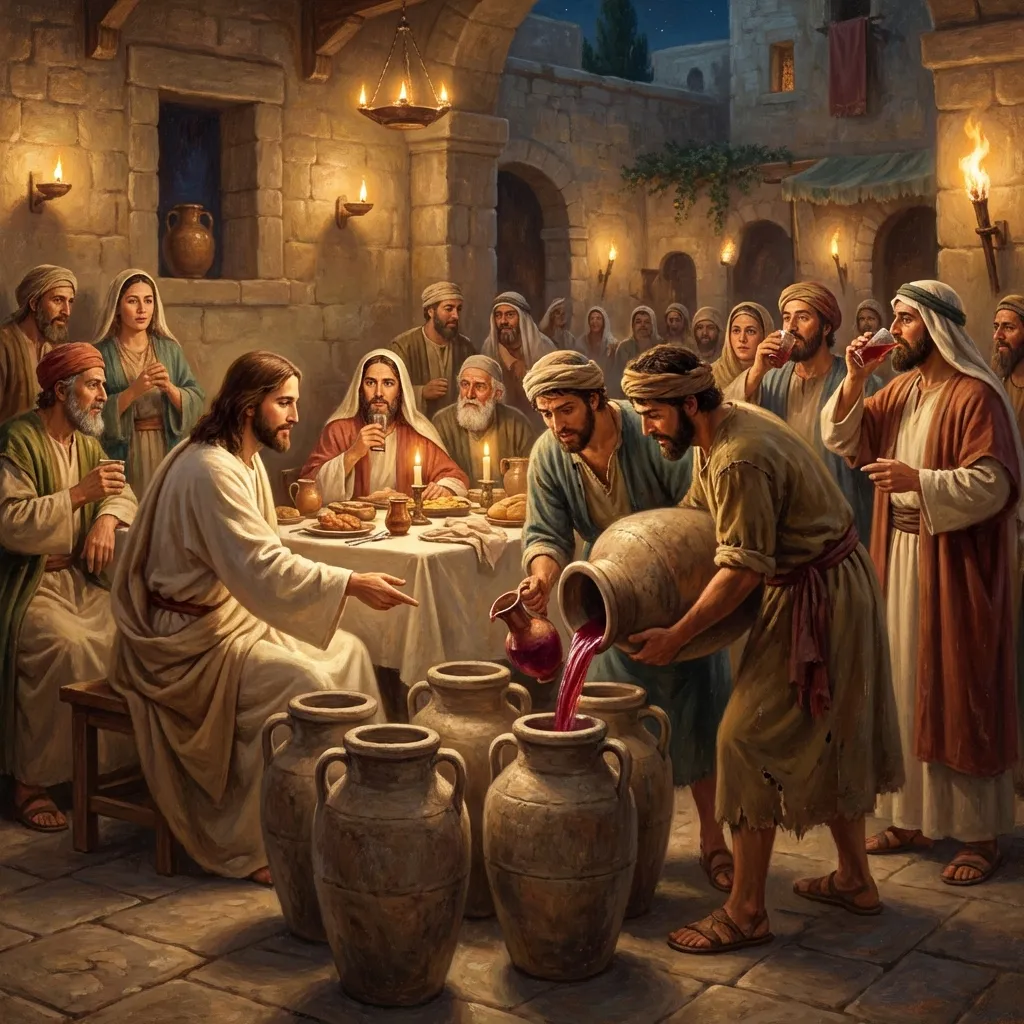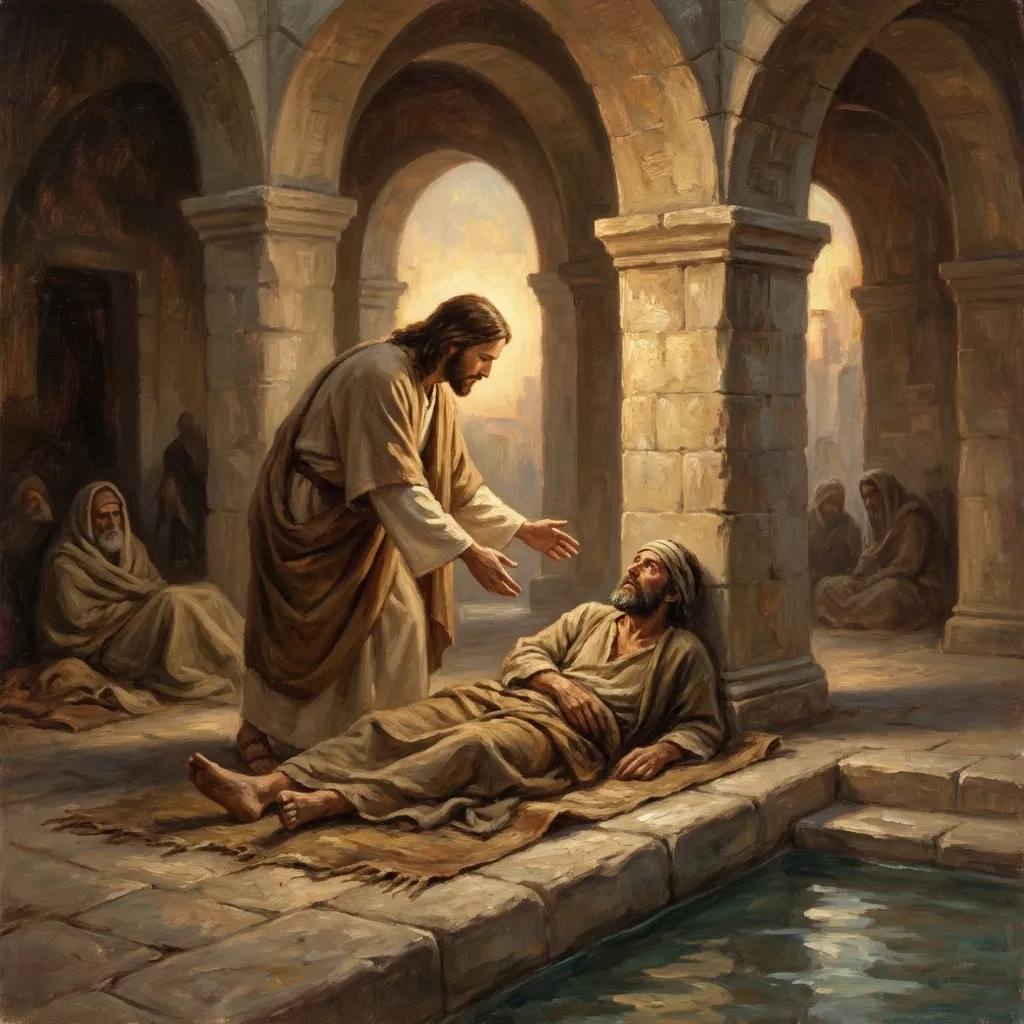
As Jesus walked through Jerusalem near the Temple, He noticed a man who had been blind from his birth. In the ancient world, congenital blindness was regarded as an absolute, irreversible biological finality. This encounter in John 9 triggered one of the most dramatic confrontations in scripture, demonstrating Christ as the Light of the World who opens both physical eyes and spiritual hearts.
1. The Problem of Pain: Retribution vs Revelation
Upon seeing the blind beggar, the disciples immediately defaulted to cold theological debate: "Rabbi, who sinned, this man or his parents, that he was born blind?" (John 9:2). Contemporary rabbinic thought held that tragedy was always a direct punitive retribution for specific sins. Jesus shattered their judgmental fatalism: "Neither this man nor his parents sinned, but this happened so that the works of God might be displayed in him." Human suffering is not an equation of karma; in the hands of God, it is an arena for divine redemption.
2. The Chemistry of Creation: Dust and Saliva
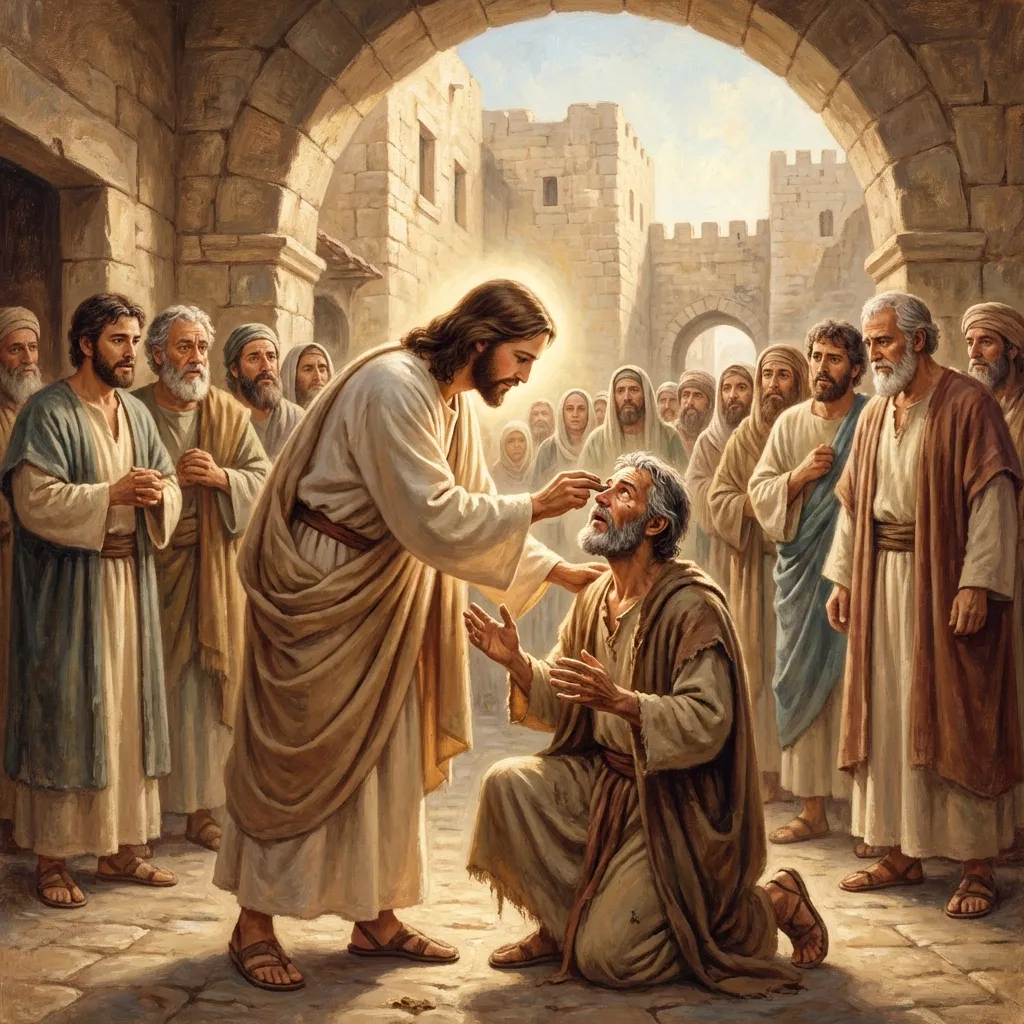
Jesus spat on the dry ground, made mud with the saliva, and smeared it across the blind man's empty eyes. This physical act echoed Genesis 2:7, where God formed Adam from the dust of the earth. The Creator who originally formed the human body was fashioning new optic nerves and irises from clay. Jesus then commanded him: "Go, wash in the Pool of Siloam" (this word means 'Sent'). The blind beggar had to navigate the bustling stone staircases of Jerusalem with mud smeared on his face. He obeyed, washed, and came home seeing.
3. The Interrogation: An Unshakeable Testimony
The miracle ignited an ecclesiastical storm. The Pharisees convened a court of inquiry because Jesus had kneaded clay on the Sabbath. They cross-examined the man's terrified parents and badgered the healed beggar, insisting that Jesus was a sinner. The unschooled beggar offered an immortal defense that silenced their intellectual arrogance: "Whether he is a sinner or not, I don't know. One thing I do know. I was blind but now I see!" (John 9:25). An argument can be debated, but an authentic personal transformation in Christ cannot be refuted.
4. Found by the Good Shepherd
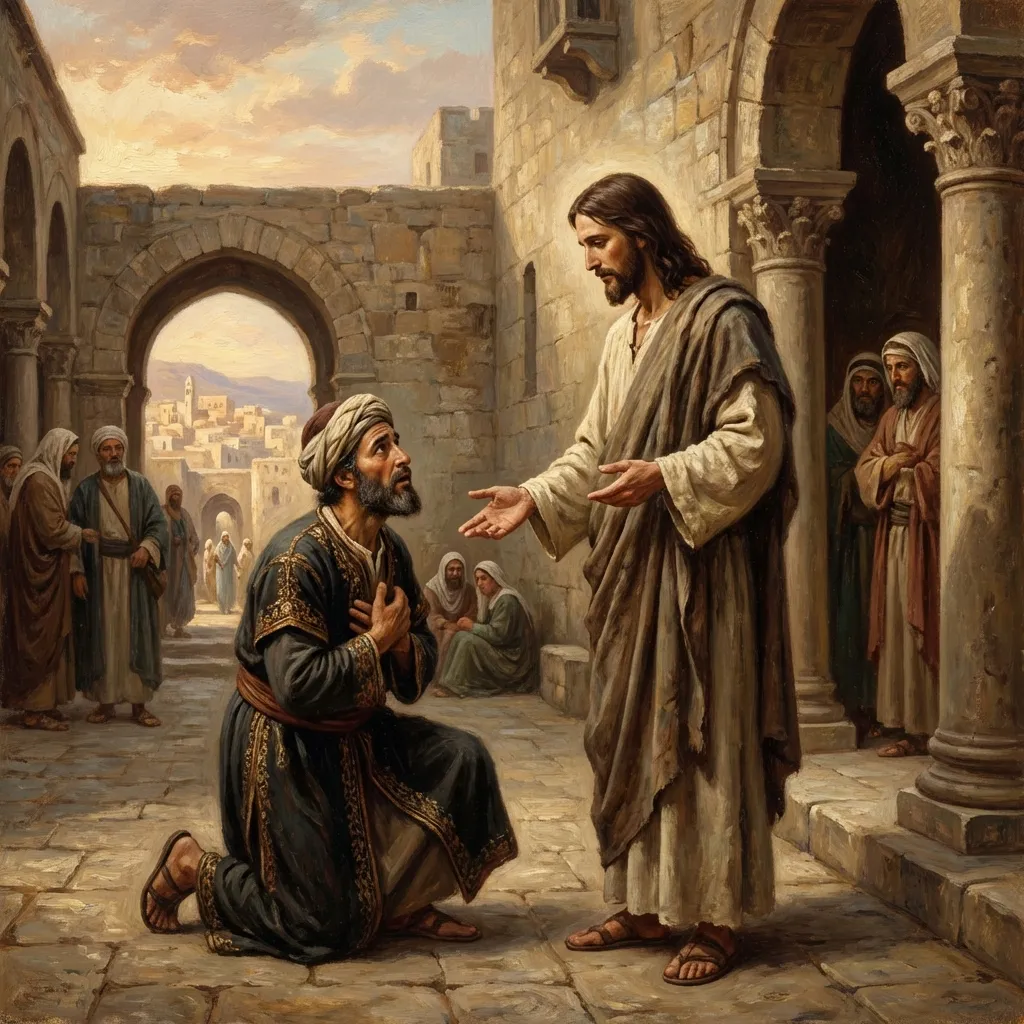
Enraged by his bold defense of Jesus, the Pharisees excommunicated the man, casting him out of the synagogue. In Jewish society, this meant commercial boycott, social ostracization, and public shame. When Jesus heard he had been cast out, He sought him out, found him, and asked: "Do you believe in the Son of Man?" When the man recognized Jesus as the Lord, he cried: "Lord, I believe," and fell to his knees in adoration.
5. The Great Reversal of Spiritual Sight
Jesus concluded: "For judgment I have come into this world, so that the blind will see and those who see will become blind." The proud religious elites who boasted in their Torah knowledge were blind to the Messiah standing before them. But the humble blind beggar, cast out by religion, received both optical sight and eternal salvation. When we acknowledge our blindness, Christ floods our soul with eternal light.
Biblical Keywords & Theological Roots
Blind from birth; a congenital, incurable condition in the ancient world considered an irreversible biological impossibility.
Siloam, meaning 'Sent' (Apostellō); the historic pool fed by the Gihon Spring, pointing prophetically to Jesus as the One sent from the Father.
To fall down, prostrate oneself in adoration, worship; the healed beggar fell down and worshipped Jesus as the Son of Man.
🔑 Key Spiritual Takeaways
- Suffering is Not Always Punitive: Jesus rejected the disciples' assumption that the man's blindness was caused by sin, revealing it was an opportunity for God's glory.
- Progressive Spiritual Sight: The man first called Jesus 'a man named Jesus', then 'a prophet', then 'from God', and finally worshipped Him as 'Lord'.
- The Power of Personal Testimony: The beggar dismantled the Sanhedrin's theology with one simple, unshakeable fact: 'One thing I do know: I was blind, but now I see!'
- Spiritual Blindness vs Physical Blindness: The Pharisees had working physical eyes but were spiritually blind; the beggar lost his physical sight but gained eternal vision.
Support Independent Biblical Research
Did this study bless you? Help support our independent bilingual research and interactive visual Bible tools.
⚡ Fast Facts
- Unprecedented Miracle: The healed man boldly told the Sanhedrin: 'Nobody has ever heard of opening the eyes of a man born blind' (John 9:32).
- Sabbath Clay-Making: Jesus spat on the ground and made mud, directly violating rabbinic prohibitions against kneading and healing on the Sabbath.
- Pool of Siloam Discovery: In 2004, archaeologists unearthing a sewer pipe in Jerusalem discovered the original stone steps of the Pool of Siloam.
- Excommunication: The healed man was officially cast out (excommunicated) from the synagogue for refusing to call Jesus a sinner.
❓ Frequently Asked Questions (FAQs)
Why did the disciples ask whether this man or his parents sinned?
First-century Jewish theology widely assumed that personal suffering and birth defects were direct punishments for specific sins, either committed by parents (Exodus 20:5) or prenatal sin committed in the womb. Jesus emphatically rejected this karmic view, declaring that God uses human frailty to display His redemptive glory.
Why did Jesus use mud made of saliva to heal his eyes?
In Genesis 2:7, God formed humanity from the dust of the ground. By using dust mixed with His own saliva to create new optical tissue, the Son of God re-enacted original creation. Furthermore, washing in the Pool of Siloam ('Sent') tested the man's obedient faith.
What happened to the man after he was cast out of the synagogue?
Hearing that he had been excommunicated, Jesus went out to find him personally (John 9:35). In the ancient world, excommunication meant social and economic ruin. Jesus met him in his rejection, revealed Himself as the Son of Man, and welcomed him into the eternal family of God.