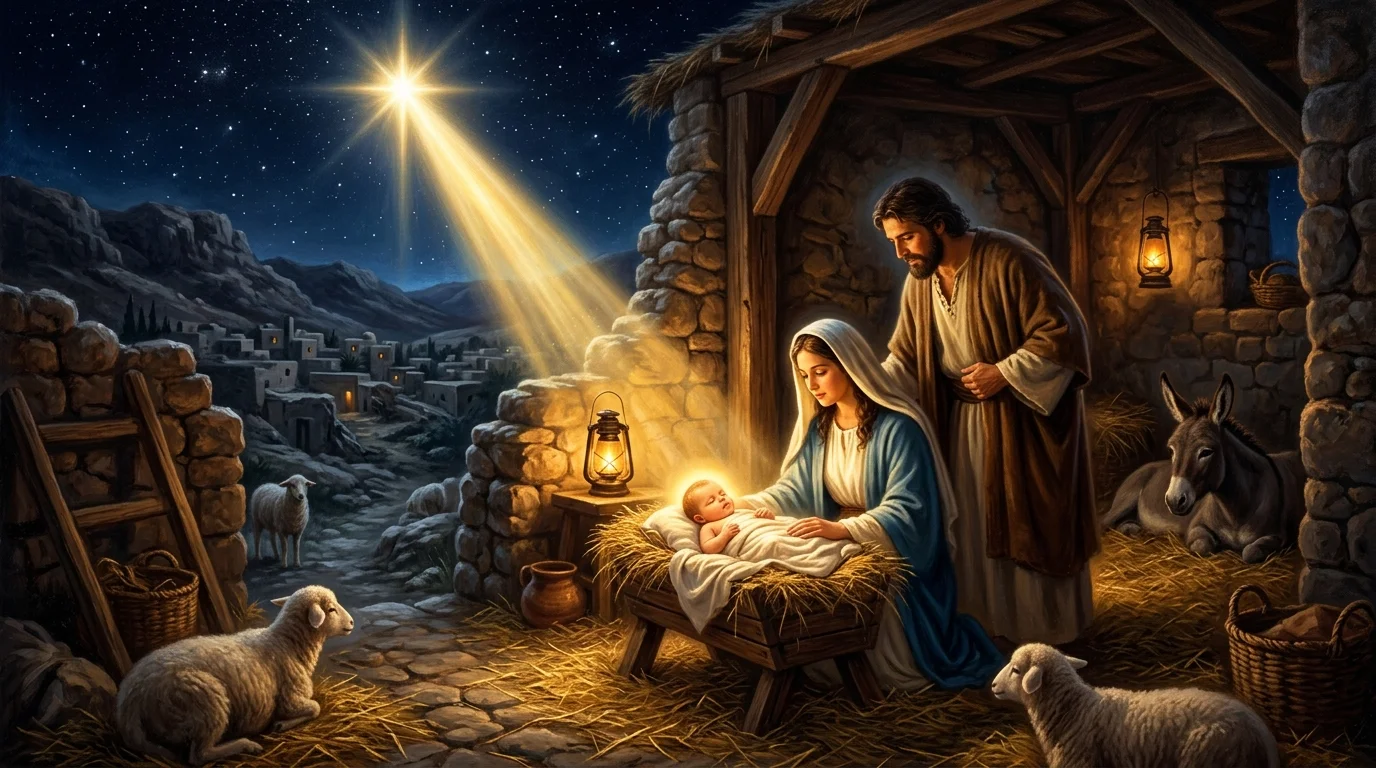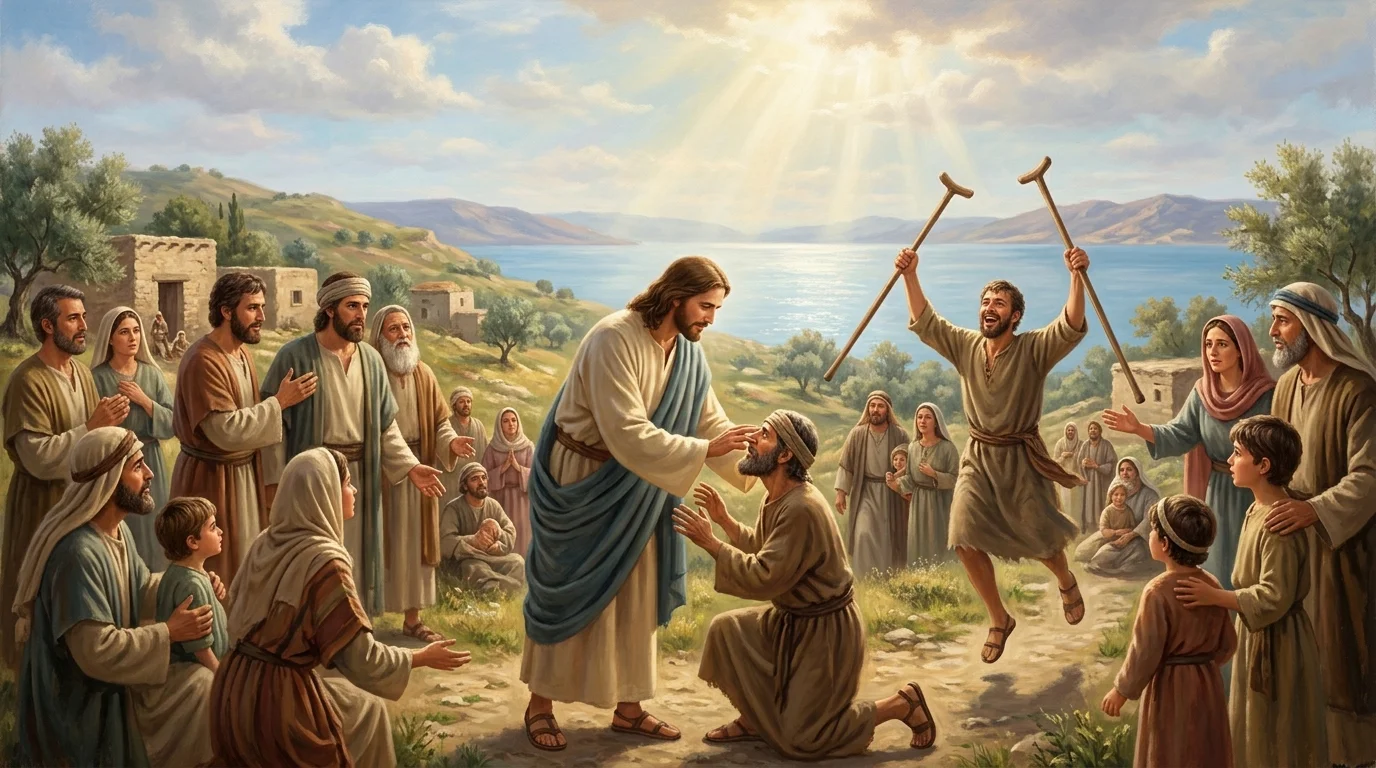
"In the past he humbled the land of Zebulun and the land of Naphtali, but in the future he will honor Galilee of the nations, by the Way of the Sea, beyond the Jordan—The people walking in darkness have seen a great light; on those living in the land of deep darkness a light has dawned."
"Leaving Nazareth, he went and lived in Capernaum, which was by the lake in the area of Zebulun and Naphtali—to fulfill what was said through the prophet Isaiah: 'Land of Zebulun and land of Naphtali, the Way of the Sea, beyond the Jordan, Galilee of the Gentiles—the people living in darkness have seen a great light...'"
In Isaiah 9:1-2, the prophet delivered a dazzling oracle of redemption to an abandoned borderland: 'The people walking in darkness have seen a great light; on those living in the land of deep darkness a light has dawned.' Matthew 4:12-16 identifies Jesus' public ministry in Galilee as the precise geographical and spiritual fulfillment of this ancient promise, demonstrating God's sovereign delight in bringing glorious salvation to the most despised corners of the earth.
1. The Historical Scars of Zebulun and Naphtali
In 732 BC, the northern tribal regions of Zebulun and Naphtali suffered catastrophic devastation. King Tiglath-Pileser III of Assyria swept down from Damascus, leveled the northern fortified cities of Hazor and Megiddo, and carried the northern tribes into brutal exile (2 Kings 15:29). For centuries thereafter, this frontier region was flooded with foreign colonists, becoming known disparagingly as 'Galilee of the Gentiles' (*Galil hag-Goyim*). The aristocratic elites of Jerusalem viewed Galileans as uncultured, religiously compromised peasants. Yet through Isaiah, God made an astonishing promise: the very land that first tasted the gloom of judgment would be the very first to behold the blazing dawn of the Messiah!
2. The Relocation to Capernaum: Matthew 4
When Jesus began His earthly ministry, He did not establish His headquarters in the imperial capital of Rome, nor in the philosophical academy of Athens, nor even in the temple city of Jerusalem. After His hometown of Nazareth rejected Him, Jesus 'went and lived in Capernaum, which was by the lake in the area of Zebulun and Naphtali—to fulfill what was said through the prophet Isaiah' (Matthew 4:13-14). Capernaum was a bustling fishing and trade town situated right along the Via Maris (Way of the Sea), the international highway connecting Egypt with Damascus. By planting His ministry here, Jesus positioned the Gospel at the crossroads of the nations.
3. The Nature of the Great Light
Isaiah describes humanity's condition without Christ as living in 'the shadow of death' (*tsalmaveth*). It was not merely physical poverty or political oppression, but profound spiritual blindness, demonic oppression, and estrangement from Yahweh. Into this impenetrable gloom, Jesus stepped forth not merely bringing light, but being the Light Himself! In Galilee, Jesus cast out demons with a single word, unstopped deaf ears, cleansed lepers, and raised Jairus' daughter from the dead. The glory of God tabernacled among fishermen, tax collectors, and outcasts.
4. Breaking the Yoke of Oppression
Isaiah 9 continues by connecting the dawn of light to the shattering of a tyrannical yoke: 'For as in the day of Midian’s defeat, you have shattered the yoke that burdens them, the bar across their shoulders, the rod of their oppressor' (Isaiah 9:4). Just as Gideon's tiny army of 300 broke the Midianite horde through flashing torches in clay jars (Judges 7), so Jesus broke the crushing spiritual yoke of Satan and the condemning burden of legalism not through military legions, but through the humble proclamation of grace and truth.
5. An Everlasting Dawn for All Nations
The dawn that broke over the Sea of Galilee 2,000 years ago was never meant to stay confined to Palestine. Jesus declared to His Galilean disciples: 'You are the light of the world... let your light shine before others' (Matthew 5:14-16). He commissioned them from a Galilean mountaintop to go and make disciples of all nations (Matthew 28:16-20). Today, the Light of Galilee continues to penetrate the darkest corridors of human despair, grief, and sin, bringing life, joy, and eternal salvation to all who look to Him.
Biblical Keywords & Theological Roots
Light, dawn of divine deliverance, spiritual illumination dispelling the deepest darkness of sin and pagan ignorance.
Darkness, obscurity, state of spiritual blindness and death resulting from estrangement from God.
Galilee ('circuit / ring'); frontier region bordering pagan territories, historically despised by Judean elites.
Ancient Near Eastern & Archaeological Context
In the 8th century BC, the northern kingdom of Israel was crushed by the brutal Assyrian war machine. Zebulun and Naphtali, guarding the vulnerable northern passes, bore the initial brunt of deportation and devastation. Pagans from across Mesopotamia were forcibly resettled there, creating a culturally mixed population viewed with contempt by southern Judeans ('Can any good thing come out of Nazareth?' John 1:46). Yet Isaiah foretold that the very region that drank the first dregs of judgment would be crowned with the dawn of the Messianic Light.
🔑 Key Spiritual Takeaways
- God deliberately directs His brightest gospel revelation to the places and people considered most degraded and hopeless by human standards.
- Spiritual darkness is not dispelled by political power or legalistic moralism, but exclusively by the personal entrance of Jesus the True Light.
- Your geographical, social, or generational background cannot hinder God's sovereign grace from transforming you into a vessel of light.
- The Gospel is inherently global; beginning in despised Galilee, Christ signaled that salvation was destined for all Gentile nations.
Support Independent Biblical Research
Did this study bless you? Help support our independent bilingual research and interactive visual Bible tools.
⚡ Fast Facts
- First Invaded, First Redeemed: The northern tribal territories of Zebulun and Naphtali were the very first to be devastated and exiled by the Assyrian empire under Tiglath-Pileser III in 732 BC.
- Geographical Fulfilment: Jesus made Capernaum in Galilee His ministerial headquarters, fulfilling Isaiah 9:1-2 to the exact geographical coordinates (Matthew 4:13-16).
- Galilee of the Gentiles: Named 'Galilee of the Gentiles' (*Galil hag-Goyim*) because centuries of intermarriage and Greek trade made it a melting pot despised by strict Jerusalem purists.
- Birthplace of the Apostles: With the exception of Judas Iscariot, all of Jesus' original twelve apostles were recruited from Galilee.
❓ Frequently Asked Questions (FAQs)
Why did Jesus move His headquarters from Nazareth to Capernaum?
After being rejected in His hometown of Nazareth (Luke 4:28-30), Jesus relocated to Capernaum on the Sea of Galilee. Matthew 4:13-16 explicitly explains this move as the direct fulfillment of Isaiah 9:1-2, placing the Great Light squarely in the tribal territories of Zebulun and Naphtali.
What does 'Galilee of the Gentiles' signify for the scope of Christ's mission?
By beginning His public ministry along the ancient trade route (*Via Maris*) connecting Egypt, Damascus, and Mesopotamia, Jesus proclaimed that His salvation was not an insular Jewish secret, but an international light destined to illuminate every Gentile nation sitting in the shadow of death.
How does John's Gospel connect to Isaiah's light prophecy?
John opens his Gospel echoing Isaiah: 'The light shines in the darkness, and the darkness has not overcome it' (John 1:5). Later, Jesus boldly declared in Jerusalem: 'I am the light of the world. Whoever follows me will never walk in darkness, but will have the light of life' (John 8:12).