"The stone the builders rejected has become the cornerstone; the Lord has done this, and it is marvelous in our eyes... See, I lay a stone in Zion, a tested stone, a precious cornerstone for a sure foundation... he will be a stone that causes people to stumble and a rock that makes them fall."
"Jesus said to them, 'Have you never read in the Scriptures: The stone the builders rejected has become the cornerstone; the Lord has done this, and it is marvelous in our eyes?' ... Jesus is 'the stone you builders rejected, which has become the cornerstone.'"
Psalm 118:22 contains one of the most remarkable architectural metaphors in sacred history: 'The stone the builders rejected has become the cornerstone; the Lord has done this, and it is marvelous in our eyes.' Re-echoed by Isaiah and claimed directly by Jesus during Passion Week, this prophecy establishes that humanity's catastrophic rejection of God's Messiah is the very foundation upon which God erected the eternal temple of salvation.
1. The Temple Quarry and the Rejected Ashlar
The imagery derives from the construction of ancient sacred architecture. When stonecutters excavated limestone from the quarries beneath Jerusalem, each block was chiseled to exact proportions before arriving at the Temple Mount. Legend and parabolic history record that an oddly shaped stone arrived that did not match the blueprints of the human masons. Deeming it useless, the builders discarded it into the Kedron Valley where weeds overgrown it. However, when the foundation reached the crucial angle where two grand walls met, no ordinary block could bear the stress. The architects recalled the rejected stone, hauled it up, and discovered it was the perfectly engineered cornerstone destined to anchor the entire structure.
2. Passion Week Confrontation: Matthew 21
Just days before His crucifixion, Jesus confronted the chief priests and elders in the Temple courts. After telling the Parable of the Wicked Tenants who murdered the vineyard owner's son, Jesus looked intensely at the Jewish leadership and quoted Psalm 118:22: 'Have you never read in the Scriptures: The stone the builders rejected has become the cornerstone?' (Matthew 21:42). He applied the text directly to Himself and the Sanhedrin. The religious leaders were the 'builders' charged with cultivating God's kingdom; Jesus was the stone. By rejecting Him, they fulfilled the very scriptures they claimed to protect.
3. Isaiah's Tested Stone and Rock of Stumbling
Psalm 118 does not stand alone. In Isaiah 28:16, Yahweh declared: 'See, I lay a stone in Zion, a tested stone, a precious cornerstone for a sure foundation; the one who relies on it will never be stricken with panic.' Yet in Isaiah 8:14, the prophet warned that this same holy sanctuary would become 'a stone that causes people to stumble and a rock that makes them fall.' The Messiah possesses a double destiny: to those who believe, He is absolute stability, peace, and eternal refuge; to those who insist on their self-righteousness, He is an unavoidable stumbling block over which they shatter into ruin.
4. Peter's Apostolic Indictment: Acts 4
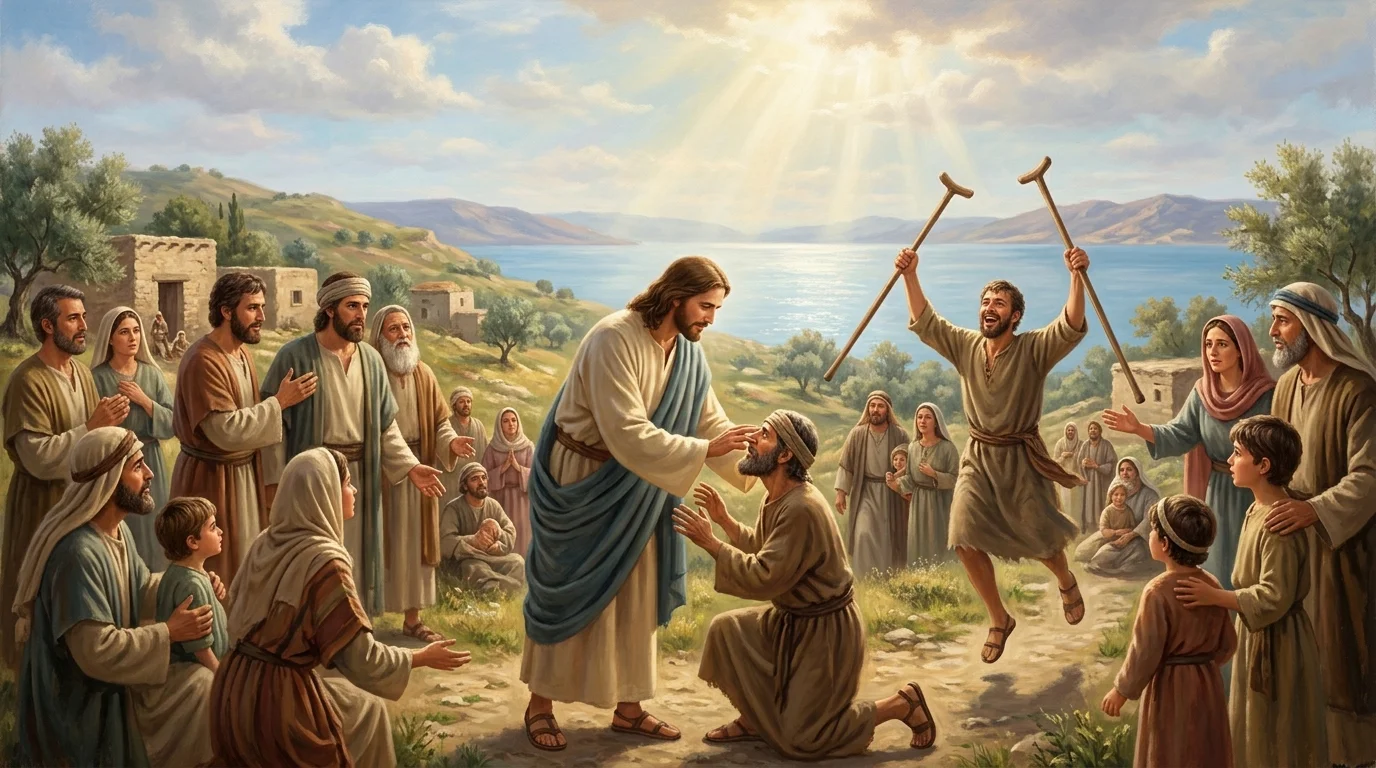
Following the healing of the lame man at the Beautiful Gate, Peter and John were dragged before the very Sanhedrin that had condemned Jesus. Filled with the Holy Spirit, Peter boldly leveled Psalm 118 against the high priest Caiaphas: 'Jesus is the stone you builders rejected, which has become the cornerstone. Salvation is found in no one else, for there is no other name under heaven given to mankind by which we must be saved' (Acts 4:11-12). The stone they executed had been raised by God to the absolute pinnacle of cosmic authority!
5. The Living Temple of God
In 1 Peter 2:4-6, the apostle expands this metaphor to encompass the entire body of Christ: 'As you come to him, the living Stone—rejected by humans but chosen by God and precious to him—you also, like living stones, are being built into a spiritual house to be a holy priesthood.' Every believer is cemented into this indestructible superstructure. Human empires rise and crumble, earthly institutions fracture, but the spiritual temple anchored upon Jesus Christ, the rejected and vindicated Cornerstone, will stand secure for all eternity.
Biblical Keywords & Theological Roots
Stone, rock; the foundational element of God's covenantal temple and sanctuary.
Cornerstone, chief angle stone that sets the alignment, stability, and geometry for an entire building.
Stumbling block, obstacle over which prideful men trip and fall into catastrophic ruin.
Ancient Near Eastern & Archaeological Context
In ancient Near Eastern monumental architecture, the cornerstone (*rosh pinnah*) was the largest, most carefully squared and perfectly tested ashlar block quarrymen produced. Placed at the base corner, it joined two walls and dictated the alignment, plumb line, and structural integrity of the entire edifice. In Psalm 118, the psalmist poetically recalls quarry workers setting aside a seemingly irregular stone, only to discover it was the exact capstone required to anchor the pinnacle of the Temple.
🔑 Key Spiritual Takeaways
- God's choice of Messiah deliberately overturns human architectural wisdom; what man rejects, God crowns as supreme.
- No one remains neutral toward Jesus; He is either the unshakeable foundation of your eternal hope or the rock that shatters your self-righteousness.
- The Church is not an institution built on human charisma, but a living spiritual temple anchored eternally upon the resurrected Cornerstone.
- Rejection by worldly authorities does not invalidate divine calling; it often precedes God's highest vindication.
Support Independent Biblical Research
Did this study bless you? Help support our independent bilingual research and interactive visual Bible tools.
⚡ Fast Facts
- Passover Hallel Anthem: Psalm 118:22 was sung annually at Passover while lambs were being slaughtered in the Jerusalem Temple courts.
- Apostolic Cornerstone Theme: Cited more frequently in the New Testament than almost any other Old Testament prophecy (Matthew 21:42, Mark 12:10, Luke 20:17, Acts 4:11, 1 Peter 2:7).
- The Builders' Fatal Error: The Jewish Sanhedrin—Israel's authorized master builders—examined Jesus and rejected Him as unsuited for their nationalistic temple.
- Dual Destiny: Peter explains (1 Peter 2:6-8) that Christ is either a precious cornerstone of salvation or an inescapable crushing rock of judgment.
❓ Frequently Asked Questions (FAQs)
Who were the 'builders' who rejected the cornerstone?
Jesus explicitly identified the Jewish religious establishment—the chief priests, scribes, Pharisees, and elders of the Sanhedrin—as the builders (Matthew 21:45). Entrusted with guiding Israel's spiritual development, they rejected God's Messiah because He did not fit their worldly political ambitions.
What does Jesus mean by saying the stone will crush whoever it falls on?
In Luke 20:18, Jesus explains two stages of encountering Him: whoever stumbles over this stone in unbelief is broken in conviction and judgment; but on whomsoever the stone falls in final eschatological wrath, it will grind him to dust like the giant rock in Daniel 2:34-35 that pulverizes earthly empires.
How does Peter use this prophecy in 1 Peter 2?
Peter weaves together three Old Testament stone prophecies (Isaiah 28:16, Psalm 118:22, Isaiah 8:14) to demonstrate that believers who come to Christ are living stones being built into a holy spiritual priesthood, whereas those who disobey the Word find Him an insurmountable rock of offense.