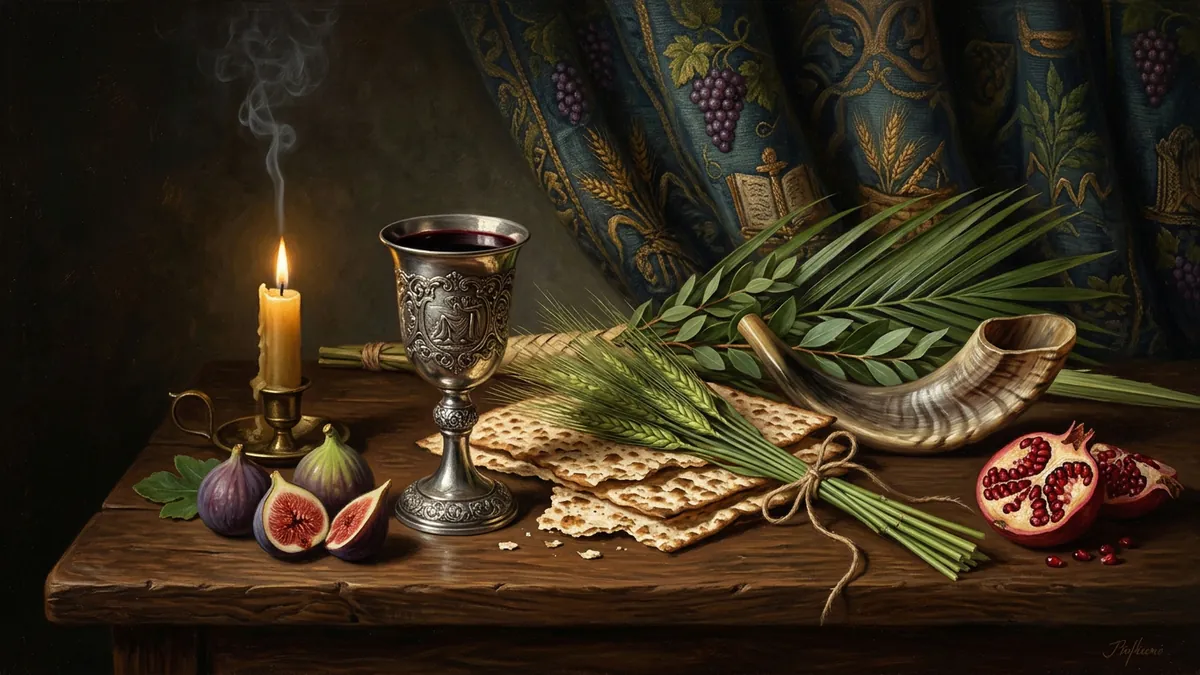
In the twenty-third chapter of Leviticus, God summoned Moses to Mount Sinai and unveiled seven sacred festivals that were to define the spiritual heartbeat and agricultural calendar of Israel. The Hebrew text does not refer to them merely as historical holidays (chag), but specifically designates them as Moedim—divinely appointed appointments—and Miqra Qodesh (holy convocations or dress rehearsals). While these feasts commemorated historical deliverances and aligned with the harvest cycles of the Promised Land, the Apostle Paul reveals their ultimate mystery in Colossians 2:16–17: they are "a shadow of things to come; but the body is of Christ." The seven feasts form God’s master prophetic calendar for redemptive history.
The 7 Feasts
Spring Fulfillment
Summer Interval
Fall Fulfillment
1. The Complete Master Chart of the 7 Feasts
The seven feasts divide into two distinct clusters separated by a long, warm summer harvest:
2. The Spring Feasts: Precision Fulfillment at Christ's First Coming
The theological brilliance of Scripture shines in the mathematical and chronological precision with which Jesus fulfilled the four spring feasts during Passion Week in AD 30:
- Passover (Nisan 14): On the tenth day of Nisan, the Passover lamb was selected and inspected in Jerusalem for blemishes. On Nisan 10, Jesus entered Jerusalem on a donkey during the Triumphal Entry and underwent four days of public theological cross-examination in the Temple by Pharisees, Sadducees, and Herodians, emerging blameless (1 Peter 1:19). At 3:00 PM on Nisan 14—the precise moment the High Priest slaughtered the Passover lamb in the Temple—Jesus cried from the Cross, "It is finished!" (Tetelestai), giving up His spirit as the true Lamb of God.
- Unleavened Bread (Nisan 15): Beginning at sunset as the high Sabbath commenced, bread without yeast (a universal biblical symbol of sin and corruption) was eaten. Christ's holy, sinless physical body was laid in Joseph of Arimathea’s tomb, experiencing no biological corruption (Acts 2:27).
- Firstfruits (Sunday after Passover): Leviticus 23:11 commanded the priest to wave the first sheaf of the spring barley harvest on the day after the Sabbath (Sunday morning). On that exact Sunday morning, Jesus burst from the tomb in bodily resurrection, becoming "the firstfruits of them that slept" (1 Corinthians 15:20), guaranteeing the future harvest of all believers!
- Pentecost / Shavuot (50 Days Later): Exactly fifty days after the waving of the Firstfruits sheaf, the High Priest waved two loaves of bread baked with leaven (Leviticus 23:17). Why with leaven? Because these loaves represented the Church—Jew and Gentile—redeemed sinners still battling indwelling sin, yet accepted by grace. On that exact morning, the Holy Spirit fell upon the 120 disciples in Acts 2!
3. The Autumn Feasts: The Blueprint for Christ's Second Coming
Between the fourth feast (Pentecost) and the fifth feast (Trumpets) lies an extended summer gap of nearly four months. This agricultural intermission mirrors the Church Age—the dispensation of grace spanning two millennia during which the Gospel is proclaimed to all nations.
Just as the four spring feasts were fulfilled literally and sequentially to the exact day, biblicists recognize that the three autumn feasts will be fulfilled with identical literal precision at the consummation of the age:
- The Feast of Trumpets (Yom Teruah): The only feast occurring on the new moon (requiring two witnesses to sight the crescent sliver), Yom Teruah is characterized by the blasting of the ram’s horn (shofar). In ancient rabbinic tradition, the 100th blast of the shofar was known as the Tekiah Gedolah—the "Great Trumpet" or "Last Trump." Paul employs this exact terminology in 1 Corinthians 15:52 ("at the last trump") and 1 Thessalonians 4:16 to describe the sudden rapture and resurrection of the saints.
- The Day of Atonement (Yom Kippur): The most solemn day on the Hebrew calendar, featuring strict fasting, national confession, and the High Priest entering the Holy of Holies behind the veil with sacrificial blood. This prefigures the climax of the Great Tribulation when the surviving remnant of Israel repents: "They will look on Me whom they pierced. Yes, they will mourn for Him as one mourns for his only son" (Zechariah 12:10; Romans 11:26).
- The Feast of Tabernacles (Sukkot): The climax of joy and the final harvest of autumn. For seven days, Israel dwelled in outdoor brush arbor booths (sukkot), celebrating divine protection and the ingathering of the vintage and olive press. Prophetic scripture declares that in the Millennial Kingdom, Jesus the King of kings will establish His throne in Jerusalem, and all nations will travel annually to celebrate the Feast of Tabernacles (Zechariah 14:16–19; Revelation 21:3).
4. Spiritual Application for Believers Today
Understanding the Moedim transforms Christian Bible study from viewing the Old Testament as an obsolete archive into recognizing it as the breathtaking architectural blueprint of redemption. We do not celebrate the feasts under the bondage of legalistic ceremonial obligation (Colossians 2:16–17; Galatians 4:9–10). Rather, we rejoice that our Passover has been sacrificed for us (Christ), our Unleavened Bread feeds our souls (the Word), our Firstfruits has risen (the Resurrection), our Pentecost has empowered us (the Holy Spirit), and we eagerly await the sovereign sound of the trumpet that will summon us to the eternal marriage supper of the Lamb.
Biblical Keywords & Theological Roots
Appointed time, divine appointment, sacred season; fixed celestial rendezvous scheduled by God on the biblical calendar (Lev 23:2).
Holy convocation, public assembly, dress rehearsal; sacred gathering where Israel rehearsed prophetic shadows of the coming Messiah.
Passover; to spring over, spare, protect; the foundational redemption feast where the blood of the innocent lamb sheltered Israel from death.
Booths, tabernacles, temporary shelters; the joyful harvest feast celebrating God's wilderness presence and foreshadowing Christ tabernacling with man.
Support Independent Biblical Research
Did this study bless you? Help support our independent bilingual research and interactive visual Bible tools.
⚡ Fast Facts
- The 7 feasts of Leviticus 23 are called 'Moedim' in Hebrew, meaning divinely scheduled appointments on God's prophetic calendar.
- Jesus was crucified on the exact day and hour of Passover (Nisan 14 at 3 PM) when the sacrificial lambs were being slaughtered in the Temple.
- Jesus rose from the dead on the exact Sunday of Firstfruits (Yom HaBikkurim), becoming the firstfruits of the resurrection (1 Cor 15:20).
- The Feast of Tabernacles (Sukkot) prophetically prefigures Christ's millennial reign on earth when God tabernacles among men (Rev 21:3).
❓ Frequently Asked Questions (FAQs)
How do the 7 feasts outline God's prophetic timeline?
The 7 feasts provide a chronological roadmap of redemption: the four Spring feasts (Passover, Unleavened Bread, Firstfruits, Pentecost) were fulfilled to the exact day by Christ’s death, burial, resurrection, and the Holy Spirit’s outpouring. The four-month summer interval represents the present Church Age gathering a harvest of nations. The three Fall feasts (Trumpets, Atonement, Tabernacles) foreshadow future eschatological events: the Rapture, the national repentance and salvation of Israel, and Christ's Millennial Kingdom on earth.
Why were two loaves baked WITH LEAVEN offered on Pentecost?
While leaven was strictly forbidden during Passover and Unleavened Bread as a symbol of sin, Leviticus 23:17 specifically commanded that the two loaves offered on Pentecost (Shavuot) be baked with leaven. Prophetically, these two loaves prefigured the New Testament Church comprised of two distinct peoples—Jews and Gentiles. Unlike the sinless Christ (the unleavened bread), believers are redeemed sinners who still battle indwelling fleshly imperfections, yet are made holy and accepted through the Spirit's fire.
Why did Jesus attend the Feast of Tabernacles in John 7?
In John 7, Jesus attended the Feast of Tabernacles during which the priests performed the dramatic daily Water Libation ceremony, pouring water from the Pool of Siloam onto the Temple altar. On the 'great day of the feast,' Jesus stood and proclaimed aloud: 'If anyone thirsts, let him come to Me and drink. He who believes in Me, out of his heart will flow rivers of living water' (John 7:37–38), publicly declaring Himself to be the ultimate spiritual fulfillment of the feast's life-giving water.