Upon arriving in Capernaum, Peter was approached by collectors of the two-drachma temple tax. In Matthew 17:24-27, this unique, quiet miracle demonstrates Christ's sovereign omniscience over marine life, His voluntary surrender of royal privilege, and His miraculous provision for everyday financial duties.
1. The Temple Tax Dilemma
The collectors asked Simon Peter: "Doesn't your teacher pay the temple tax?" Originating in Exodus 30:13, every Jewish male aged twenty and older paid an annual half-shekel (equivalent to two Greek drachmas or two days' wages) for Temple sacrifices and upkeep. Peter instinctively answered 'Yes.' But when he entered the house, Jesus anticipated his question, opening a profound theological inquiry into divine sonship.
2. The Immunity of the King's Children
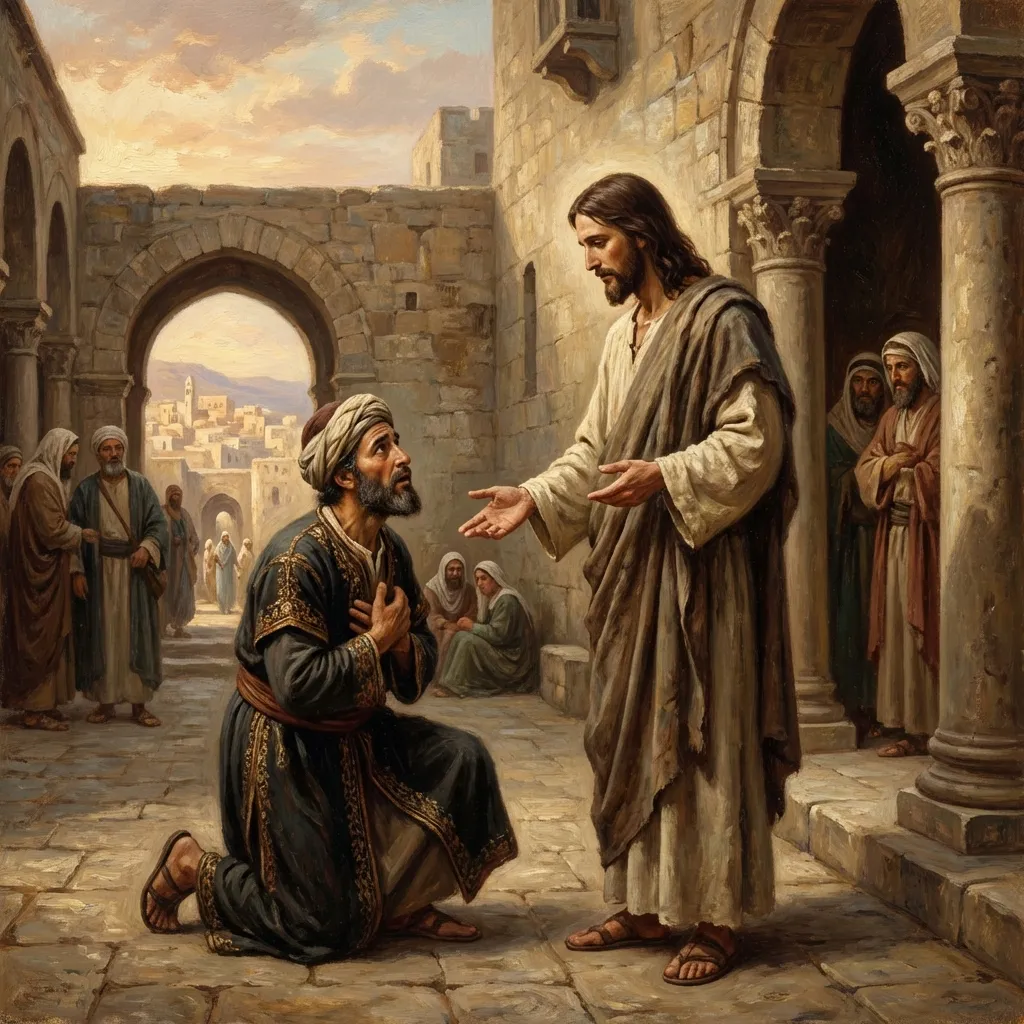
Jesus asked Simon: "From whom do the kings of the earth collect duty and taxes—from their own children or from others?" Peter replied: "From others." Jesus declared the glorious conclusion: "Then the children are exempt." As the unique, eternal Son of God, Jesus had no obligation to pay tax for His Father's house. By extension, citizens of God's Kingdom are royalty, free from spiritual bondage.
3. Waiving Rights to Prevent Stumbling
Nevertheless, Jesus uttered a master principle of Christian liberty: "But so that we may not cause offense, go to the lake and throw out your line" (Matthew 17:27). True spiritual maturity does not demand its legal rights; it willingly yields privilege in order to avoid putting a stumbling block before unsaved neighbors. Love prioritizes the spiritual good of others above personal entitlement.
4. The Hook, the Fish, and the Stater
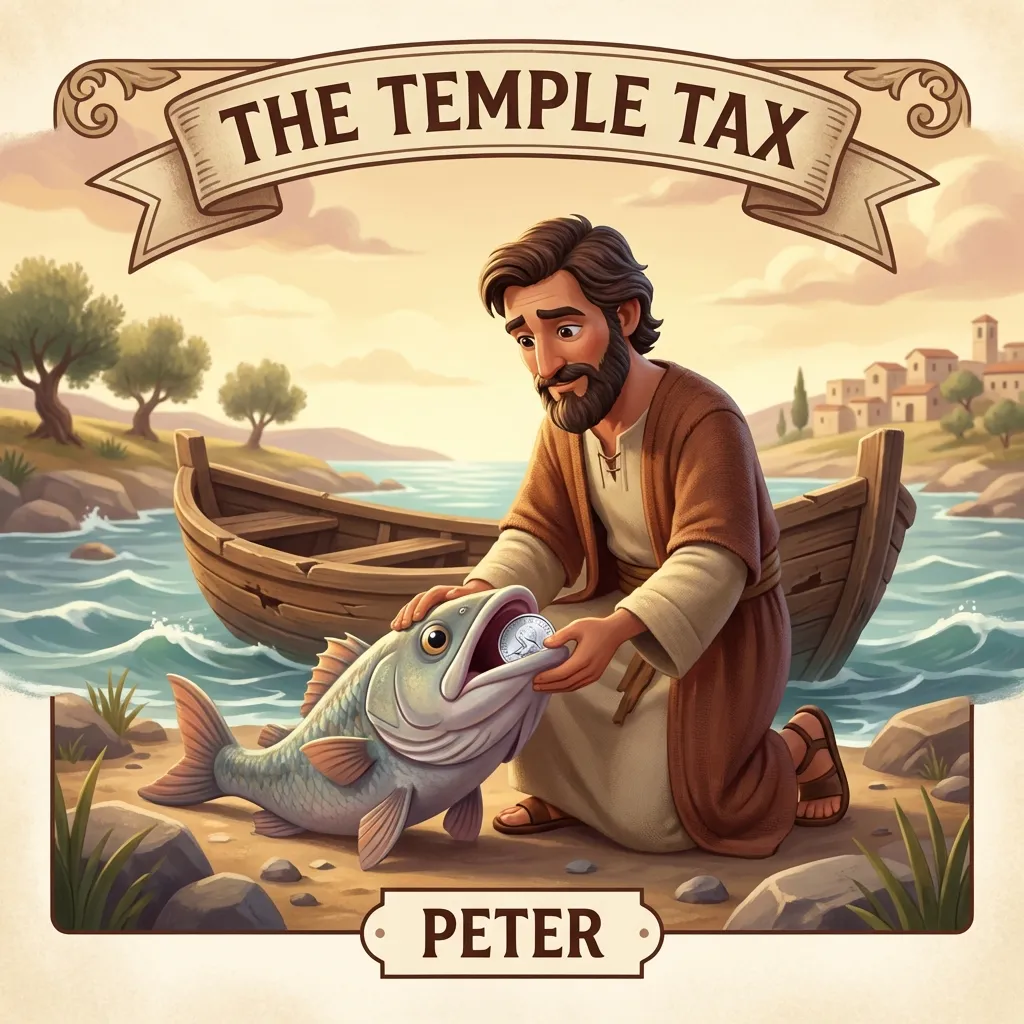
Jesus gave Peter instructions that sounded like fairy tale fiction to a professional fisherman: do not cast a commercial net; throw a single fishing line with a hook into the lake. Take the first fish that bites, open its mouth, and find a four-drachma coin (a statēr). Peter obeyed, caught the fish, and pulled a glittering silver coin from its jaws—the exact sum required to pay the temple tax for two men.
5. 'For Me and For You'
Notice Christ's beautiful instruction: "Take it and give it to them for my tax and yours." Jesus did not say 'for our tax,' preserving His distinct divine status, yet He bound His destiny intimately to Peter's. The Lord who numbers the hairs of our head knows every bill, mortgage, and tax obligation we face, and He possesses limitless creative channels to supply our needs.
Biblical Keywords & Theological Roots
Two-drachma / half-shekel Temple tax levied annually on every adult Jewish male for the upkeep of the Jerusalem Temple (Exodus 30:13).
Stater / four-drachma coin; worth exactly one full shekel—the exact legal amount required to pay the temple tax for two people (Jesus and Peter).
To cause to stumble, offend; Jesus paid the tax: 'so that we may not cause offense to them', modeling humble cultural sensitivity.
🔑 Key Spiritual Takeaways
- Royal Immunity, Gracious Concession: As the King's Son, Jesus was exempt from Temple taxes, yet willingly paid it to avoid giving needless offense to religious authorities.
- Master of Creation's Depths: Christ knows what is inside every creature; He orchestrated a fish to swallow a coin, migrate to Peter's hook, and bite at the precise second.
- Individual Divine Provision: God did not supply a treasure chest; He provided the exact coin needed for today's specific legal obligation.
- Co-Belonging with Christ: Jesus told Peter to pay the coin 'for me and for you'—identifying intimately with His disciple in grace and provision.
Support Independent Biblical Research
Did this study bless you? Help support our independent bilingual research and interactive visual Bible tools.
⚡ Fast Facts
- Unique to Matthew: This miracle is recorded exclusively in the Gospel of Matthew—appropriate for Matthew, the former tax collector.
- Exodus Origin: The half-shekel temple tax originated in Exodus 30:11-16 as an atonement ransom during census taking.
- First Fish Hooked: Jesus instructed Peter not to cast a commercial net, but to throw a single line and take the very first fish that bit.
- Exact Currency: The four-drachma stater found in the fish's mouth was the exact Tyrian shekel required by Temple authorities without requiring money changing.
❓ Frequently Asked Questions (FAQs)
Why did the tax collectors ask Peter, 'Doesn't your teacher pay the temple tax?'
This was not a civil Roman tax, but the religious half-shekel tax supporting the Jerusalem Temple. Rabbinic tradition often debated whether rabbis, priests, and holy men were exempt. The collectors were probing whether Jesus regarded Himself as loyal to Temple authority.
Why did Jesus use the analogy of kings and sons in Matthew 17:25-26?
Earthly kings collect customs from subjects, not from their own royal sons. Because the Temple was the house of His Father, Jesus, as the true Son of God, was legally exempt. Yet He waived His royal rights out of love so as not to cause stumbling.
What does this miracle teach us about God's provision for our obligations?
God cares about our secular and practical obligations, including bills and taxes. When we seek His Kingdom first, He provides creative, unexpected solutions to meet our legitimate financial responsibilities without compromise.