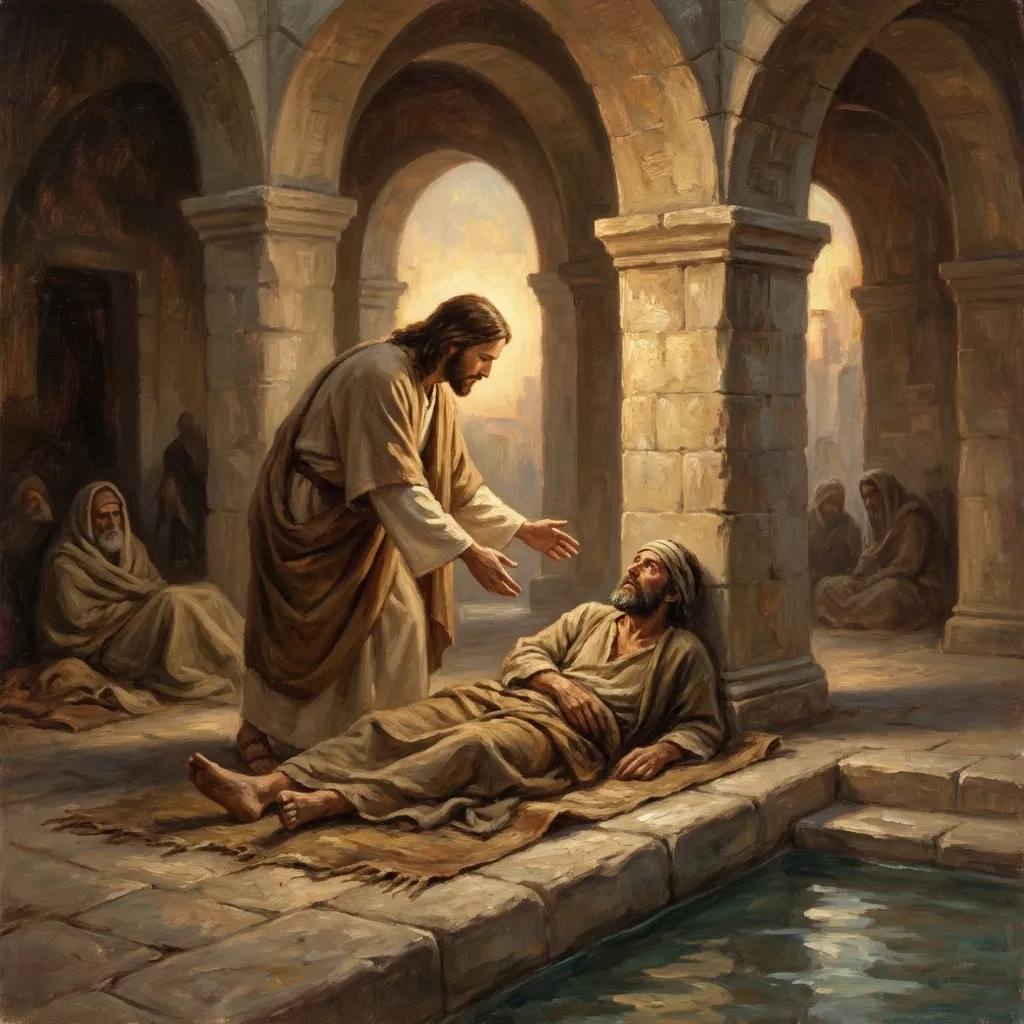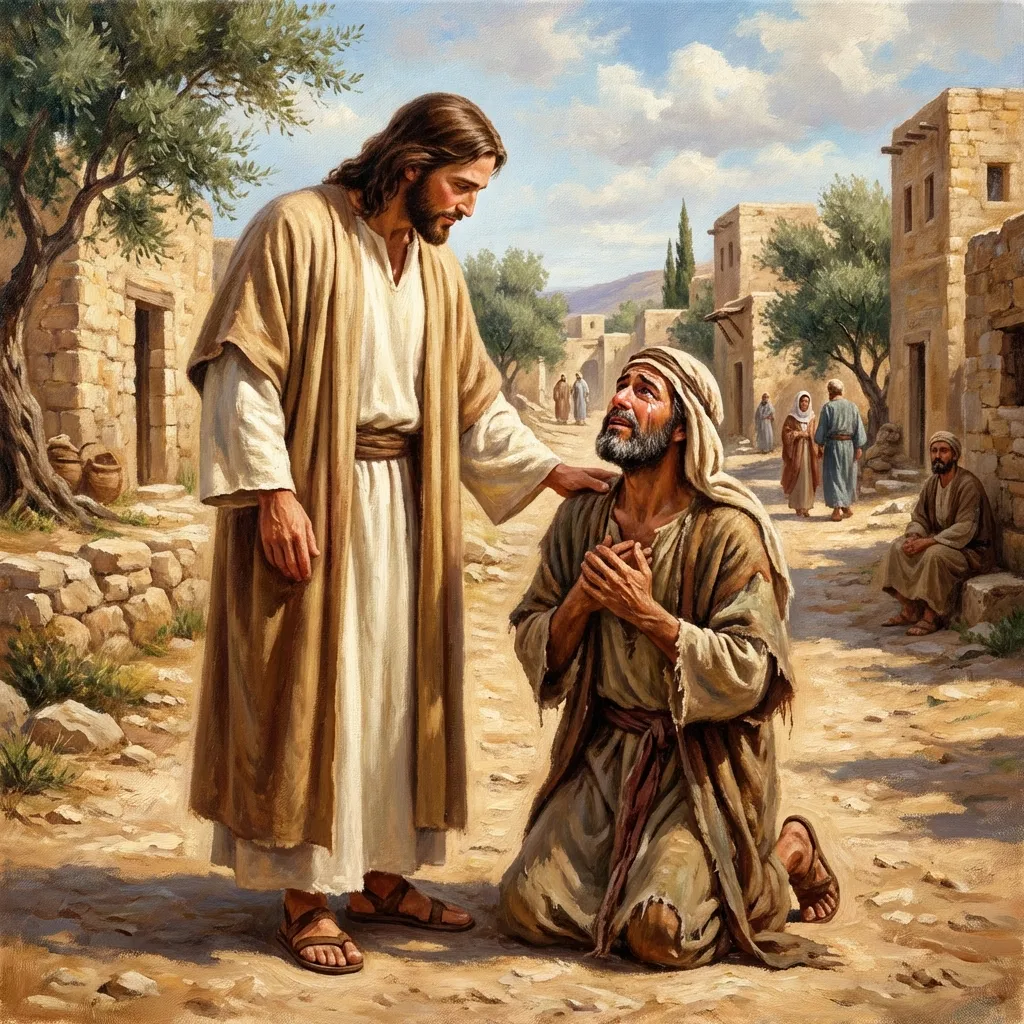
In first-century Jewish society, no condition was more dreaded or isolating than leprosy. A leper was not merely physically diseased; he was deemed legally dead, socially exiled, and spiritually cursed. In Mark 1:40-45, an untouchable leper fell on his knees before Jesus Christ, prompting a radical demonstration of divine compassion that shattered religious barriers.
1. The Living Death of Ancient Leprosy
Under the Mosaic code (Leviticus 13-14), anyone diagnosed with a malignant skin infection had to tear their clothes, let their hair hang wild, cover their mustache, and cry aloud "Unclean! Unclean!" to warn passersby. Lepers were cast out of walled cities, forced to forage in desolate valleys and tombs. Families abandoned them; friends fled from them. Over years of numbness, ulceration, and the loss of extremities, the greatest wound was not physical pain, but the devastating emotional torment of being completely untouchable.
2. The Cry of Humble Faith
Breaking social quarantine at the risk of being stoned, the leper ran and fell on his face before Jesus, begging Him: "If you are willing, you can make me clean." Notice his theology: he did not question Christ's ability; he wondered only if someone so holy would be willing to stoop to someone so vile. True prayer does not demand or bargain; it rests in reverent submission to the sovereign willingness of Christ.
3. The Touch That Conquered Defilement
Mark 1:41 records: "Moved with compassion, Jesus reached out his hand and touched him. 'I am willing,' he said. 'Be clean!'" Under the Law, if a clean person touched a leper, the clean person became unclean. But in Jesus Christ, the flow of purity is reversed! When the Holy One touches the defiled, corruption does not contaminate holiness—holiness obliterates corruption. The scales withered, dead nerves sparked to life, and fresh, smooth skin returned like that of a newborn child.
4. Restoring the Outcast to Community
Jesus immediately instructed the man: "Go, show yourself to the priest and offer the sacrifices that Moses commanded for your cleansing, as a testimony to them" (Mark 1:44). Jesus did not abolish the law; He fulfilled it. Only an authorized Levitical priest could legally declare a leper clean and reintegrate him into his family, synagogue, and community. Christ is concerned not merely with our private relief, but with our full public restoration to society.
5. Christ Takes the Leper's Exile
The healed man was so overwhelmed with joy that he could not contain himself; he blazed the news across the entire region. The story ends with a poignant reversal: the healed man returned to city life and family fellowship, while Jesus "could no longer enter a town openly but stayed outside in lonely places." On the cross, this exchange reached its cosmic culmination: Christ was cast outside the camp, bearing our spiritual leprosy, so that we who were far off might be brought into the household of God.
Biblical Keywords & Theological Roots
Leper, afflicted with Hansen's disease or disfiguring skin conditions; considered ceremonially unclean and utterly banned from human contact.
Moved with profound compassion, visceral mercy; Mark 1:41 records Jesus felt overwhelming compassion for the rejected man.
'Be cleansed!'; imperative command of divine purity transmitting instant cleansing and eradicating the defilement.
🔑 Key Spiritual Takeaways
- Faith in Divine Ability: The leper never doubted Christ's power; he said: 'If you are willing, you can make me clean'—submitting entirely to Christ's sovereign will.
- The Touch That Restores Dignity: Long before antibiotics or modern medicine, the leper had gone years without a human touch; Jesus touched him before healing him.
- Holiness is Contagious: In Christ, divine purity is stronger than corruption. Sin cannot contaminate Jesus; His holiness purifies the contaminated.
- Honor for God's Law: Jesus commanded the healed man to fulfill the Levitical inspection, verifying the miracle through official biblical channels.
Support Independent Biblical Research
Did this study bless you? Help support our independent bilingual research and interactive visual Bible tools.
⚡ Fast Facts
- Social Death: Under Leviticus 13:45-46, lepers had to tear their clothes, leave hair unkempt, cover their lower face, and shout 'Unclean! Unclean!' wherever they walked.
- The Touch of Compassion: In Jewish law, touching a leper transmitted ritual defilement; but when Jesus touched him, holiness flowed out, instantly cleansing the leprosy.
- Priestly Testimony: Jesus commanded him to show himself to the priest and offer the sacrifices prescribed by Moses (Leviticus 14) as a public testimony.
- Blazing Fame: Although Jesus told him to tell no one, the healed man joyfully proclaimed it everywhere, forcing Jesus into lonely wilderness places.
❓ Frequently Asked Questions (FAQs)
Why did Jesus reach out and physically touch the leper before saying 'Be clean'?
Jesus could have healed him with a spoken word from a distance. By deliberately touching rotting, untouchable skin, Jesus communicated unconditional love and dignity to a man who had suffered years of emotional isolation, showing that God welcomes the outcast.
Why did Jesus command the man not to tell anyone?
Known as the 'Messianic Secret,' Jesus wanted to avoid sensationalist crowds seeking only miracles, which would hinder His teaching ministry and accelerate premature conflict with the Sanhedrin before His appointed hour.
What was the significance of showing himself to the Temple priest?
Leviticus 14 outlines an elaborate, rare ceremony for cleansing a healed leper. In all of Old Testament history, only two lepers (Miriam and Naaman) were healed. When this man arrived in Jerusalem certified clean, it was undeniable proof to the priesthood that the Messiah had arrived.