Leaving the ancient oasis city of Jericho on His final ascent to Jerusalem, Jesus was surrounded by a jubilant pilgrim throng. Sitting beside the dusty highway, enveloped in darkness and poverty, was a blind beggar named Bartimaeus, son of Timaeus. In Mark 10:46-52, this encounter paints an unforgettable portrait of relentless faith that refuses to be silenced by the crowd.
1. Hearing the Sound of Hope
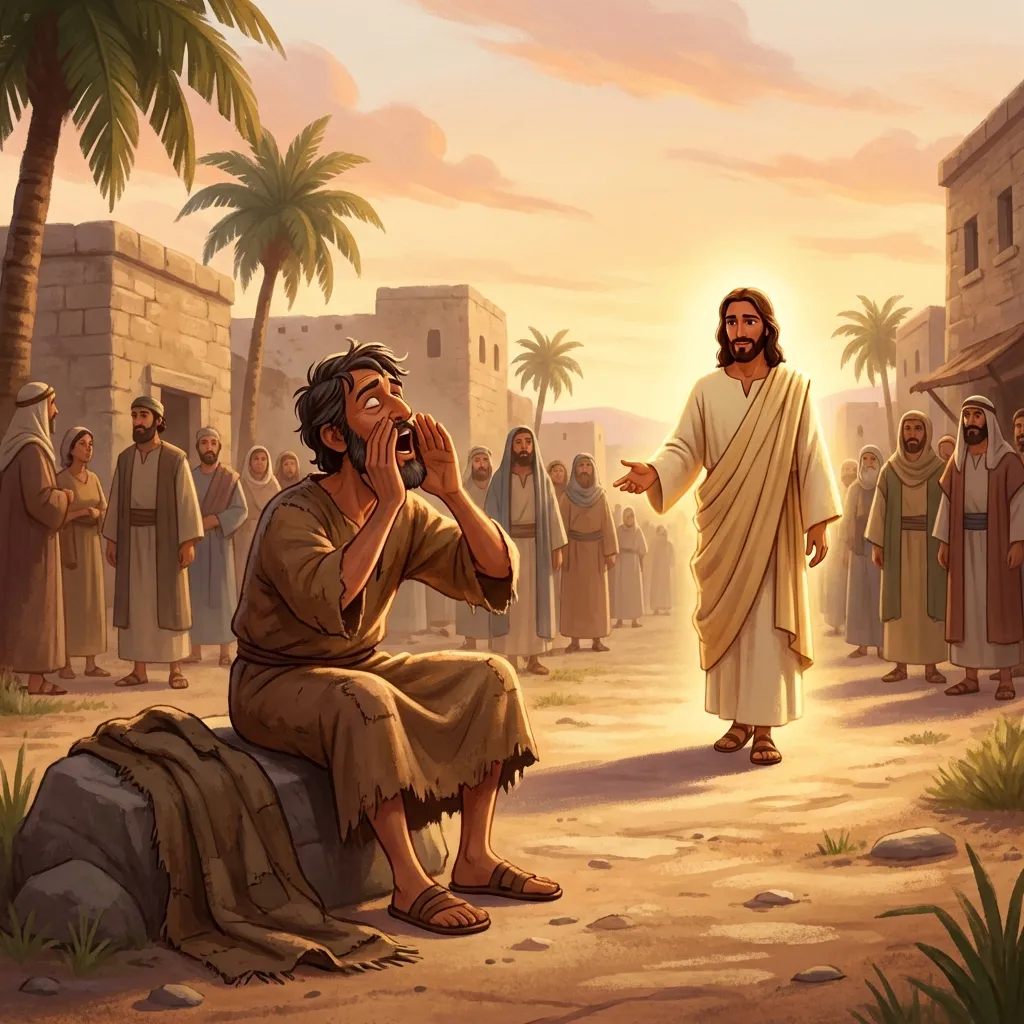
Unable to see the bustling road, Bartimaeus lived by his ears. Hearing the unusual vibration of a vast multitude, he asked what it meant. When bystanders told him, "Jesus of Nazareth is passing by," something ignited in his soul. He had heard of the Galilean Prophet who cleansed lepers and raised the dead. Instantly, he began to scream at the top of his lungs: "Jesus, Son of David, have mercy on me!"
2. Refusing the Shush of the Crowd
The respectable pilgrims were annoyed by the dirty beggar interrupting the Rabbi. Many sternly rebuked him, telling him to shut his mouth. How often does religious peer pressure attempt to silence desperate prayer! But opposition only stoked his desperation: Mark 10:48 notes: "He shouted all the more, 'Son of David, have mercy on me!'" True faith does not surrender to public intimidation.
3. The Stop That Stopped the Universe
Mark 10:49 records three glorious words: "Jesus stopped and said, 'Call him.'" The Son of God, marching toward the cosmic battle of Calvary to bear the sins of the world, halted His steps for the cry of a nameless beggar. The crowd changed their tune: "Cheer up! On your feet! He's calling you." Throwing his beggar's cloak aside—his only possession and government-issued begging license—Bartimaeus jumped to his feet and stumbled blindly toward the voice of Jesus.
4. Rabboni: I Want to See
Standing before him, Jesus asked: "What do you want me to do for you?" Bartimaeus did not ask for silver, food, or comfortable clothes. He went straight to the root of his misery: "Rabboni [My Master], I want to see." Jesus responded: "Go, your faith has healed you." Immediately his blind eyes opened, floodlit with the morning sun, and the first sight he beheld was the loving face of Jesus Christ.
5. Following Jesus Along the Road
Jesus told him 'Go,' giving him freedom to return to his family. But Mark records that instead of going home, Bartimaeus "followed Jesus along the road." The road from Jericho led straight up the steep, winding canyon to Jerusalem and the Cross. Bartimaeus cast off his beggar's cloak, received optical and spiritual sight, and became a faithful, cross-bearing disciple of Jesus Christ.
Biblical Keywords & Theological Roots
Bartimaeus, meaning 'Son of Timaeus' (Aramaic Bar-Timei); also linked to Greek 'timē' (honor) or Aramaic 'tamei' (unclean) transformed into honored disciple.
'Rabboni' (My Master / My Great Teacher); an intimate, supreme honorific title used only twice in the New Testament (Bartimaeus and Mary Magdalene).
'Throwing off his cloak'; casting aside his beggar's coat—his only worldly possession and government-issued begging license—to run to Jesus.
🔑 Key Spiritual Takeaways
- Refusing to be Silenced: When the religious crowd rebuked him and told him to be quiet, Bartimaeus shouted all the more: 'Son of David, have mercy on me!'
- Throwing Away the Past: Bartimaeus cast aside his beggar's cloak before he could even see, demonstrating bold faith that he would never need to beg again.
- Clear Spiritual Desires: When Jesus asked 'What do you want me to do for you?', Bartimaeus did not ask for money or alms, but cried: 'Rabboni, I want to see!'
- From Blind Beggar to Cross-Bearing Disciple: True healing does not end in selfish enjoyment; Bartimaeus used his new eyesight to follow Jesus on the road to Calvary.
Support Independent Biblical Research
Did this study bless you? Help support our independent bilingual research and interactive visual Bible tools.
⚡ Fast Facts
- Named Beggar: While most miracle recipients in the Gospels remain anonymous, Mark uniquely gives Bartimaeus's specific name and patronymic.
- Jericho Setting: The healing occurred as Jesus departed Jericho on His final, fateful ascent to Jerusalem to be crucified.
- Casting Off the Cloak: Mark 10:50 notes he 'threw his cloak aside, jumped to his feet and came to Jesus'—abandoning his beggar's license in anticipatory faith.
- Following on the Way: Once healed, Bartimaeus did not return home; he immediately joined the pilgrim procession, 'following Jesus along the road' toward the Cross.
❓ Frequently Asked Questions (FAQs)
Why was casting aside his cloak (Mark 10:50) so significant?
In the ancient Roman world, recognized beggars carried a specific outer cloak that functioned as a legal permit to beg in public gates. Furthermore, as a blind man, finding a discarded cloak again would be nearly impossible. By throwing it aside, Bartimaeus demonstrated radical faith that he was stepping out of the begging profession forever.
Why did Jesus ask 'What do you want me to do for you?' when his blindness was obvious?
Jesus never assumes; He invites honest, vocal articulation of faith. Many beggars preferred small coins rather than the overwhelming responsibility of lifelong work. By asking, Jesus gave Bartimaeus dignity, allowing him to declare his deep desire for total transformation.
Why did Bartimaeus address Jesus as 'Rabboni'?
'Rabboni' is an intensified Aramaic title meaning 'My Master' or 'My Supreme Lord.' It carried profound personal affection and spiritual submission, placing Bartimaeus not merely as a miracle-seeker, but as a devoted disciple.