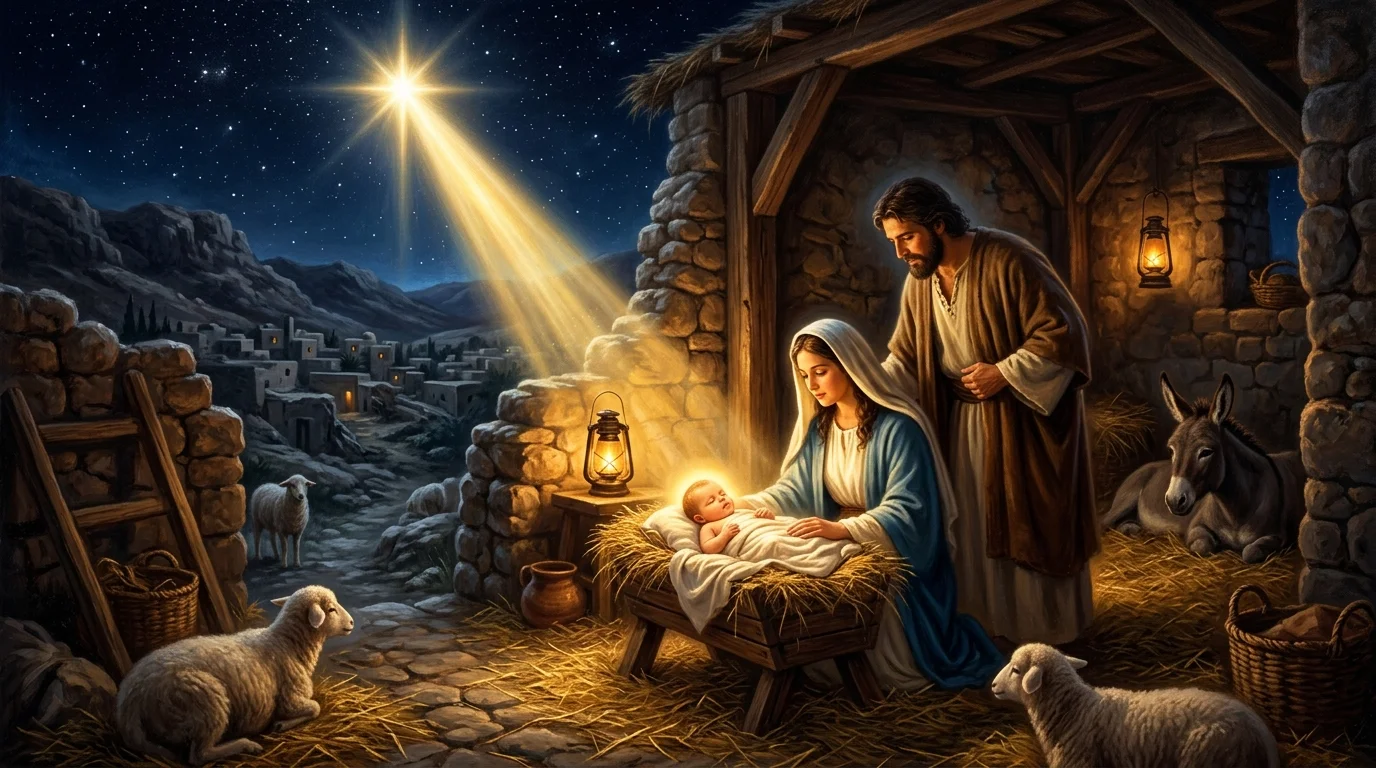
"A star will come out of Jacob; a scepter will rise out of Israel... Nations will come to your light, and kings to the brightness of your dawn... they will bring gold and frankincense and proclaim the praise of the Lord."
"Magi from the east came to Jerusalem and asked, 'Where is the one who has been born king of the Jews? We saw his star when it rose and have come to worship him.' ... On coming to the house, they saw the child with his mother Mary, and they bowed down and worshiped him. Then they opened their treasures and presented him with gifts of gold, frankincense and myrrh."
Psalm 72:10-11 and Isaiah 60:3-6 capture the glorious eschatological vision of foreign sovereigns and eastern dignitaries bringing tribute to the King of Israel. When the mysterious Magi crossed the burning deserts following a celestial star to lay gold, frankincense, and myrrh before an infant in Bethlehem, ancient prophecy was unveiled before the nations.
1. The Vision of the Royal Tribute in Psalm 72 and Isaiah 60
A millennium before the birth of Christ, King Solomon penned a prophetic coronation psalm depicting the universal reign of the Messiah: "May the kings of Tarshish and of distant shores bring tribute to him; may the kings of Sheba and Seba present him gifts. May all kings bow down to him and all nations serve him" (Psalm 72:10-11). Three centuries later, the prophet Isaiah expanded this cosmic picture: "Nations will come to your light, and kings to the brightness of your dawn... Herds of camels will cover your land, young camels of Midian and Ephah. And all from Sheba will come, bearing gold and incense and proclaiming the praise of the LORD" (Isaiah 60:3, 6).
2. The Caravan of the Magi: Daniel's Enduring Legacy
In Matthew 2:1-2, the vision burst into historical reality: "After Jesus was born in Bethlehem in Judea, during the time of King Herod, Magi from the east came to Jerusalem and asked, 'Where is the one who has been born king of the Jews? We saw his star when it rose and have come to worship him.'" The Magi were not amateur fortune-tellers; they were members of the elite Medo-Persian priestly and scholarly caste. Five centuries earlier, the prophet Daniel had served as the Grand Vizier over all the wise men of Babylon (Daniel 2:48). Daniel undoubtedly instructed them in the Hebrew Scriptures, including Balaam's ancient oracle in Numbers 24:17: "A star will come out of Jacob; a scepter will rise out of Israel."
3. Political Panic in Jerusalem
When this heavily escorted eastern diplomatic delegation rode into Jerusalem demanding the location of the newborn 'King of the Jews,' King Herod and the city were seized with panic: "When King Herod heard this he was disturbed, and all Jerusalem with him" (Matthew 2:3). Herod was an illegitimate Idumean usurper appointed by the Roman Senate; the arrival of Persian dignitaries seeking a rightful heir of David posed an existential threat to his throne. Herod summoned the chief priests, who quoted Micah 5:2: the Messiah would be born in Bethlehem.
4. The Three Prophetic Treasures
Following the radiant celestial light southward to Bethlehem, the Magi entered the house: "On coming to the house, they saw the child with his mother Mary, and they bowed down and worshiped him. Then they opened their treasures and presented him with gifts of gold, frankincense and myrrh" (Matthew 2:11). These gifts were deeply symbolic theological declarations:
- Gold (Zahav): The royal metal acknowledging Jesus as the King of kings and Lord of lords.
- Frankincense (Levonah): The rare aromatic resin reserved for temple sacrifices, acknowledging Jesus as the Great High Priest and God manifested in the flesh.
- Myrrh (Mor): A bitter, fragrant embalming resin used to anoint corpses for burial, casting the solemn shadow of the Cross across the cradle of Bethlehem.
5. The Ingathering of the Gentiles
The homage of the Magi marks the breathtaking turning point of redemptive history. The Jewish religious leaders in Jerusalem possessed the prophetic scrolls, yet they did not bother to walk five miles to Bethlehem to greet their Messiah. Meanwhile, pagan Gentiles from hundreds of miles away poured out their fortunes and knelt in the dust before the infant King. The Magi stand as the glorious firstfruits of all nations who will one day surround the throne of the Lamb, casting their crowns before King Jesus.
Biblical Keywords & Theological Roots
Tribute, royal gift, tax offering; paid by foreign potentates to acknowledge a superior sovereign king.
Gold; the quintessential royal metal symbolizing imperial majesty, supreme sovereignty, and kingship.
Frankincense; pure, fragrant white aromatic gum resin burned on the altar of incense, symbolizing deity and priestly intercession.
Ancient Near Eastern & Archaeological Context
In the ancient Near East, the Magi (*Magoi*) were a hereditary priestly and scholarly caste of Medo-Persian and Babylonian origin. Renowned as astronomers, mathematicians, and political kingmakers, they studied celestial phenomena and ancient astrological omens. Centuried earlier, the prophet Daniel had been appointed chief of all the wise men and astrologers of Babylon (Daniel 2:48; 5:11). Daniel's Hebrew prophecies regarding the seventy weeks (Daniel 9:24-27) and Balaam's star prophecy (Numbers 24:17) were deeply woven into eastern Persian scribal lore. When an extraordinary celestial alignment appeared, the Magi mounted an expedition carrying the luxury commodities of the Arabian and Persian trade routes: gold bullion, frankincense (*Boswellia carterii*) from Southern Arabia, and myrrh (*Commiphora myrrha*) from the Horn of Africa.
🔑 Key Spiritual Takeaways
- The Universal King: Jesus is not merely a tribal Jewish hero; He is the King of kings to whom all foreign monarchs owe ultimate allegiance.
- Prophetic Foreshadowing of the Cross: The inclusion of bitter myrrh alongside gold and frankincense reveals that this baby King was born to die.
- Genuine Worship Demands Costly Offering: The Magi did not arrive with empty hands; true adoration opens its treasures and lays its finest possessions at Christ's feet.
- Divine Guidance for Earnest Seekers: God mobilized cosmic stars and prophetic Scripture to guide distant pagan seekers straight to the Savior.
Support Independent Biblical Research
Did this study bless you? Help support our independent bilingual research and interactive visual Bible tools.
⚡ Fast Facts
- 1,000-Year and 700-Year Prophetic Foundation: Psalm 72:10-11 was written by Solomon around 970 BC, and Isaiah 60:3-6 was penned around 700 BC.
- The Threefold Theological Gifts: Gold for His Kingship; Frankincense for His Deity and High Priesthood; Myrrh for His sacrificial suffering and burial.
- The Magi (*Magoi*): Persian/Babylonian priestly astronomers who preserved the ancient prophecy of Balaam regarding 'a Star coming out of Jacob' (Numbers 24:17) and Daniel's Messianic timetable (Daniel 9:24-27).
- Gentile Ingathering: The arrival of the eastern Magi represents the firstfruits of the Gentile nations fulfilling prophecy by bringing tribute to the King of the Jews.
❓ Frequently Asked Questions (FAQs)
How do Psalm 72 and Isaiah 60 connect to Matthew 2?
Psalm 72:10-11 prophesies: 'The kings of Tarshish and of distant shores will bring homage to him; the kings of Sheba and Seba will present gifts.' Isaiah 60:3, 6 adds: 'Nations will come to your light, and kings to the brightness of your dawn... bearing gold and incense and proclaiming the praise of the LORD.' Matthew 2:11 directly fulfills these royal prophecies.
What is the symbolic spiritual meaning of the three gifts?
Gold symbolizes Christ's royal kingship; Frankincense (used in priestly temple incense) symbolizes His divine nature and high-priestly intercession; Myrrh (a bitter resin used for embalming corpses, John 19:39) foreshadowed His suffering, vicarious death, and burial.
Were there literally 'three kings' who visited Jesus?
Scripture never identifies the Magi as kings, nor specifies that there were three; tradition inferred three from the three named gifts (gold, frankincense, myrrh). They were elite Persian dignitaries and astronomers whose arrival, accompanied by armed retinues, threw King Herod and all Jerusalem into political turmoil (Matthew 2:3).
