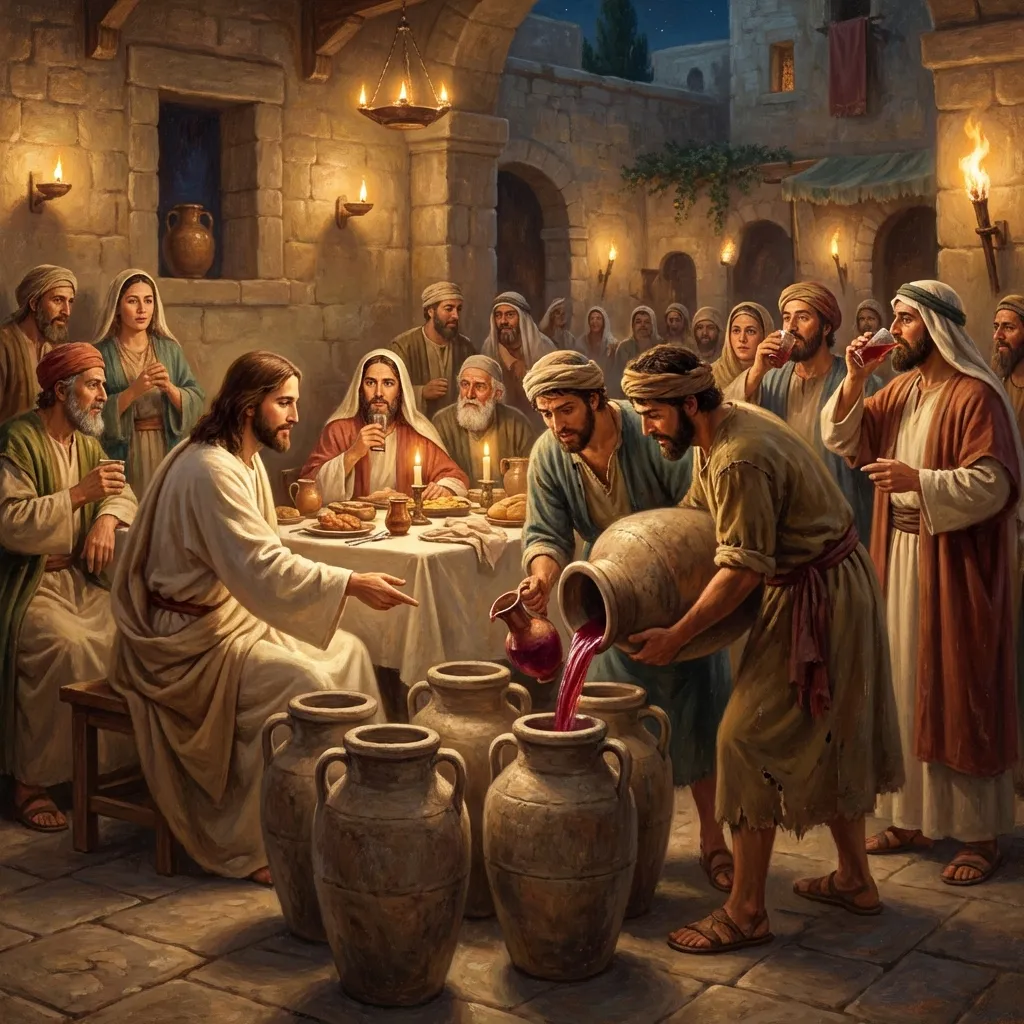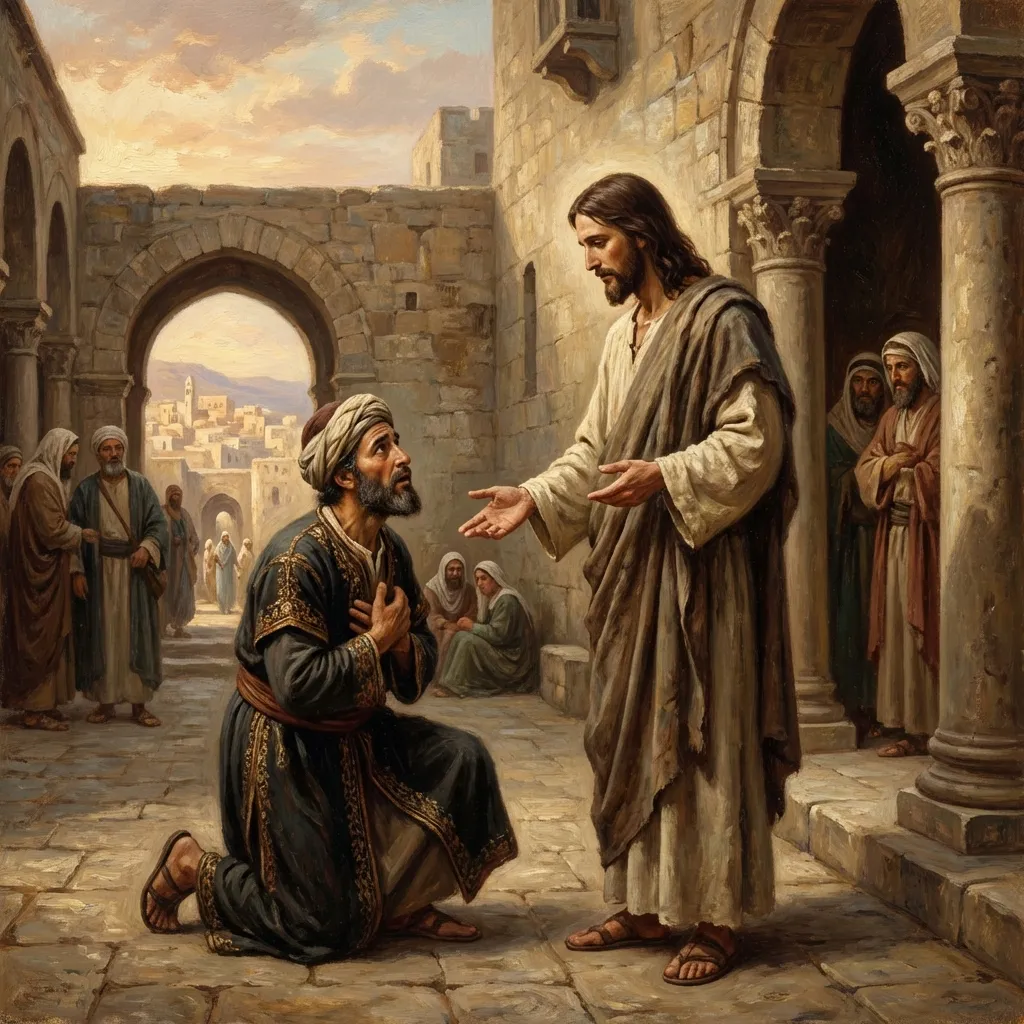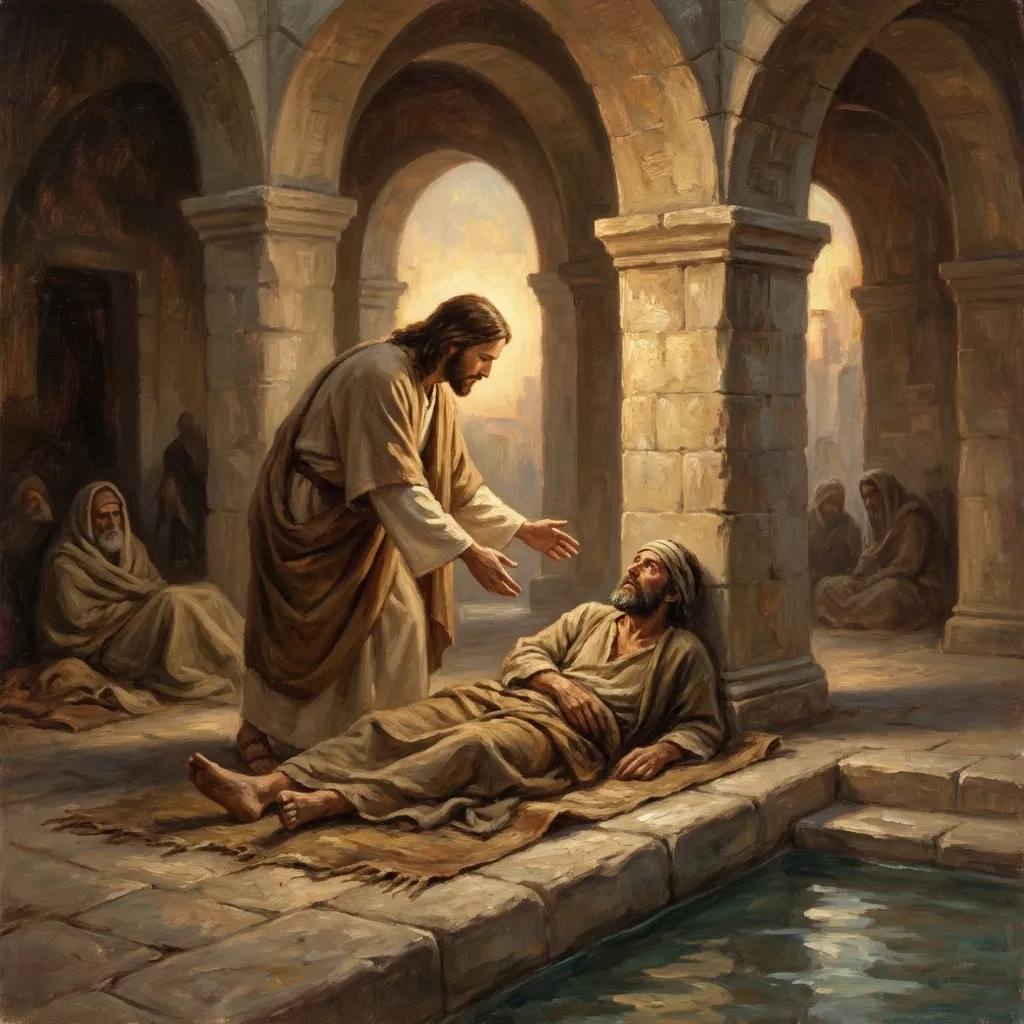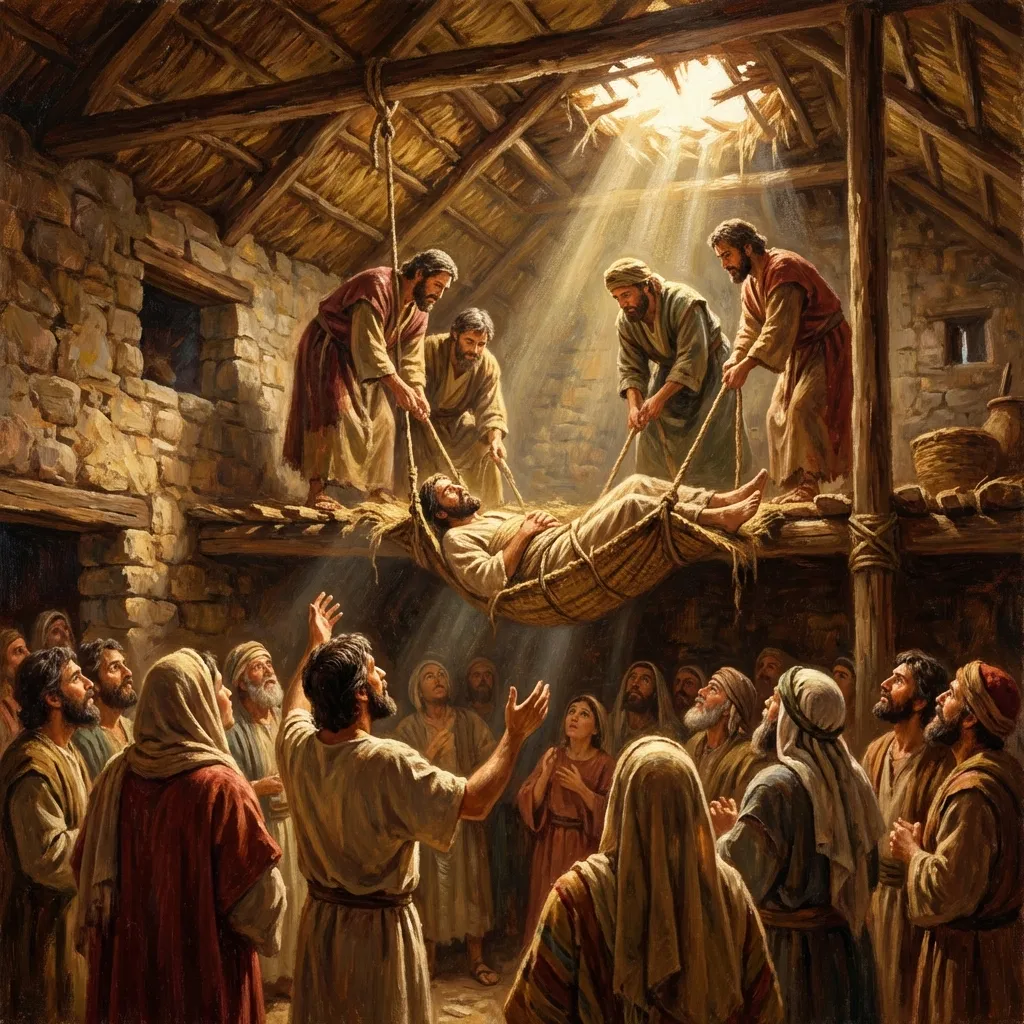
In Mark 2:1-12, Jesus returns to Capernaum, preaching the Word inside a residence so packed with listeners that people spilled out into the courtyard and street. In this dramatic confrontation, four determined friends tore open the roof to lower a paralyzed man to Jesus' feet, triggering a historic revelation of Christ's authority to forgive sins.
1. The Obstacle of the Crowds
When four friends arrived carrying their paralyzed companion on a pallet, they were met by an impenetrable wall of people. Leading theologians, Pharisees, and teachers of the law from every village in Galilee and Judea occupied the front seats. Lesser faith would have turned around and waited for a more convenient day. But authentic faith refuses to be discouraged by obstacles; it finds an unconventional way into the presence of Jesus.
2. Tearing the Roof Off
Climbing the external stone staircase to the flat roof, the four men began digging through the compacted clay, brushwood, and tiles. Dust and debris rained down upon the teachers of the law below. Ropes in hand, they carefully lowered the pallet directly in front of Jesus. Mark 2:5 records a monumental statement: "When Jesus saw their faith, he said to the paralyzed man, 'Son, your sins are forgiven.'" Faith is not merely an intellectual conviction; it is a visible, persistent action that God sees and honors.
3. The Silent Charge of Blasphemy
The scribes sat in silent theological fury, thinking: "Why does this fellow talk like that? He's blaspheming! Who can forgive sins but God alone?" (Mark 2:7). Their premise was correct: only God can forgive sins against God. But their conclusion was tragic: they failed to recognize that the God of Israel was standing right before them in the flesh.
4. Which is Easier to Say?
Knowing their unspoken thoughts, Jesus challenged them: "Which is easier: to say to this paralyzed man, 'Your sins are forgiven,' or to say, 'Get up, take your mat and walk'?" Anyone can falsely claim to forgive sins because forgiveness is invisible. But to command atrophied limbs to instantly walk requires undeniable, visible power. Jesus continued: "But I want you to know that the Son of Man has authority on earth to forgive sins." Turning to the paralytic, He commanded: "Get up, take your mat and go home!"
5. Incredible Things Seen Today
Immediately, the man stood up before their stunned eyes, rolled up his mat, and walked out in full view of them all. The entire room was swept with holy awe, and the crowd glorified God, shouting: "We have never seen anything like this!" (Mark 2:12). Christ heals our broken bodies, but His greatest glory is lifting the eternal crushing burden of human sin.
Biblical Keywords & Theological Roots
Are forgiven, pardoned, released from debt; Jesus exercised sovereign divine prerogative: 'Son, your sins are forgiven.'
To unroof, tear away the roof tiles; the desperate, audacious faith of the four friends dismantling the clay and thatch ceiling.
Paradoxical, extraordinary, beyond belief; Luke 5:26 records the crowd left saying: 'We have seen incredible/paradoxical things today!'
🔑 Key Spiritual Takeaways
- Intercessory Faith in Action: Jesus 'saw their faith'—the collective, persistent faith of loyal friends carried this helpless man into Christ's healing presence.
- Addressing the Root Need: Before healing the man's physical legs, Jesus first forgave his spiritual sins, establishing that soul salvation is humanity's supreme priority.
- Visible Proof of Invisible Authority: Jesus healed physical paralysis to prove He possesses legitimate cosmic power to forgive invisible spiritual guilt.
- Overcoming Every Barrier: Authentic faith refuses to take 'no' for an answer; when the door is blocked by crowds, faith climbs the roof.
Support Independent Biblical Research
Did this study bless you? Help support our independent bilingual research and interactive visual Bible tools.
⚡ Fast Facts
- Four-Man Faith: Mark 2:3 explicitly records the paralyzed man was carried by four loyal friends who refused to let crowds block their way.
- Capernaum Home: The miracle occurred in a packed house in Capernaum, traditionally identified as Simon Peter's home.
- Roof Architecture: Galilean homes had flat roofs made of clay, branches, and tiles reached by an outside stone staircase.
- Scribes' Accusation of Blasphemy: The Pharisees silently accused Jesus of blasphemy because Old Testament theology reserves forgiveness of sins exclusively for God.
❓ Frequently Asked Questions (FAQs)
Why did Jesus forgive the man's sins before addressing his physical paralysis?
Jesus saw that the man's greatest inner torment was spiritual guilt and separation from God. By forgiving him first, Jesus revealed the true hierarchy of human needs: physical health without spiritual salvation is meaningless. Furthermore, it provoked the Pharisees to confront Christ's divine identity.
Why did the religious leaders accuse Jesus of blasphemy?
Under Isaiah 43:25, God alone has the sovereign authority to blot out sins. By directly declaring 'your sins are forgiven' on His own authority rather than merely praying for God to forgive him, Jesus was claiming to be God in human flesh.
What does Jesus mean by calling Himself the 'Son of Man' in Mark 2:10?
'Son of Man' was Jesus' favorite Messianic self-designation, drawn directly from Daniel 7:13-14, where the Son of Man is given everlasting dominion, glory, and cosmic authority over all peoples and nations.