"All who see me mock me; they hurl insults, shaking their heads. 'He trusts in the Lord,' they say, 'let the Lord rescue him. Let him deliver him, since he delights in him.'"
"Those who passed by hurled insults at him, shaking their heads... In the same way the chief priests, the teachers of the law and the elders mocked him. 'He saved others,' they said, 'but he can’t save himself! He’s the king of Israel! Let him come down now from the cross, and we will believe in him. He trusts in God. Let God rescue him now if he wants him.'"
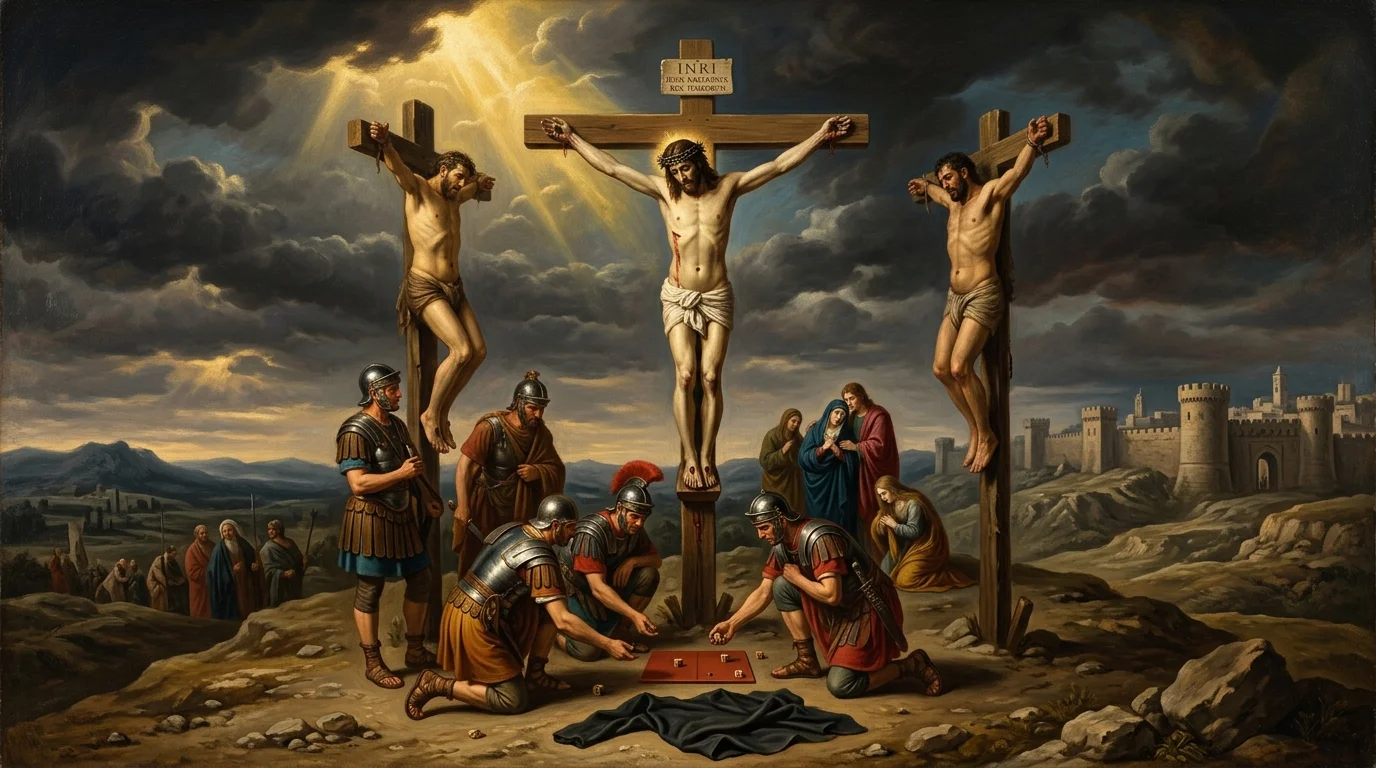
Psalm 22:7-8 records the exact, agonizing psychological torment endured by the Messiah upon the cross: 'All who see me mock me; they hurl insults, shaking their heads. He trusts in the Lord, they say, let the Lord rescue him. Let him deliver him, since he delights in him.' In Matthew 27:39-44, this precise verbal choreography was reenacted around the cross of Jesus Christ, exposing the depths of human depravity and the triumph of sacrificial love.
1. The Psychology of Public Mockery
Crucifixion was engineered not merely to destroy the physical body, but to pulverize human dignity. The Romans placed crucifixion sites along major highways so that travelers would jeer at the victims. In Psalm 22, David describes a righteous sufferer surrounded by a pack of wild dogs, predators gaping with open mouths. The Hebrew word for mock (*la'ag*) denotes mimicry, sneering, and abusive ridicule aimed at crushing the human spirit.
2. The Wagging Heads: Matthew 27:39
As Jesus hung suspended between heaven and earth on the crossroads outside Jerusalem, the Passover pilgrims streamed past. Matthew records the precise fulfillment of Psalm 22:7: 'Those who passed by hurled insults at him, shaking their heads and saying, You who are going to destroy the temple and build it in three days, save yourself! Come down from the cross, if you are the Son of God!' (Matthew 27:39-40). The wagging of the head was the ancient Semitic gesture of absolute contempt and self-righteous triumph over an enemy.
3. The Sanhedrin’s Unconscious Quotation
Then the chief priests, scribes, and elders of Israel stepped forward. Blinded by hatred, they uttered the very words David penned a thousand years earlier: 'He saved others, but he cannot save himself! He’s the king of Israel! Let him come down now from the cross, and we will believe in him. He trusts in God. Let God rescue him now if he wants him, for he said, I am the Son of God' (Matthew 27:42-43). Compare this with Psalm 22:8: 'He trusts in the Lord, let the Lord rescue him; let him deliver him, since he delights in him.' The Sanhedrin was literally quoting the messianic script written a millennium before!
4. The Irony of Golgotha
Their taunt contained the ultimate divine paradox: 'He saved others; he cannot save himself.' They meant it as an insult to prove His impotence. In reality, it was the definition of His mission! If Jesus saved Himself by summoning legions of angels to smash the Roman cross, the human race would have been eternally lost. The shepherd could not save His own life if the sheep were to be delivered from the wolf. His refusal to come down was not weakness, but the invincible restraint of infinite divine love.
5. Grace for the Mockers
How did Jesus respond to this torrent of blasphemous ridicule? He did not curse them or call down consuming fire as Elijah did (2 Kings 1:10). Luke 23:34 records His first words from the tree: 'Father, forgive them, for they do not know what they are doing.' That prayer shattered the darkness! One of the mocking criminals beside Him heard that prayer, repented, and was welcomed into Paradise that very day (Luke 23:42-43). Weeks later at Pentecost, thousands of the very people who wagged their heads at Golgotha were cut to the heart, repented, and received the forgiveness of the crucified and risen King (Acts 2:36-38).
Biblical Keywords & Theological Roots
To mock, deride, scoff with cruel contempt; mimicking and taunting a helpless sufferer.
To open wide, separate, shoot out the lips; making contemptuous facial grimaces and sticking out the tongue.
To shake, wag, toss the head; dynamic body language of self-righteous dismissal and gloating triumph.
Ancient Near Eastern & Archaeological Context
Public crucifixions in the Roman Empire were deliberately staged along major public thoroughfares—such as the busy crossroads outside Jerusalem's Damascus or Jaffa Gate—to maximize psychological terror and public humiliation. Passersby traveling to the Passover feast gathered around the execution site to spit, curse, and mock the condemned. The victim hung naked, exposed to the elements, insects, and the merciless verbal abuse of the spectators.
🔑 Key Spiritual Takeaways
- Satan used religious mockery to tempt Christ to abandon the cross: 'If you are the Son of God, come down!' (Matthew 27:40).
- Had Jesus come down from the cross to save Himself, He could not have saved us; His refusal to save Himself was the supreme act of love.
- The mockery of the crowds proves that fallen human religion values visible power and spectacle over sacrificial love and humble obedience.
- When believers face public ridicule for following Christ, they are walking the very path trodden by their crucified Lord.
Support Independent Biblical Research
Did this study bless you? Help support our independent bilingual research and interactive visual Bible tools.
⚡ Fast Facts
- Verbatim Taunts: Psalm 22:8 records the precise words of mockery: 'He trusts in the Lord, let the Lord rescue him; let him deliver him, since he delights in him.'
- Sanhedrin Repetition: In Matthew 27:43, the chief priests, teachers of the law, and elders unknowingly quoted Psalm 22:8 almost word for word around the cross!
- Passersby Wagging Heads: Matthew 27:39 notes: 'Those who passed by hurled insults at him, shaking their heads,' directly fulfilling Psalm 22:7.
- Crucified Thieves Joining In: Mark 15:32 records that even the dying criminals crucified beside Him hurled insults at Him until one experienced supernatural repentance.
❓ Frequently Asked Questions (FAQs)
Why did the religious leaders mock Jesus instead of just executing Him?
They wanted to destroy His messianic credibility forever. Under Deuteronomy 21:23, anyone hanging on a tree was cursed by God. By mocking His trust in God, they sought to prove to the populace that Jesus was an imposter abandoned by the Almighty.
What is the irony in their taunt: 'He saved others; he cannot save himself'?
Their mocking taunt in Matthew 27:42 was inadvertently the truest theological statement ever uttered at Golgotha! It was precisely *because* He was saving others that He could not—and would not—save Himself from the cross.
How did Jesus respond to the cruel taunts from the cross?
Instead of calling down fire from heaven or returning insult for insult, Jesus opened His mouth in divine intercession: 'Father, forgive them, for they do not know what they are doing' (Luke 23:34).