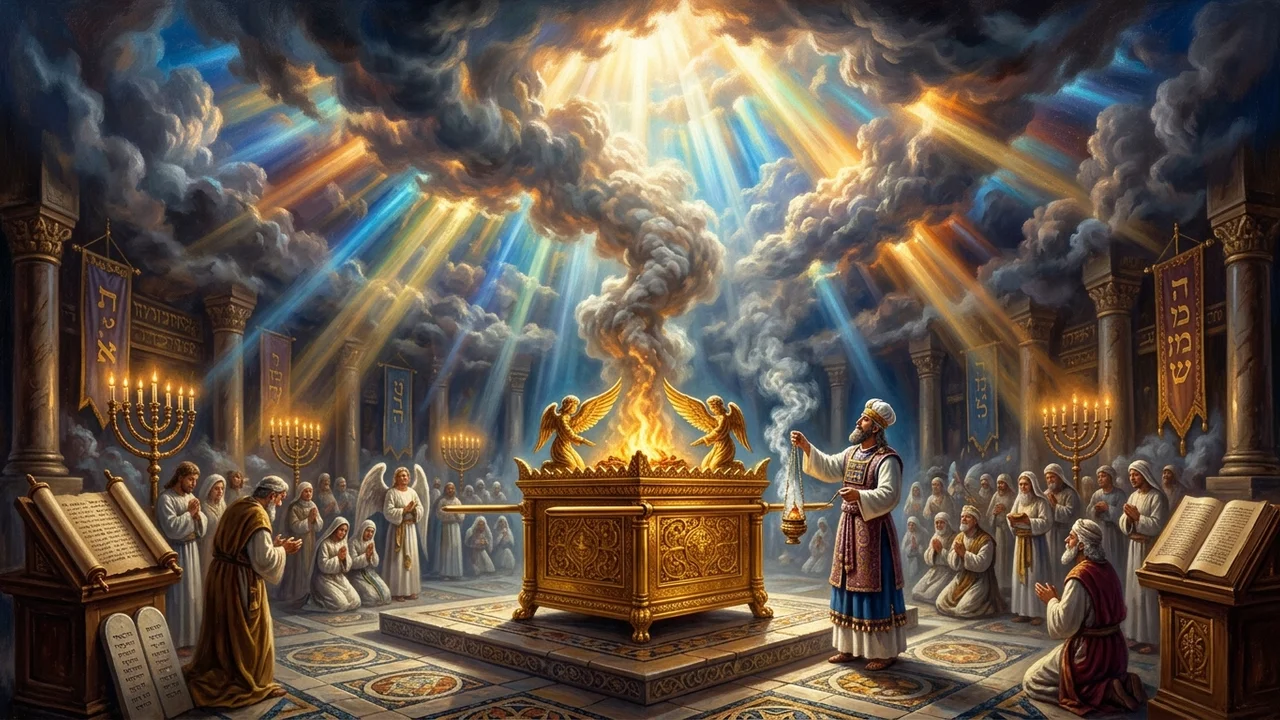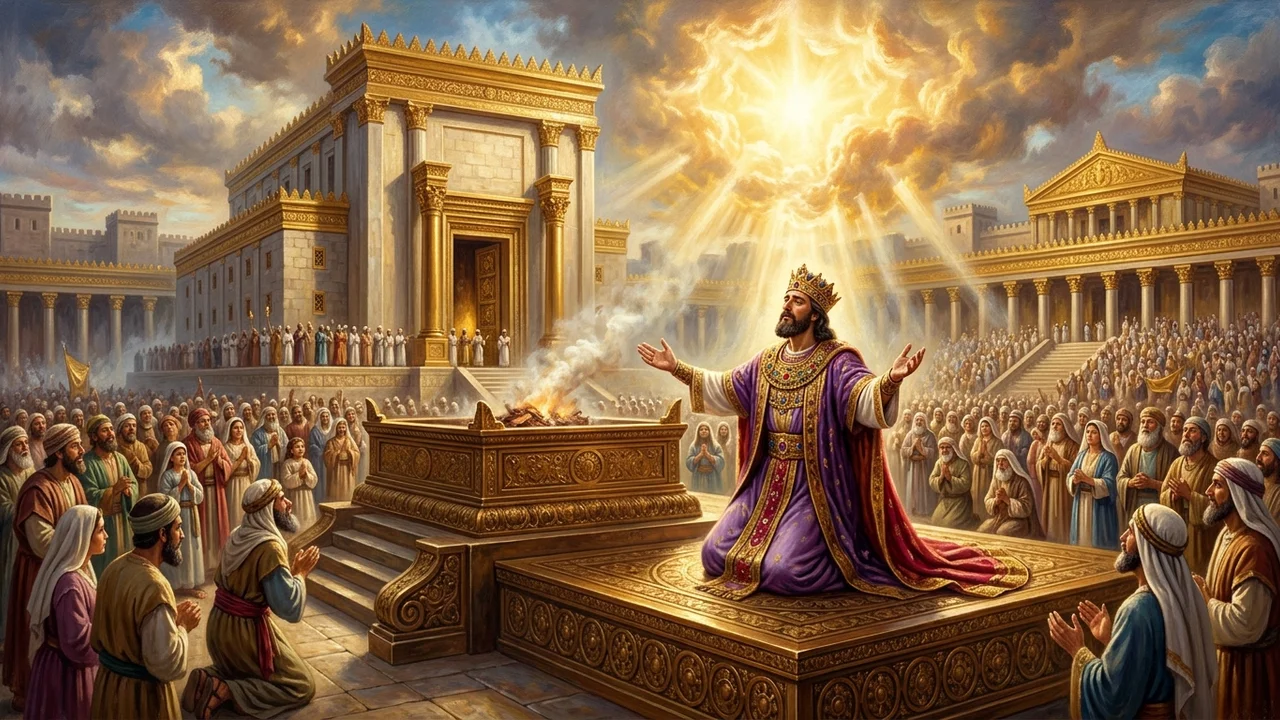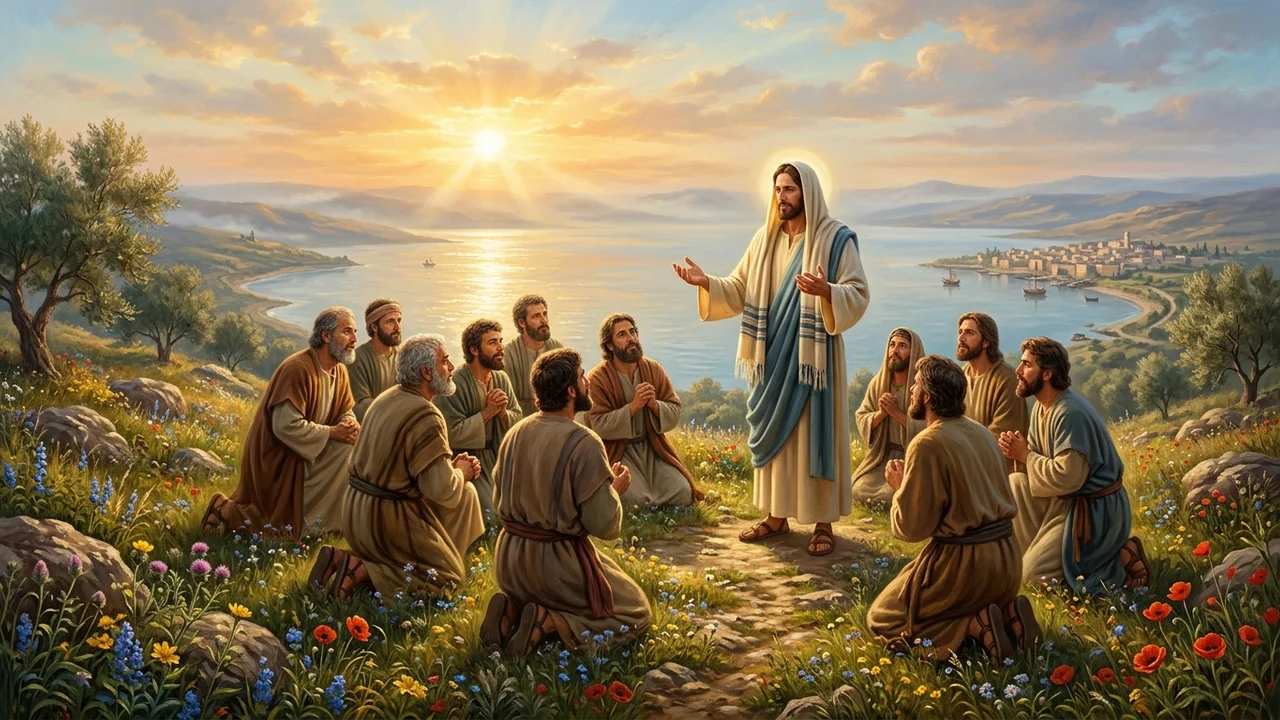
"Our Father in heaven, hallowed be your name, your kingdom come, your will be done, on earth as it is in heaven. Give us today our daily bread. And forgive us our debts, as we also have forgiven our debtors. And lead us not into temptation, but deliver us from the evil one. For yours is the kingdom and the power and the glory forever. Amen."
Anatomy of the Prayer
"Our Father in heaven, hallowed be your name"
Approaching God not as a distant monarch, but as a loving Father whose holy character deserves supreme reverence.
"Your kingdom come, your will be done, on earth as it is in heaven"
Submitting personal agendas so that God's sovereign rule and righteousness reign in our lives, families, and society.
"Give us today our daily bread"
Depending on God day-by-day for physical, emotional, and spiritual sustenance without anxious hoarding.
"And forgive us our debts, as we also have forgiven our debtors"
Experiencing divine cleansing while unreservedly releasing bitterness and extending forgiveness to those who wrong us.
"Lead us not into temptation, but deliver us from the evil one"
Recognizing spiritual vulnerability and crying out for divine guidance away from Satan's snares and traps.
"For yours is the kingdom and the power and the glory forever. Amen."
Closing with triumphant confidence that God alone possesses absolute authority, power, and eternal glory.
Of all the requests the disciples could have made of Jesus—asking how to walk on water, multiply loaves, or cast out demons—they made only one recorded request about His spiritual practices: 'Lord, teach us to pray' (Luke 11:1). They saw that the secret to Christ's public authority was His private intimacy with the Father.
1. The Revolution of 'Abba' Father
In the ancient world, gods were distant, capricious tyrants to be appeased with elaborate mantras. Jesus shattered religious formality with two words: 'Our Father'. True prayer is not an interrogation of God or a mechanical transaction; it is a child climbing into the lap of a loving, sovereign Father.
2. God's Agenda First
Human prayer naturally defaults to self-centered wishlists: 'Give me, fix this, heal that.' Jesus revolutionizes the heart by commanding us to align with heaven first: Hallowed be Your name, Your kingdom come, Your will be done. When God's glory becomes our supreme treasure, our earthly needs fall into peaceful perspective.
3. The Triangle of Human Need
The second half of the prayer covers all three dimensions of human existence: Physical Provision (our daily bread for today), Emotional and Spiritual Cleansing (forgiveness of past sins), and Moral and Supernatural Protection (deliverance from future evil). It is the most comprehensive 60-second prayer in human history.
4. The Doxological Anchor of Faith
The closing doxology—'For yours is the kingdom and the power and the glory forever'—anchors our petitions in cosmic assurance. We do not ask from a position of despair; we pray knowing that the throne of the universe is not vacant. Christ invites us to align our hearts with the triune God whose sovereignty governs history, whose omnipotence guarantees provision, and whose glory is the eternal destination of all creation.
Biblical Keywords & Theological Roots
Aramaic term of intimate, affectionate familial relationship used by children for their father; conveys unconditional trust, approachable love, and covenant security without sacrificing reverent honor.
To sanctify, venerate, set apart as uniquely holy and separate from common things; treating God's transcendent character and name with supreme reverence in thoughts, speech, and conduct.
A rare biblical term meaning 'necessary for today's subsistence' or 'bread for the coming morrow'; pointing to God's daily supernatural provision echoing the manna in the wilderness.
Active, malignant evil that seeks to corrupt, deceive, and destroy; personified as 'the evil one' (Satan), reminding believers that prayer is engaged in supernatural spiritual warfare.
🔑 Key Spiritual Takeaways
- Vertical Before Horizontal: The Lord's Prayer dedicates the first half entirely to God's glory, Kingdom, and will before asking for personal needs.
- God is 'Our Father' (Abba): Prayer begins in adoption and family intimacy, not formal ritualism or empty repetition.
- The Law of Forgiveness: We cannot genuinely experience the flow of God's forgiveness while harboring unforgiveness toward others (Matt 6:14-15).
- Daily Reliance: God gives 'daily' bread, inviting us to cultivate an unbroken, 24-hour lifestyle of prayer rather than sporadic crisis prayers.
🛠️ How to Pray & Apply This in Your Life Today
- Start with Praise: Spend your first 2–3 minutes of prayer thanking God for Who He is (His holiness, mercy, wisdom) before listing requests.
- Pray for Kingdom Priorities: Intercede for missionaries, church revivals, the unreached, and biblical righteousness in governance.
- Practice Instant Forgiveness: Release grudges against family members, coworkers, or church brethren by name before concluding your prayer.
- Armor Up for the Day: Ask God to order your steps and shield your mind from lust, pride, anger, and spiritual deception.
Personal Daily Model Prayer
"Heavenly Father, I bow before Your holy majesty today. Hallowed be Your magnificent name in my home, my thoughts, and my work. Establish Your Kingdom rule in my heart today; let Your perfect will be done in every decision I make, even when it crosses my own desires. I trust You for my daily provision, health, and strength. Cleanse me of every hidden sin, and grant me the grace to forgive freely anyone who has hurt me. Guard my steps from temptation, and rescue me from the enemy's schemes. For all authority, power, and glory belong to You alone, both now and forever. In Jesus' mighty name, Amen."
Support Independent Biblical Research
Did this study bless you? Help support our independent bilingual research and interactive visual Bible tools.
⚡ Fast Facts
- Two Biblical Accounts: Matthew 6:9-13 (in the Sermon on the Mount) and Luke 11:2-4 (given in response to a direct disciple request).
- Structure of Sevens: The Matthew version contains seven concise petitions: three regarding God's glory and four regarding human needs.
- Word 'Daily' (Epiousios): The Greek word 'epiousios' occurs nowhere else in ancient Greek literature, meaning 'bread sufficient for the coming day'.
- Universal Christian Prayer: The Lord's Prayer has been recited continuously across every Christian denomination for over 2,000 years in more than 2,000 languages.
❓ Frequently Asked Questions (FAQs)
Did Jesus intend for the Lord's Prayer to be repeated word-for-word or used as a framework?
Both. Jesus said in Luke 11:2: 'When you pray, say...', encouraging verbal repetition, but in Matthew 6:9 He said: 'This, then, is how you should pray...', presenting it as a foundational structural outline covering adoration, surrender, provision, forgiveness, and warfare.
Why does the prayer say 'lead us not into temptation' if God tempts no one?
James 1:13 clarifies that God tempts no one to sin. The Greek word 'peirasmos' means testing or severe trial. The petition is a humble cry asking God to spare us from situations where our human weakness might fail, and to provide the supernatural way of escape (1 Cor 10:13).
Why is the closing doxology ('For yours is the kingdom and the power and the glory') present in Matthew but omitted in Luke?
Matthew recorded Jesus' Sermon on the Mount preached to a vast Jewish audience familiar with Temple liturgy (such as David's great doxology in 1 Chronicles 29:11), making a communal declaration of praise natural. Luke recorded a private discipleship encounter where Christ gave a concise prayer outline focused directly on the core petitions.