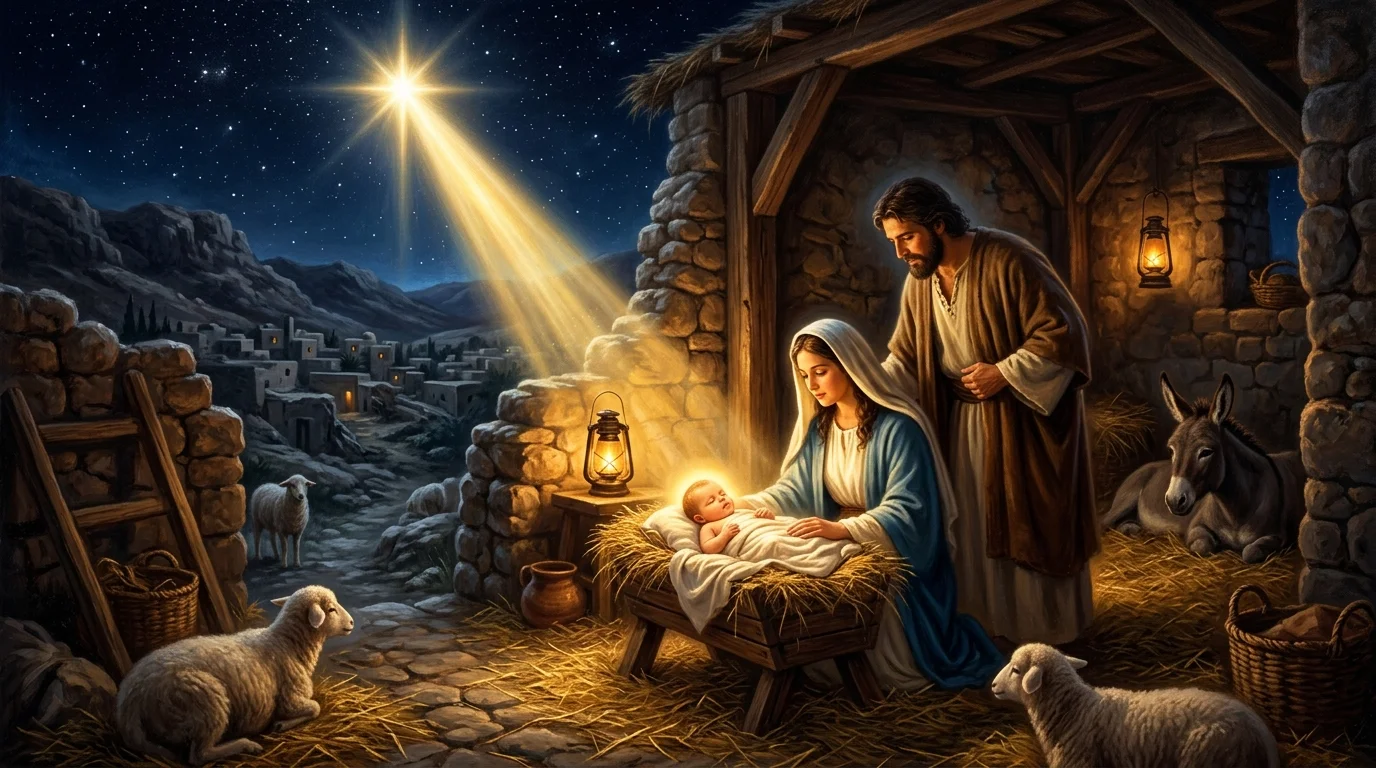
"I will proclaim the Lord's decree: He said to me, 'You are my Son; today I have become your father [begotten you].' ... Who has established all the ends of the earth? What is his name, and what is his son's name? Surely you know!"
"And a voice from heaven said, 'This is my Son, whom I love; with him I am well pleased.' ... God has fulfilled this for us... by raising up Jesus. As it is written in the second Psalm: 'You are my Son; today I have become your father.'"
Psalm 2 is one of the most foundational Messianic coronation texts in all of sacred Scripture. Written a millennium before the advent of Christ, it records the immutable celestial decree of the Father declaring His Son's sovereign enthronement over Zion, shattering the hubris of rebellious earthly rulers and guaranteeing an everlasting inheritance across all nations.
1. The Cosmic Rebellion of Earthly Monarchs
The psalm opens with the panoramic uproar of rebellious nations: 'Why do the nations conspire and the peoples plot in vain? The kings of the earth rise up and the rulers band together against the Lord and against his anointed, saying, Let us break their chains and throw off their shackles' (Psalm 2:1-3). Fallen mankind fundamentally resents divine sovereignty. From the Tower of Babel to modern secular regimes, human power continually attempts to cast off the moral restraints of Yahweh. The psalmist characterizes all such scheming with one devastating verdict: it is entirely 'in vain' (*riq*).
2. Heaven's Laughter and the Inviolable Decree
In contrast to the frantic machinations of earthly courts, God does not panic or mobilize defensive armies. Instead, 'The One enthroned in heaven laughs; the Lord scoffs at them' (Psalm 2:4). The sovereign Creator laughs not out of ignorance, but from supreme omnipotence. Against the furious noise of rebellious kings, God issues His quiet, unshakeable verdict: 'I have installed my king on Zion, my holy mountain' (Psalm 2:6). Human elections, military conquests, and political revolutions cannot overturn what the Almighty has established in the heavenly council.
3. The Proclamation of Divine Sonship
In verse 7, the newly installed King steps forward to recite the royal decree: 'I will proclaim the Lord's decree: He said to me, You are my son; today I have begotten you' (Psalm 2:7). This declaration represents the peak of Davidic covenant theology. The term 'begotten' (*yalad*) in royal enthronement ceremonies refers to the formal, legal inauguration of the monarch into the full exercise of divine authority. When applied to Christ, the New Testament interprets this not as the origin of His deity—for the Word was with God from eternity (John 1:1)—but as His glorious resurrection and vindication as sovereign Lord over death and creation (Acts 13:33, Romans 1:4).
4. Historical Fulfillment at the Cross and Resurrection
The early church immediately recognized the historical fulfillment of Psalm 2 during their first wave of persecution. In Acts 4:25-28, the apostles gathered in prayer and identified the precise conspirators: Herod Antipas, Pontius Pilate, the Roman legionnaires, and the Sanhedrin had gathered together against God's holy servant Jesus. Yet in doing so, they accomplished exactly what God's power and will had decided beforehand should happen! The apparent murder of the King was actually His cosmic enthronement. At the resurrection, Christ conquered every opposing spiritual force, fulfilling Hebrews 1:5: 'For to which of the angels did God ever say, You are my Son; today I have become your Father?'
5. The Iron Scepter and the Call to Kiss the Son
The psalm concludes with a solemn gospel invitation and a stark warning: 'Kiss his son, or he will be angry and your way will lead to your destruction... Blessed are all who take refuge in him' (Psalm 2:12). To 'kiss the son' was the ancient custom of feudal homage, bowing down to kiss the monarch's ring or feet in total submission. Christ holds an iron scepter that will ultimately dash rebellious empires to pieces (Revelation 19:15), yet toward the repentant, His scepter is extended in boundless grace. Today, all who bow to Jesus Christ find eternal refuge from the wrath to come.
Biblical Keywords & Theological Roots
My Son; declaring an essential, ontological divine filial relationship rather than mere adoption or created status.
To beget, bring forth, generate; used in royal coronation to signify eternal divine generation and public declaration of sovereign rule.
Decree, statute, inviolable celestial edict carved in stone by Yahweh Himself, unalterable by earthly monarchs.
Ancient Near Eastern & Archaeological Context
In the Ancient Near East, royal coronation ceremonies incorporated divine sonship formulas where the monarch became Yahweh's vice-regent upon Mount Zion. Surrounding pagan empires claimed their kings were biological offspring of deities, but in Israel's covenant theology, the King was adopted as covenantal son to enforce God's righteousness. David and his line ruled as foreshadows, yet every earthly king fell into sin and failure. Psalm 2 points beyond mortal Davidic heirs to the ideal, faultless King whose reign extends not merely over Judah, but unto the uttermost parts of the earth.
🔑 Key Spiritual Takeaways
- Jesus is not an adopted or created subordinate; He is the eternally begotten Son of God possessing the exact divine nature of the Father.
- Human rebellion against God and His Anointed is utterly futile; earthly kingdoms shatter before the sovereign decree of Heaven.
- The resurrection was the historical, public coronation of the Son of God over sin, death, and all rebellious cosmic powers.
- True wisdom and blessedness consist of bowing the knee and trusting in the Son before the day of final divine wrath.
Support Independent Biblical Research
Did this study bless you? Help support our independent bilingual research and interactive visual Bible tools.
⚡ Fast Facts
- Royal Coronation Psalm: Psalm 2 is a royal enthronement psalm historically sung at the anointing of Davidic kings, reaching absolute fulfillment in Jesus.
- Baptismal Echo: At Jesus' Jordan baptism, God the Father tore the heavens, quoting Psalm 2:7: 'You are my beloved Son; with you I am well pleased' (Mark 1:11).
- Resurrection as Enthronement: In Acts 13:33, Paul cites Psalm 2:7 as fulfilled in Christ's resurrection, when He was vindicated openly as King of Kings.
- Hebrews Central Argument: Hebrews 1:5 uses Psalm 2:7 to prove Christ's superiority over all angels: 'For to which of the angels did God ever say, You are my Son?'
❓ Frequently Asked Questions (FAQs)
What does 'Today I have begotten you' mean if Jesus is eternal?
The biblical concept of 'begetting' (*yalad*) in Psalm 2:7 refers to official royal induction and public demonstration of sonship, not ontological origin. The Apostles explicitly apply this verse to the Resurrection (Acts 13:33, Romans 1:4), where Jesus was publicly manifested and vindicated as the Son of God with power, rather than implying He began to exist at that moment.
Why do kings and nations rage against the Lord's Anointed in Psalm 2?
Psalm 2 describes fallen human nature's perpetual desire to cast off divine moral authority ('let us break their chains'). This rebellion culminated historically when Herod, Pontius Pilate, Jewish leaders, and Gentile soldiers conspired together against Jesus at Calvary, as Peter explicitly observes in Acts 4:25-28.
How does Jesus exercise His iron scepter over the nations today?
Presently, Christ exercises His authority through the proclamation of the Gospel and the restraining power of the Holy Spirit, gathering subjects from every tribe, tongue, and nation. At His Second Advent, this rule will manifest in physical, visible judgment when He shatters rebellious worldly empires like fragile pottery (Revelation 2:27, 19:15).