The story of how the Bible came to us is a thrilling saga of divine providence, literary resilience, and heroic martyrdom. Written over 1,600 years by roughly 40 authors across three continents, the biblical text survived the fall of mighty empires, official imperial book-burnings, damp desert caves, and the fires of religious persecution. Today, it stands as the most widely distributed, meticulously verified, and deeply cherished volume in human history.
1. The Evolution of Ancient Writing Materials
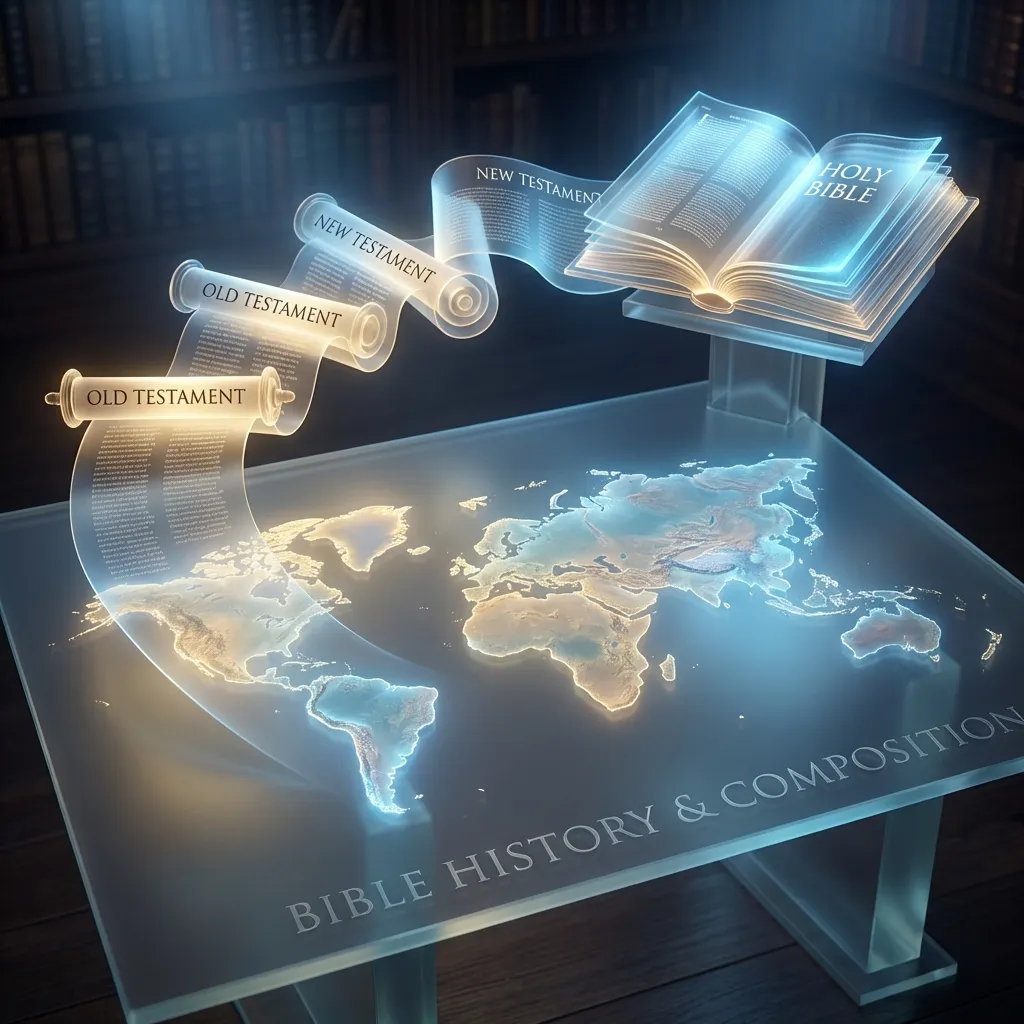
The physical medium upon which God’s revelation was inscribed evolved through four major historical eras:
- Stone & Clay Tablets (c. 1500–1400 BC): The earliest inscriptions, including the Ten Commandments chiseled into stone by the finger of God (Exodus 31:18) and ancient Near Eastern treaties inscribed on wet clay with cuneiform styluses.
- Papyrus Scrolls (c. 1400 BC – AD 200): Made from pressed Nile river reeds, papyrus was the universal writing material of the Mediterranean. Individual sheets were glued end-to-end to form scrolls up to 30 feet long. However, papyrus easily deteriorated in humid climates, which is why ancient manuscripts survived primarily in the arid desert sands of Egypt and Qumran.
- Parchment and Vellum (c. AD 200 – 1450): Made from specially scraped, washed, and dried animal skins (sheep, goats, or calves). Vellum was vastly more durable and expensive than papyrus. Famous fourth-century Bibles—such as Codex Sinaiticus and Codex Vaticanus—were handwritten on pristine vellum sheets.
- The Christian Invention of the Codex: In the first century, Jews and Romans still used unwieldy scrolls that required two hands to unfurl and could only fit a single long book. Early Christians pioneered the Codex (folded pages bound at the spine), because it allowed believers to cross-reference passages instantly and bind all four Gospels and Paul’s letters into a single portable book.
2. The Monumental Composition Statistics
Hebrew Vocabulary
Greek Vocabulary
English Words (KJV)
Human Penmen
Composition Span
Generations Spanned
Original Languages
Continents
3. Key Milestones in Biblical History
1. The Septuagint Translation (LXX — c. 250 BC)
Under Ptolemy II Philadelphus in Alexandria, Egypt, Jewish scholars translated the Hebrew Tanakh into Koine Greek. This landmark translation allowed the Gentile world to read the prophecies of Scripture and became the primary Bible quoted by Jesus and the Apostles throughout the Roman Empire.
2. The Discovery of the Dead Sea Scrolls (1947 AD)
In the desert caves of Qumran near the Dead Sea, a Bedouin shepherd stumbled upon clay jars containing ancient leather scrolls untouched for 1,900 years. The collection included over 220 biblical manuscripts dating from 250 BC to AD 68, including a complete 24-foot scroll of Isaiah (1QIsa^a). When compared with medieval Masoretic texts written 1,000 years later, the Dead Sea Scrolls proved that the text had been transmitted with breathtaking word-for-word accuracy.
3. The Gutenberg Printing Revolution (1455 AD)
In Mainz, Germany, Johannes Gutenberg invented the movable-type mechanical printing press. The very first major book ever printed in human history was the Gutenberg Latin Bible. Printing dismantled the monopoly on Scripture, allowing God's Word to be mass-produced and placed in the hands of common people.
4. The English Translation Heritage & Blood of Martyrs
The journey of the English Bible was sealed with the blood of martyrs:
- John Wycliffe (1382): Translated the first complete Bible into English from the Latin Vulgate. Decades after his death, church authorities condemned him as a heretic, dug up his bones, burned them, and threw his ashes into the River Swift.
- William Tyndale (1526): The father of the English Bible. Tyndale translated the New Testament directly from the original Greek and smuggled copies into England hidden in bales of cloth. Betrayed in Antwerp, Tyndale was strangled and burned at the stake in 1536, crying out: "Lord! Open the King of England's eyes!" Within three years, King Henry VIII authorized the Great Bible in English.
- The King James Version (1611): Commissioned by King James I, 47 scholars produced a majestic English translation that shaped the modern English language and dominated the Christian world for over three centuries.
4. The Extraordinary Story of the Tamil Bible
The translation of the Bible into the Tamil language holds a distinguished, historic honor in global mission history:
- First Asian Language Printed: Tamil was the very first Indian and Asian language into which the Bible was translated and printed!
- Bartholomäus Ziegenbalg (1706–1715): Arriving in Tranquebar (Tarangambadi), Tamil Nadu, in 1706 as a Danish-Halle missionary, Ziegenbalg immersed himself in classical Tamil literature. By 1714, he completed the translation of the New Testament into Tamil, which was published on a wooden printing press shipped from London in 1715.
- Johann Philipp Fabricius (1777): Refined and expanded the translation, publishing the complete Old and New Testaments in Tamil. His poetic, dignified vocabulary laid the liturgical foundation for Tamil Protestantism.
- The Bower-Caldwell Union Version (1871): In the mid-19th century, a committee led by Henry Bower, Bishop Robert Caldwell, and Tamil scholar Peter Percival produced the landmark Tamil Union Version (1871). Revered for its classical dignity, poetic resonance, and theological fidelity, this 1871 translation remains the standard, beloved Bible used by millions of Tamil Christians worldwide today.
Biblical Keywords & Theological Roots
Papyrus; the primary ancient writing material produced from the pith of the Cyperus papyrus plant growing along the Nile River.
A bound book with folded leaves and pages written on both sides; early Christians pioneered the codex to replace cumbersome scrolls, allowing all four Gospels to be held in one volume.
The original, inspired manuscripts penned directly by the biblical authors' own hands or dictated to their amanuenses (scribes).
Copies derived from the original autographs; faithful manuscript transmissions safeguarded through centuries of scribal devotion.
Support Independent Biblical Research
Did this study bless you? Help support our independent bilingual research and interactive visual Bible tools.
⚡ Fast Facts
- Tamil was the very first language in all of India and Asia into which the New Testament was translated and printed (Tranquebar, 1715 by Ziegenbalg).
- The Gutenberg Bible (1455 AD) in Mainz, Germany, was the very first major book printed with movable metal type in world history.
- Early Christians pioneered the modern 'Codex' (book format with bound pages) in the 1st and 2nd centuries to replace cumbersome scrolls.
- The Dead Sea Scrolls discovered in 1947 verified that Hebrew scribes had preserved Old Testament books like Isaiah with 99% accuracy across 1,000 years.
❓ Frequently Asked Questions (FAQs)
How did the early Church decide which books were inspired by God?
The canonization process was not a human council arbitrarily voting on books, but the Church recognizing the self-authenticating voice of the Holy Spirit. Books were evaluated based on apostolic origin, doctrinal consistency with Jesus' teachings, and continuous use in public worship across Mediterranean churches from the 1st century.
Why did William Tyndale have to die for translating the Bible into English?
In the 16th century, church and political authorities outlawed vernacular translations under the 1408 Constitutions of Oxford, fearing that common people reading the Bible would question ecclesiastical corruption. Tyndale was betrayed, convicted of heresy by imperial authorities in Belgium, strangled, and burned at the stake in 1536.
What makes the 1871 Tamil Union Version Bible so special?
The 1871 Tamil Union Version was crafted over decades by leading linguists, including Henry Bower, Bishop Robert Caldwell (author of Comparative Grammar of Dravidian Languages), and Tamil scholars. It harmonized classical Sangam Tamil dignity with precise theological accuracy, creating an enduring masterpiece that has remained the standard Bible of Tamil Christians for over 150 years.