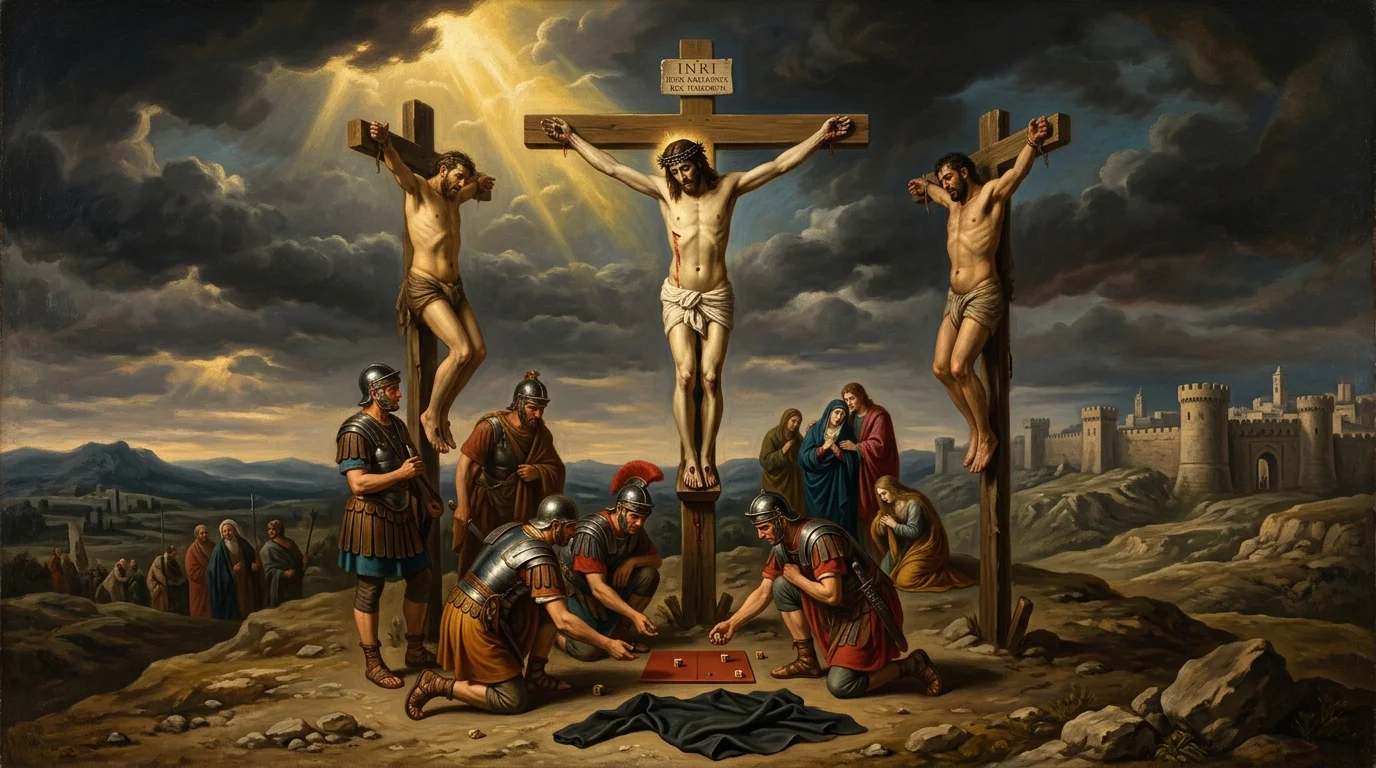
"He was oppressed and afflicted, yet he did not open his mouth; he was led like a lamb to the slaughter, and as a sheep before its shearers is silent, so he did not open his mouth."
"When he was accused by the chief priests and the elders, he gave no answer. Then Pilate asked him, 'Don’t you hear the testimony they are bringing against you?' But Jesus made no reply, not even to a single charge—to the great amazement of the governor."
In the Roman legal system, silence before capital accusations was considered an admission of guilt. Yet when Jesus stood before Caiaphas, Herod Antipas, and Pontius Pilate, He maintained a majestic, holy silence that fulfilled Isaiah 53:7.
1. The Lamb Led to Slaughter
Pagan false witnesses brought contradictory charges against Him. The high priest tore his robes; Pilate demanded answers. Yet Jesus uttered not a word of self-defense. He was the Passover Lamb, yielding without resistance to the altar of God.
2. Surrendered to the Righteous Judge
As the Apostle Peter later wrote: 'When He was reviled, He did not revile in return; when He suffered, He made no threats, but committed Himself to Him who judges righteously' (1 Peter 2:23). His silence secured our justification.
⚡ Fast Facts
- Pilate's Amazement: Roman Governor Pontius Pilate was accustomed to prisoners groveling or raging; Jesus' dignified silence stunned him.
- Silence Before Herod: Luke 23:9 records that when King Herod questioned Jesus at length, Jesus gave him not a single word.
- No Retaliation: 1 Peter 2:23 reflects: 'When they hurled their insults at him, he did not retaliate; when he suffered, he made no threats.'
- Voluntary Sacrifice: His silence proved that no one took His life from Him; He laid it down willingly (John 10:18).
❓ Frequently Asked Questions (FAQs)
Jesus did not defend Himself because He stood before the bar of justice not merely as an innocent individual, but as our Representative and Sin-Bearer. Before God, our guilt had no defense; therefore, Jesus remained silent to accept our sentence.