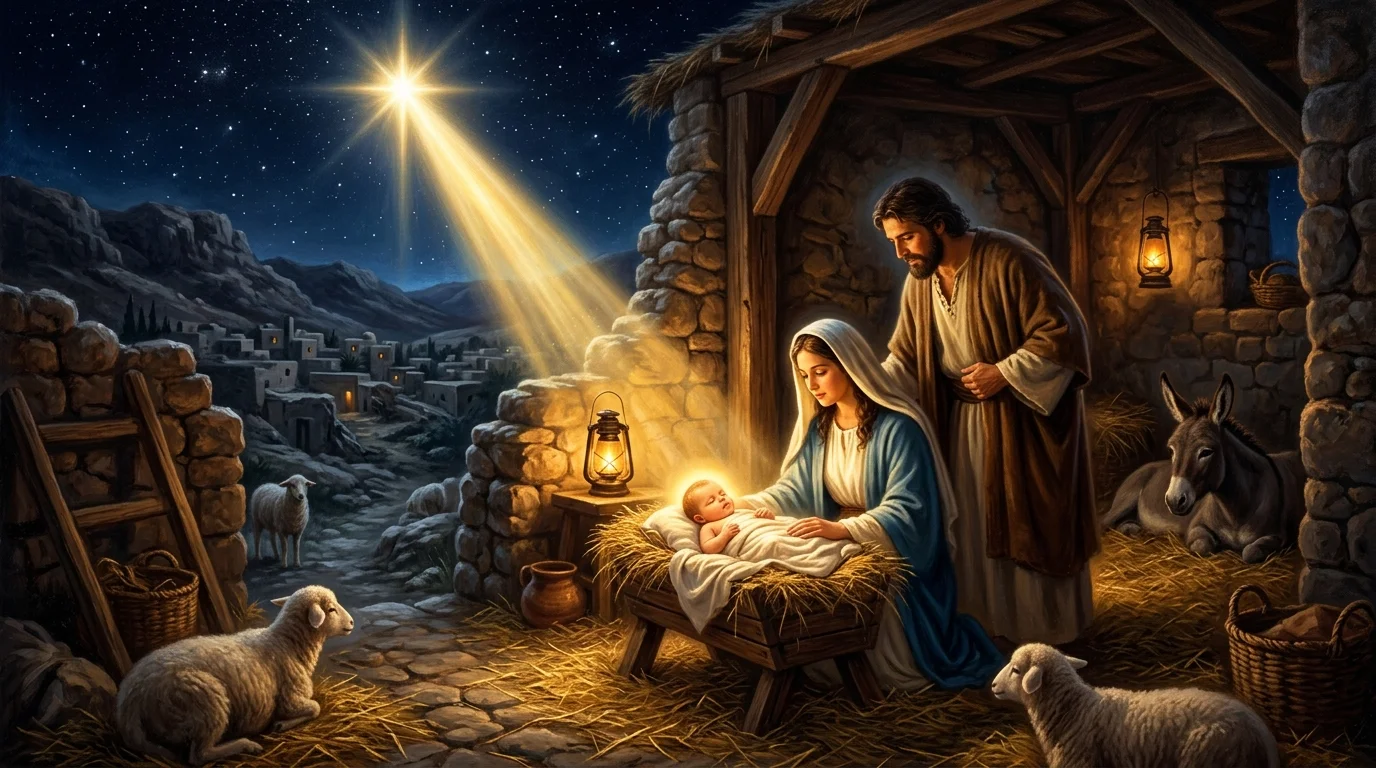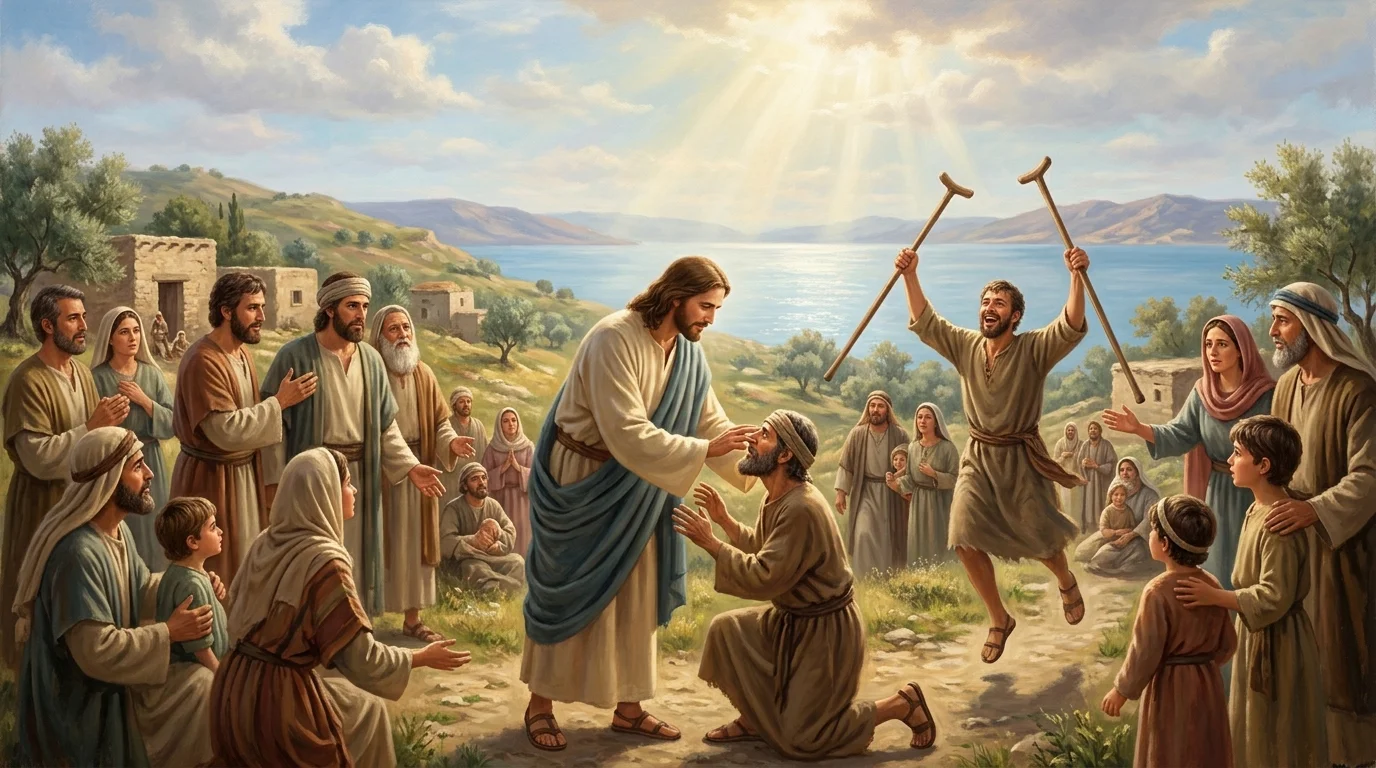
"He was despised and rejected by mankind, a man of suffering, and familiar with pain. Like one from whom people hide their faces he was despised, and we held him in low esteem... I am a foreigner to my own family, a stranger to my own mother’s children."
"He came to that which was his own, but his own did not receive him... For even his own brothers did not believe in him... 'Which of the two do you want me to release to you?' asked the governor. 'Barabbas,' they answered. 'What shall I do, then, with Jesus who is called the Messiah?' Pilate asked. They all answered, 'Crucify him!'"
Isaiah 53:3 paints one of the most heartbreaking portraits in prophetic literature: 'He was despised and rejected by mankind, a man of suffering, and familiar with pain. Like one from whom people hide their faces he was despised, and we held him in low esteem.' Echoed in Psalm 69:8 and fulfilled in John 1:11, this prophecy reveals that the Creator of the universe stepped into His own world only to experience the devastating chill of total rejection by His own family, neighbors, and nation.
1. The Paradox of the Incarnation: John 1:11
The Gospel of John summarizes human history's greatest tragedy in one haunting sentence: 'He came to that which was his own, but his own did not receive him' (John 1:11). The Greek distinguishes between ta idia (His own domain—the universe He created) and hoi idioi (His own people—the covenant nation of Israel). The birds knew their Maker, the storm winds obeyed His voice, the demons shrieked in terror before His presence, yet the very people who carried His Torah for two millennia looked Him in the eye and said, 'We do not want this man to reign over us' (Luke 19:14).
2. The Hometown Mob of Nazareth: Luke 4
Rejection struck Jesus first not in the marble halls of Roman governors, but in the sleepy hill town where He grew up. In Nazareth, after reading Isaiah 61 in the synagogue, the listeners marveled at His gracious words. But when Jesus challenged their spiritual entitlement by reminding them that God bypassed apostate Israel to bless a Phoenician widow and a Syrian leper, the congregation exploded in homicidal rage. 'They got up, drove him out of the town, and took him to the brow of the hill on which the town was built, in order to throw him off the cliff' (Luke 4:29). His own childhood neighbors sought to murder Him!
3. Alienation in His Own Household
Psalm 69:8 foretold: 'I am a foreigner to my own family, a stranger to my own mother’s children.' This was fulfilled with excruciating literalness. In Mark 3:21, His family came to take charge of Him, saying, 'He is out of his mind.' In John 7:3-5, His own half-brothers taunted Him to go show off in Judea if He was so great, for 'even his own brothers did not believe in him.' To walk in perfect holiness in a fallen household meant enduring a profound, silent isolation that no other human being has ever experienced.
4. The National Verdict: Crucify Him!
The rejection reached its fever pitch on Good Friday. Standing on the stone pavement of the Gabbatha, Pontius Pilate presented Jesus to the multitude: 'Here is your king!' But the chief priests and the crowd screamed with frenzied hatred: 'Away with him! Away with him! Crucify him! We have no king but Caesar!' (John 19:14-15). The covenant nation chose a brutal Roman tyrant and a convicted murderer named Barabbas over the sinless Son of David. Isaiah 53:3 stood fulfilled to the absolute letter.
5. The Triumph of the Rejected King
Yet God’s redemptive genius turned humanity’s darkest sin into salvation’s brightest triumph. As Romans 11:11 explains, through Israel's transgression, salvation has come to the Gentiles! The rejection at the Cross was the very altar upon which the Lamb of God bore the sins of the world. And to all who receive Him today—regardless of whether they have been rejected by family, abandoned by friends, or despised by society—Christ imparts the unfading dignity of becoming children of the living God (John 1:12).
Biblical Keywords & Theological Roots
Despised, disdained, held in utter contempt as utterly worthless and contemptible.
Forsaken, shunned, abandoned by men; isolated and deserted by friends, family, and nation.
Stranger, foreigner, alienated; treated as an unwelcome alien by one's own flesh and blood.
Ancient Near Eastern & Archaeological Context
In ancient Mediterranean collectivist culture, individual identity was entirely embedded within the family clan and ancestral village. To be disowned or mocked by one's own clan was equivalent to social death. When Jesus began proclaiming the Kingdom, the religious elite whispered that He was demon-possessed (Mark 3:22), His own family attempted to seize Him thinking He was out of His mind (Mark 3:21), and the elders of Nazareth attempted to stone Him.
🔑 Key Spiritual Takeaways
- Jesus fully experienced the profound agony of familial rejection, social ostracization, and national betrayal.
- Rejection by human authorities or loved ones is not proof of divine disfavor; it often mirrors the path of the Master.
- Human unbelief can never derail God's sovereign redemptive plan; Israel's tragic stumbling opened the door of salvation to the Gentile world.
- To all who receive Him, regardless of their family or background, Christ gives the right to become children of God (John 1:12).
Support Independent Biblical Research
Did this study bless you? Help support our independent bilingual research and interactive visual Bible tools.
⚡ Fast Facts
- Apostolic Epitaph: John 1:11 summarizes the tragic paradox of the Incarnation: 'He came to that which was his own, but his own did not receive him.'
- Family Skepticism: John 7:5 reveals that during His public ministry, 'even his own brothers did not believe in him,' mocking His public aspirations.
- Nazareth Mob: In Luke 4:28-29, His own hometown neighbors were filled with murderous fury and attempted to throw Him off a cliff.
- Psalm of Alienation: Psalm 69:8 foretold: 'I am a foreigner to my own family, a stranger to my own mother’s children.'
❓ Frequently Asked Questions (FAQs)
Why didn't Jesus' biological brothers believe in Him initially?
Growing up in the same household, they saw His ordinary human life in Nazareth. Familiarity blinded them to His divinity. Only after the Resurrection, when Jesus appeared personally to His brother James (1 Corinthians 15:7), did His brothers believe, later becoming pillars and authors of the New Testament (James and Jude).
How does Isaiah 53:3 describe the rejection of the Messiah?
Isaiah 53:3 calls Him 'despised and rejected by mankind, a man of suffering, and familiar with pain. Like one from whom people hide their faces he was despised, and we held him in low esteem.' Society instinctively averts its eyes from what it considers broken and cursed.
What comfort does Christ's rejection offer to rejected believers today?
Hebrews 4:15 assures us that we have a High Priest who sympathizes with our deepest wounds. When believers are mocked, isolated, or disowned by family for their faith, they can rest in Christ, knowing He bore that exact sorrow and welcomes them into God's eternal family.